


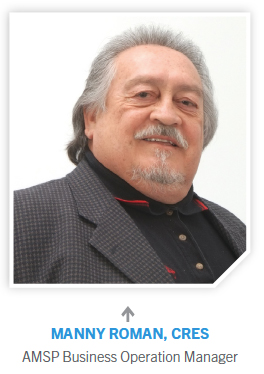
By Manny Roman
 Somebody, somewhere, decided for the rest of us that we should never say the word “problem.” The word has such negative connotations that some managers actually get angry with anyone who uses that nasty word. We are required to substitute “opportunity” for the “P” word. Opportunity is supposed to reframe the situation into a positive, thus we are happy that the situation showed up.
This reframing can be a great thing. It allows people to maintain a positive attitude and drive toward a solution. The drive toward the solution is performed without regard for the cause of the “opportunity.” The focus is on driving ahead with a forward-looking attitude.
An opportunity is a great thing. We all love opportunities. They are everywhere. In business, these are the gold nuggets we look for in order to grow and prosper. They are to be taken advantage of with great delight. We even feel that we can create opportunities. Long live opportunities.
Problems are bad. They cause anxiety, frustration and high blood pressure. They are to be avoided and prevented. They are not to be discussed or even mentioned. They must be converted into an opportunity. Death to problems!
A true opportunity tends to have an easily discovered and visualized condition. It is as if, “There it is, let’s go for it.” We are truly happy when an opportunity shows up.
A problem will normally have a cause, and often it will be a hidden cause. Hiding a problem with the “opportunity” word may make people feel better for a while. Is anyone really happy when a problem shows up, even a disguised one? Does anybody really believe that a problem is actually an opportunity in disguise? It may be, but only after analysis and due consideration.
I believe in calling a problem a problem. You see, if you insist on calling it an opportunity, you are going to be forward-looking to find the good in it. This is not bad in itself as long as you are not deluding yourself and others in the process. Sure, problem sounds negative, however calling it what it is causes us to view it in reality. We then understand that there exits a cause. Problems have causes.
Ascertaining the cause of a problem is a backwards process. We look back to see what happened not forward while ignoring the cause. If we define the problem well, we will see the cause well. We then can correct the cause as well as the problem. Thus preventing the re-emergence of the problem in the future. We are not treating only the symptoms. We are implementing a cure.
We fix problems and take advantage of opportunities. My concern is that I see leaders refuse to see problems for what they are: caused by something. That “something” needs to be addressed. The “If we don’t acknowledge it, it doesn’t exist,” attitude has never worked well.
Oh, you know what? Why not reframe it, not as an opportunity but as a “challenge.” Yeah, that is much more positive and not as disconcerting. A challenge implies that there may be some obstacles to overcome, however we can overcome them.
If I “challenged” you to a duel, you will focus on ensuring that you aim well, not on what caused me to present the challenge. Again, the cause may wind up ignored because we are looking forward, not backward.
So, in closing, do not fear the “P” word. It allows us to look for the cause and the solution. If you have a problem with anything I have said, turn it into an opportunity to define why. But don’t challenge me about it. It’s your problem not mine.
