


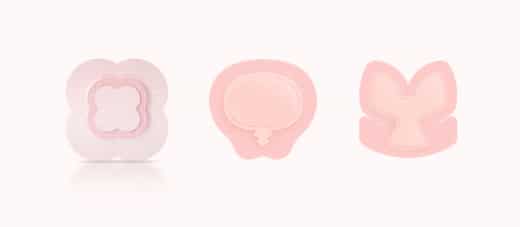
 Smith+Nephew (LSE:SN, NYSE:SNN), the global medical technology company, today announces that ECRI – leaders in advancing evidence-based healthcare globally – have completed updated Clinical Evidence Assessments of ALLEVYN LIFE Sacrum Foam Dressings and the LEAF Patient Monitoring System. In their latest reports, ECRI upgraded its Evidence Bar ratings for both to favorable* after assessing the most recently published clinical evidence and key outcomes for pressure injury prevention.
The ECRI Evidence Bar provides a visual representation of ECRI’s view of the benefits and harms of the technology. Their reports, ratings and conclusions do not constitute a recommendation or endorsement of any product or technology. ECRI is an independent and non-profit organization focused on improving the safety, quality, and cost-effectiveness of health care globally. ECRI’s Clinical Evidence Reports are utilized by third-party payers and health care providers as a means of making informed and objective evidence-based decisions.
Smith+Nephew’s ALLEVYN LIFE Sacrum Foam Dressing is indicated to manage chronic and acute exudative and granulating wounds on the sacrum and to help prevent sacral pressure injuries. The dressing has a multilayer design that includes a hydrocellular foam pad that indicates when the dressing requires changing,1,2 a perforated adhesive wound contact layer1,3,4 coated with silicone gel, a showerproof breathable outer layer, an absorbent lock-away core,5,6 and a masking layer to hide the exudate.1,2 Due to independent and non-bonded internal layers of the ALLEVYN LIFE Dressing, a layer-on-layer sliding phenomenon occurs and allows for dissipation of mechanical energy that could otherwise be transferred to the patient. This distinct mode of action could help alleviate pressure injury incidence in a patient’s skin and in the underlying soft tissues.7
Smith+Nephew’s LEAF Patient Monitoring System is a wearable, wireless solution that meets the recommendations in the National Pressure Injury Advisory Panel (NPIAP) guidelines.8 The LEAF System is proven to help improve adherence to individualized turn protocols up to 98%9,10 and has been shown to help reduce the odds of developing hospital-acquired pressure injuries (HAPIs) by 73%.10†
Use of the LEAF System helped improve nursing efficiencies,11,12 and generated up to $1.8 million estimated annual cost savings in one facility’s critical care units.11,13
“Hospital-acquired pressure injuries represent a significant burden to global healthcare systems and cost an estimated 60,000 lives14 and $26.8 billion15 in the US each year.” said Rohit Kashyap, President Advanced Wound Management at Smith+Nephew. “The ECRI ‘favorable’ rating for both our ALLEVYN LIFE Sacral Foam Dressing and LEAF Patient Monitoring System further demonstrates Smith+Nephew’s commitment to improving healthcare practices and outcomes in pressure injury prevention.”
ALLEVYN LIFE Foam Dressings and the LEAF Patient Monitoring System are part of Smith+Nephew’s comprehensive Advanced Wound Management portfolio – shaping what’s possible in wound care. To learn more about Smith+Nephew’s pressure injury prevention solutions, please click here.
* ECRI Evidence Bar™ Definition: A visualization of ECRI’s judgement about the balance of benefits and harms of the technology after assessing the available published clinical evidence in light of key outcomes and comparisons of interest.
† p=0.012
References
- Tiscar-González V, Menor-Rodríguez MJ, Rabadán-Sainz C, et al. Clinical and Economic Impact of Wound Care Using a Polyurethane Foam Multilayer Dressing. Adv Skin Wound Care. 2021;34(1):23-30.
- Simon D, Bielby A. A structured collaborative approach to appraise the clinical performance of a new product. Wounds UK. 2014;10(3):80 – 87.
- Smith+Nephew 2016.Product Performance of Next Generation ALLEVYN Life Internal Report. (HVT080) GMCA-DOF/08.
- Smith+Nephew 2016.Permeability of Hydrophillic Polyurethane Film when in contact with water and water vapour (ALLEVYN LIFE). Internal Report. RD/16/019.
- Smith+Nephew 2016.New ALLEVYN Life Gen2 wcl – Physical Testing. Internal Report. DS/15/025/R.
- Smith+Nephew 2016.Wound Model Testing of New ALLEVYN Life Gen2 wcl Dressing using Horse Serum at a Flow Rate Modelling that of a Moderately Exuding Wound. DS/14/303/R.
- Marché C, Creehan S, Gefen A. The frictional energy absorber effectiveness and its impact on the pressure ulcer prevention performance of multilayer dressings. Int Wound J. 2024; 21(4):e14871.
- European Pressure Ulcer Advisory Panel, National Pressure Injury Advisory Panel and Pan Pacific Pressure Injury Alliance. Prevention and Treatment of Pressure Ulcers/Injuries: Clinical Practice Guideline. Emily Haesler (Ed.) EPUAP/NPIAP/PPPIA: 2019.
- Schutt SC, Tarver C, Pezzani M. Pilot study: Assessing the effect of continual position monitoring technology on compliance with patient turning protocols. Nurs Open. 2017;5(1):21-28.
- Pickham D, Berte N, Pihulic M, Valdez A, Mayer B, Desai M. Effect of a wearable patient sensor on care delivery for preventing pressure injuries in acutely ill adults: A pragmatic randomized clinical trial (LS-HAPI study). Int J Nurs Stud. 2018;80:12-19.
- Smith+Nephew 2020.Leveraging novel technology to decrease hospital-acquired pressure injuries. Internal Report. EO.AWM.PCS006.001.v1.
- Rogers M. Reducing Hospital-Acquired Pressure Injuries (HAPI) in Long-term Acute Care with Turn Cueing Technology. Poster presented at: American Organization for Nursing Leadership; March 18- March 21, 2020; Nashville, Tennessee, USA.
- Gasparini R, Derisma Q, Hannon R. “Turning” to Technology: Reducing Hospital Acquired Pressure Injuries in Critical Care with Visual Turn Cueing. Poster presented at: National Pressure Injury Advisory Panel Annual Conference; March 10- March 12, 2021; Virtual Conference.
- Agency for Healthcare Research and Quality website. Preventing pressure ulcers in hospitals: a toolkit for improving quality of care. (PDF). Updated October 2014. Accessed October 2024. https://www.ahrq.gov/professionals/systems/hospital/pressureulcertoolkit/putool1.html
- Padula WV, Delarmente BA. The national cost of hospital-acquired pressure injuries in the United States. Int Wound J. 2019;16(3):634-640.
