


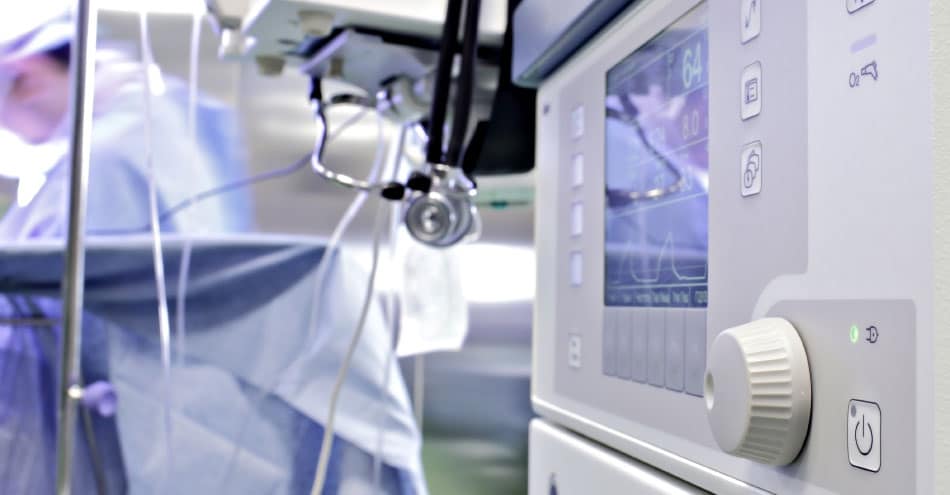
The U.S. anesthesia and respiratory (A&R) devices market faces major disruption as new US tariffs hit foreign-made products, with majority of all 510(k) approved devices manufactured outside the country. This raises serious supply chain concerns and may shift market dynamics in favor of domestic manufacturers, even as the market grows from $4.4 billion in 2023 to a projected $7.5 billion in 2033, according to GlobalData, a leading data and analytics company.
An analysis of GlobalData’s Medsource Database reveals that an estimated 67% of all 510(k) approved A&R devices are manufactured outside the US while 54% of those are manufactured solely outside the U.S.
Aidan Robertson, Medical Analyst at GlobalData, comments: “A&R may be especially susceptible to changes in trade policies as a significant portion of the products are manufactured outside the U.S. This may cause issues in how effectively these devices can be provided to the relevant patient population.”
GlobalData attributes the U.S. anesthesia and respiratory devices market growth to an aging population which in turn is increasing the prevalence of respiratory related illnesses as well as advancements in technology relating to A&R.
Robertson continues: “Some barriers to the growth include the higher costs of newer anesthesia and respiratory devices, which can limit accessibility. More recently, the ongoing trade war has emerged as a key challenge, discouraging product development, disrupting medical device supply chains, and increasing costs for consumers.”
With U.S. tariffs on China still at 145%, the impact is significant on the estimated 17% of 510(k) approved anesthesia and respiratory products made in China, especially the 10% manufactured exclusively there.
Robertson concludes: “Companies facing greater financial risk, such as Respironics, may consider shifting more production to the U.S. However, this can lead to significant short-term revenue losses, benefiting competitors with stronger domestic manufacturing operations. As a result, the U.S. anesthesia and respiratory market may see a shift in market share as healthcare providers turn to suppliers better positioned to navigate the tariffs.”
