


By K. Richard Douglas
 Orlando is probably best known for Disney World, Sea World and Universal Orlando. It is one of the great tourist destinations in America. The central Florida city also offers a sunny climate, zoos, golf and nightlife.
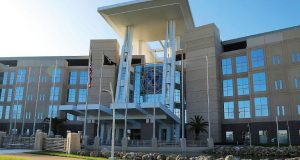
Beyond the family tourist destinations, there is another destination in Orlando that has a very important purpose and mission. It is the Orlando VA Medical Center. According to the organization’s website, the Orlando VA Medical Center serves more than 110,000 veterans in Central Florida and is one of seven medical centers that make up the VA Sunshine Healthcare Network (VISN 8).
It was established as a medical center in October 2006 and is recognized by at least one organization as a top 100 company in Central Florida for working families.
The Orlando VA Medical Center includes a 120-bed community living center in Lake Nona, a 60-bed residential rehabilitation program (domiciliary) in Lake Nona and a 56-bed residential rehabilitation program (domiciliary) located at Lake Baldwin, large outpatient clinics in Lake Baldwin, Viera and Daytona Beach and four smaller community-based outpatient clinics located in Clermont, Kissimmee, Tavares and Deltona.
The center’s website also says that the medical center is part of a 650-acre health and life sciences park known as the Lake Nona Medical City. The 65-acre medical campus has 134-inpatient beds and provides acute care, complex specialty care, advanced diagnostic services, a large multispecialty outpatient clinic as well as administrative and support services.
Manning the healthcare technology management duties for the facility is the 24-member biomedical engineering department.
The department includes Chief of Biomedical Engineering Jay Patterson, CCE; Supervisory Biomedical Equipment Support Specialist (BESS) David Six, CBET; and three lead BESS in Frank Barnets, Xavier Betts and Adam Reveile. The group also includes Administrative Support Assistant Christian Gomez, one staff biomedical engineer, one network BESS, 15 BESS and a biomedical engineer intern.
“There are staff located full-time at four different campuses; 20 of the 24 staff are based at the main hospital in Lake Nona, two are at the Viera Outpatient Clinic, one at the Daytona Outpatient Clinic and one at the Lake Baldwin Outpatient Clinic. We also support three other smaller clinics in Clermont, Tavares and Deltona,” Patterson says.
He says that the biomedical engineering department has the budget for medical equipment maintenance including service contracts.
“We work with clinical services’ input to determine what should be on contract based on equipment history and reliability, availability of backup equipment, availability of trained in-house staff, cost-effectiveness and clinical workload,” Patterson says.
“We also assess what levels of contract coverage are available and which ones fit our situation the best. We also participate in a SMART Pool with the other six VA facilities in VISN 8, to pool resources and avoid expensive contracts on critical healthcare technology systems,” he adds.
The team has been utilizing the same method for data collection for about two years now.
“We have been using Maximo for our CMMS since November 2016. It includes reporting tools to track inventory data, equipment service histories, and biomedical engineering labor and expenditures,” Patterson says.
“There are also VA data analytics tools and reports available on a national level, which are used to monitor key performance indicators and benchmark performance data against other peer sites,” he says.
The group is a one-stop shop for technology selection, site preparation/construction, installation, inspection, network integration and security, preventive maintenance/repair, training, management of alerts/recalls and documentation.
“We work with Facilities Management Service (FMS), OIT (Office of Information & Technology) and our Innovations Department to support those items in the gray area, that may not be direct patient care systems. Biomedical Engineering sits on several medical center committees, including Equipment, Environment of Care, CPR, Critical Care, Dialysis Program, Reusable Medical Equipment (RME) and Radiation Safety,” Patterson says.
The department also coordinates with its IT counterparts to ascertain the safe use of networked devices.
“Biomedical Engineering works closely with VA Office of Information & Technology staff at the local facility as well as at the regional level. Our network BESS chairs the New Technology Technical Review Board (NTTRB), which meets weekly to review new networked medical equipment requests to ensure security and compatibility,” Patterson says.
Taking On Projects
Getting a new hospital up and running is always a challenge for a HTM department. The Orlando VA Medical Center Biomedical Engineering Department was recently involved in all phases of opening a new facility.
“For the better part of two years, between 2014 and 2016, the staff was heavily involved in activating the new hospital in Lake Nona. The first outpatients were seen in the new facility in February 2015, and various clinical departments opened gradually over the following year; first outpatient and then inpatient,” Patterson says.
He says that prior to that time, the Orlando VA Medical Center was primarily an outpatient facility, except for a community living center and domiciliary.
“Biomedical Engineering’s responsibilities with activating the new hospital included: assembly, installation, inspection, and networking of new equipment; maintaining readiness documents to communicate equipment status by department; and attending regular activation meetings with individual clinical services as well as the overall steering committee,” Patterson adds.
In addition to bringing a new hospital online, the team has tackled several projects.
“We have led and participated in several Lean Six Sigma green belt projects, most recently to streamline the process for acquiring and installing networked medical equipment while meeting all national VA information and network security requirements, and improving the process for temperature and humidity monitoring of medical refrigerators and critical storage areas,” Patterson says.
“We have also been a key player in the clinical alarms workgroup to establish policy and ensure compliance with standards and regulations as the medical center added inpatient services in the last couple of years,” he says.
Away from work, the biomed group is represented at the annual Florida Biomedical Society Symposium and other industry conferences.
Veterans in central Florida can rest assured that the medical equipment they depend on is in good hands.
