


By Roger A. Bowles, MS, EdD, CBET
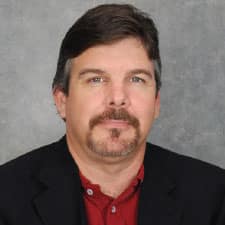
April was a special month as MD Expo was held in the Houston area, and I had the opportunity to attend. I was able to participate in a panel discussion about starting a business. My sideline business of motorcycle training is quickly becoming full-time although I never intended it that way. I was happy to share my experiences in growing a business. I was surprised that the panelists that participated in the discussion with me had many of the same experiences although all of us started different types of businesses.
Since the MD Expo was in Texas, I saw many former biomed students and it always makes me feel good to see how they have become so successful and are now recruiting current students. I enjoy hearing their stories and their recommendations for current students. Discussions about the changing field and how much it has changed over the years were interesting. When I was a BMET student in 1990 and 1991, coursework included software skills (Word Perfect, Lotus 1-2-3, and BASIC), semiconductors 1 and 2, microprocessors, chemistry, and interpersonal communications come to mind, as well as medical equipment function and troubleshooting courses.
Interpersonal communications is one class that should still be required. Several years ago, the state of Texas passed a law that restricted all associate degrees offered by state-funded schools to 60 semester hours and bachelor’s degrees to 120 hours, unless a particular profession has a national body that requires more (such as nursing). In the process of streamlining programs, many good courses were eliminated. Interpersonal communications was one of those courses for us and the reasoning behind this was that some of that coursework could be incorporated into medical equipment courses. At least that was the idea. I’m not sure that has happened as much as it needs to happen.
“Bobby, you don’t have what they call the social skills.” If you recognize this line, you might be getting a bit long in the tooth. This line, of course, is from the movie, “The Waterboy.” Funny, yes, because of the delivery in the movie. But, unfortunately, the lack of social skills is becoming a huge problem, and, in some cases, it is costing students jobs.
In March, our program held its annual advisory committee meeting. For many years, soft skills have been mentioned in these meetings, and ideas on how to teach them have been discussed. This year, members placed an even greater emphasis on this and how the overall people skills are slipping, and unlike in the movie, it isn’t funny.
Since the pandemic, we have noticed certain trends. Students spend time between classes in their vehicles, usually staring at their phones, instead of hanging out and interacting face-to-face with each other. And they no longer spend time in the library. At our school, our library has now been “repurposed.” In other words, there is no physical library on campus anymore. For an old-school instructor like me, that was a heavy blow.
Personally, I am infusing interpersonal communication opportunities into my classes, through face-to-face teamwork labs, presentations and role-play. Skills like active-listening, non-verbal communication, and writing professional emails are also stressed. As an example, I had a second-semester student, whom I had not met yet, email me and tell me (without introduction) that he would not be attending the first day of my class because his previous class that day had ended early, and he didn’t see the practicality of waiting around for an hour since we never do anything the first day anyway. Very good first impression.
In the fourth semester, I am spending more and more time preparing them for job-hunting. Many have never built a resume, never heard of LinkedIn.com or been on an interview. Some have contacted prospective internship employers via email and use text speak in their email or address the employer very informally (using words like “bro.”) So, these are things we need to fix and will fix over the next few semesters.
In other exciting news, my consulting LLC will hopefully be taking on a more active role in recruiting and vetting potential candidates for employers and employers for candidates. Of course, this will not be for entry-level people (students), as that would be a conflict of interest. Most likely this will mean partnering with full-fledged recruiters in many cases. But over the years, I have built up a few contacts in the industry and would like to help in that role. Details still need to be worked out, but I will post them when I know them.
Roger A. Bowles, MS, EdD, CBET, is a biomedical equipment technology/medical imaging technology instructor at Texas State Technical College-Waco.
