



By Joie N. Marhefka
Communication is one of the most essential skills for an HTM career. Time and time again, I hear this from the people that supervise our interns and hire our graduates. In particular, the ability to communicate with nurses and others who have different technical backgrounds is stressed. Our students are required to take both a writing class and a public speaking class, and I try to help them understand the importance of these courses and skills. For students at other schools who may not require these courses, I’d highly recommend taking them anyway. For professionals, I suggest joining Toastmasters International, a nonprofit organization that teaches public speaking as a way to practice and develop communication skills. Toastmasters has clubs throughout the world, as well as some that meet exclusively online, and offers opportunities to practice public speaking and to receive feedback and mentoring. Any of these activities will likely improve confidence as well as public speaking ability.
Teamwork is another valuable skill, which can be built outside of the classroom. In any position, it is important to be able to work with a variety of people from different backgrounds and with different expertise. Joining an intramural or recreational sports team is one good way to practice working with others. Participating in a club or other organization, where members work together toward a common goal, would also be helpful. Volunteering with a group, such as Habitat for Humanity or a local food bank, is an opportunity to work with others to accomplish a task and thus strengthen teamwork skills.
Leadership skills can be beneficial as well, especially for advancing beyond an entry-level position. Classes in leadership are available, both as for-credit college courses and as continuing education, which is one way to develop these skills. Outside the classroom, joining a leadership organization, which is available in many cities, is a path to develop as a leader. For example, I have had friends and family members complete the Leadership Harrisburg and Leadership Pittsburgh programs. In addition, volunteering as a leader for a club or professional organization can be a good way to practice and refine leadership skills. I encourage my students to seek leadership positions in student government or with other clubs on campus. For professionals, opportunities may be available with a local HTM organization or with professional societies.
Creative problem-solving skills are also useful in a field like HTM. Students can enroll in a design class to work on their problem solving. Participating in a design challenge or competition is another way to develop and practice creative problem solving. Problem-solving skills can also be improved through projects in other classes as well as on the job.
Finally, time management is a skill that is beneficial in any career. Courses and seminars, many of which are available online, can be used to learn new approaches to time management. A good way to practice time management, as well as to demonstrate it on a resume or interview, is to participate in activities, such as those discussed above. This will likely require planning and prioritization, which are essential for good time management.
The soft skills discussed above, communication, teamwork, leadership, creative problem-solving, and time management, are essential for any career, especially one in HTM. Finding ways to improve these skills while in school and through lifelong learning will help to build a resume and to succeed and grow in a career.
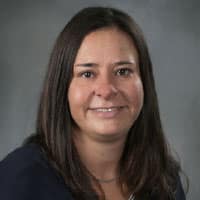
Joie N. Marhefka, Ph.D., is the biomedical engineering technology program coordinator at Penn State New Kensington.
