


By Joie N. Marhefka
One of my biomedical engineering technology (BET) students at Penn State New Kensington responded to an anonymous survey about 360-degree video and virtual reality (VR) with the following quote: “I believe that the use of new technology like VR to supplement lessons is both praiseworthy and a necessity. If a program wants to better prepare their students for the future, then VR-based course work is the next best thing after real practical experience. I also believe that if an educational institution with a program like BET wants to remain competitive, then they must adopt VR into its curriculum.” I had added some 360-degree video content to my courses and was glad to see that this student found it to be worthwhile. And, I couldn’t agree more.
Augmented reality (AR), VR, and 360-degree video are valuable tools to help students learn that can also help HTM professionals to do their jobs.
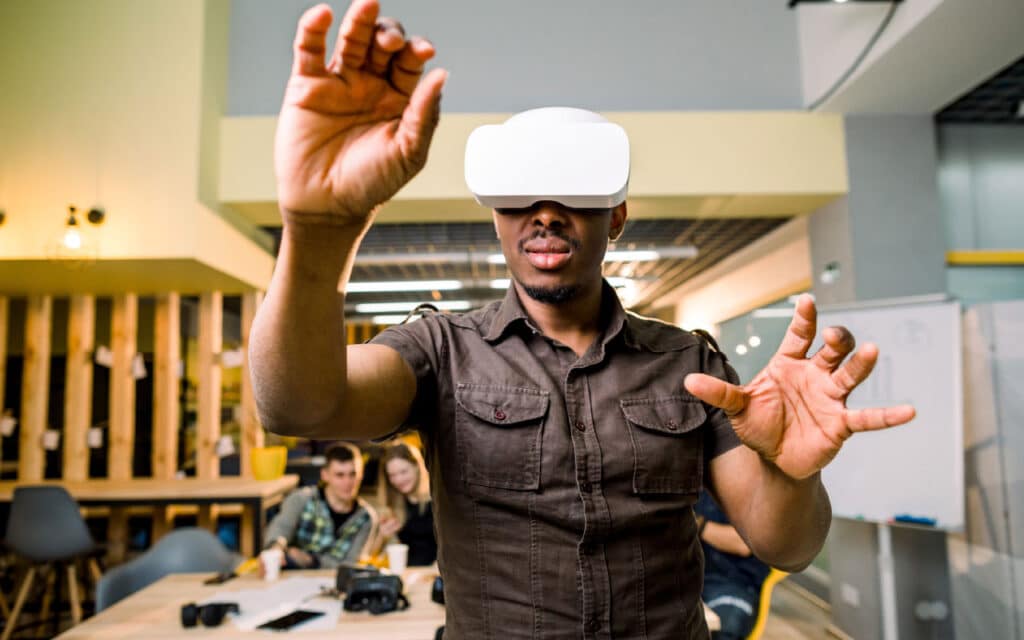
I have been working to incorporate this type of content into my classes. I recorded 360-degree videos of various work locations, including biomed shops, operating rooms, and imaging rooms, to introduce my students to potential careers and job sites. I also recorded videos of preventative maintenance procedures and repairs on equipment that we don’t have in our lab on campus. The students watch these videos using VR headsets and are able to interact with pop-ups that are embedded to provide more information – such as pictures of the inside of the device or links to service manuals. In this case, 360-degree video is a way that we are introducing students to a wider range of equipment prior to their internships while also dealing with budget realities that prevent us from having every type of device on campus. Several students commented that the 360-degree video felt like an in-person demonstration more than a traditional video. In addition, I worked with a recent graduate to create a series of 360-degree videos to give students practice with troubleshooting and customer service through a “choose your own adventure” situation. After watching each video, where a nurse describes a problem, the students are given a choice of how to respond. They are then directed to a video showing the outcome of their decision and given an additional set of choices. Through a series of videos and questions, the students reach a resolution – for example successfully identifying the problem and solution, or perhaps, angering the clinical staff. I am planning to introduce the students to AR, and its applications in device maintenance and troubleshooting, during the next school year.
My goal of adding AR, VR and 360-degree video to my classes is twofold. First, I want to introduce the students to equipment and experiences that can’t be replicated in the classroom. Second, I want to introduce the students to technologies that they will likely use in their future careers.
I recently attended the AAMI eXchange. The conference included several educational sessions and exhibits related to AR and VR. Device companies demonstrated ways that they are incorporating AR and VR into their products, including using AR and VR to help with servicing equipment. This really got me thinking about uses of AR, VR and 360-degree video in HTM beyond the traditional classroom setting.
I imagine in the future VR will have many applications in training. VR can be, and in some cases already is being, used to complement and maybe even replace in-person training sessions. VR can be used to help technicians become familiar with equipment before a hands-on training or to review content following an in-person session.
AR can be used to help walk technicians through maintenance or troubleshooting procedures. It can provide detailed information about and models of components of a device.
A 360-degree video could be used in new employee orientation or to introduce a technician to a new work area such as an operating room, an offsite clinic or a different hospital. This would allow them to become acclimated to the workspace at their own pace and to review room set-up as needed. A 360-degree video could also be used as a means to practice handling stressful situations, troubleshooting and customer service. This type of training would benefit HTM professionals as well as students.
I anticipate that AR, VR and 360-degree video will help many organizations to increase efficiency and save money. I am taking strides to familiarize my students with these technologies so that they will be ready to use them on the job. It will certainly be interesting to see how these technologies affect the HTM industry over the next few years.

