


By Steven J. Yelton, P.E., AAMIF
As I write this column, the Radiology Society of North America (RSNA) Conference and Annual Meeting is underway in Chicago. Throughout my career, students and perspective students have often taken an interest in pursuing a career in repair of imaging equipment.
Many years ago, I had the opportunity to attend the RSNA meeting. I wanted to further explore opportunities for my students and learn more for myself. I found this area of study to be very exciting. I was always interested in computers and new computer technology. As I toured the RSNA exhibits, I couldn’t believe the technology that I got to see. It seemed that the latest and greatest computer technology as well as imaging technology was on display. With the HTM and computer technology fields “living” so closely together, it’s understandable why HTM students would be interested in investigating these opportunities.
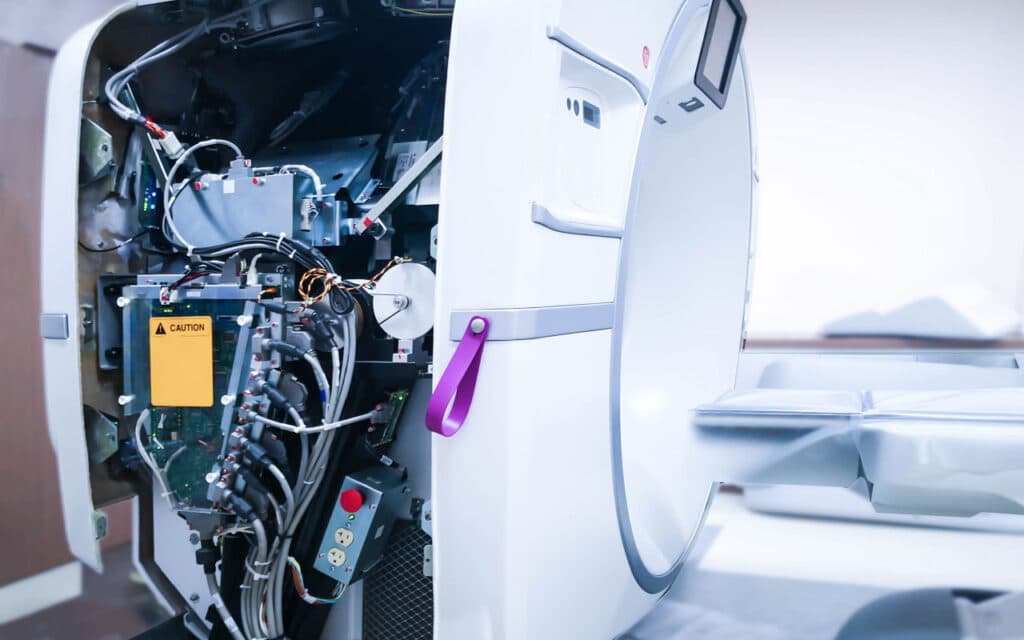
As I saw messages about this year’s RSNA meeting, I felt like this would be a good time to revisit imaging education and training in my column. At Cincinnati State Technical and Community College, the Biomedical Equipment Technology Program is a two-year Associate of Science (A.S.) program. As a college program, imaging education has always been a challenge. We were never able to have a significant amount of imaging equipment at the college because of cost, so partnerships with local hospitals and companies is what enables us to have a significant imaging training aspect of our HTM program.
The Cincinnati State A.S. program does not provide enough time to devote to the imaging area to achieve complete training. We try to provide a high-quality introduction to the imaging area both in classroom instruction and as part of our cooperative (co-op) education program.
We have many health care related programs in our Health Technologies Division. We try to establish working relationships between the Engineering Technologies and Health Technologies divisions at the college to provide shared services. One of the areas is scheduled maintenance and repair of medical systems including any imaging systems at the college. We are currently in the process of resurrecting this program. Over the years, participation in this program has lessened for no reason.
This collaboration not only provides real world laboratory exercises for the HTM students, but also provides timely support of equipment and will contribute to the safe and effective use of medical systems.
After participating in these programs, our hope is that graduates pursuing careers in imaging repair will continue their education in a four-year program or as part of an imaging training program. A partial list of the programs that our graduates have pursued over the years for training or employment are: RSTI (Radiological Service Training Institute), GE HealthCare, Phillips Healthcare and Hologic. You will find that many of these companies are participating at RSNA.
I am not promoting any college or training program. One of these non-college program alternatives in radiology service training that my graduates have pursued over the years is RSTI. These graduates tend to pursue RSTI training in conjunction with full-time employment. The RSTI program is a respected program within the industry and is in Ohio near Cleveland. This makes the proximity to Cincinnati State within a drivable distance. Our graduates also pursue bachelor’s degrees from many universities in engineering and engineering technologies on a full- or part-time basis, though usually not in the imaging area primarily because of a lack of availability.
Another topic that I would like to remind everyone of is the area of certification. We have found that the Certified Radiology Equipment Specialist (CRS) is important and highly sought after by employers and graduates. The AAMI website: https://www.aami.org/home/about-aci/aci-home/cres states the following: “Healthcare technology management professionals that desire a CRES certification are expected to have experience in a wide-range of medical imaging modalities, electromechanical devices, computers, networks and software used in the delivery of healthcare.”
The AAMI website also lists the following as the requirements for CRES certification:
- Associate degree or higher in biomedical equipment technology program; OR
- Completion of a U.S. military biomedical equipment technology program; OR
- Associate degree or higher in electronics technology and one-year full-time BMET work experience, OR
- Two years of full-time BMET work experience.
*CRES Applicants for full certification: At least 40 percent of work experience over the last two years or 25 percent over the last five years must be in the designated specialty area.
I have only listed some of the certification information here and would recommend that you visit the link listed additional information for all CRES certification requirements.
As always, I hope this information helps you!
Steven J. Yelton, P.E., AAMIF; is a senior HTM engineer for a large health network in Cincinnati, Ohio and is a professor emeritus at Cincinnati State Technical and Community College where he teaches biomedical instrumentation (HTM) courses.
