


By K. Richard Douglas
 Known for its dairy farms, motorcycles and beer, Wisconsin is the state of firsts; the first kindergarten class; the first serving of an ice cream sundae. Stretching along Lake Michigan, Wisconsin offers a coastline with 48 lighthouses, wildlife viewing and outdoor recreation.
Along with coastlines on Lake Michigan and Lake Superior, the state shares a border with neighbors Minnesota, Iowa, Illinois and the Upper Peninsula of Michigan.
All of this means that the state’s biomeds have plenty to do away from work; especially during the summer months. They also have a statewide organization that unifies them around common knowledge and camaraderie.
“The association was formed over 35 years ago. It was re-branded in 2018 to the Wisconsin Biomedical Association (WBA). During the rebranding process, we transitioned from a traditional organizational structure, featuring a president and vice president, to a more collaborative model with a board of directors, which includes the roles of treasurer and secretary,” says Darren Budde, a member of the WBA’s board of directors.
Budde says that the association was started over 35 years ago by Jim Kipp.
“Jim Kipp joined the Marshfield Clinic in 1968, bringing with him a wealth of experience in electronics. He aimed to introduce biomedical electronics as a new specialty at the clinic. With support from clinic physicians, Jim successfully integrated his expertise into the medical field, becoming a pioneer in designing and building bio-electronic devices, including perfusion pumps and nerve stimulators,” Budde says.
He says that recognizing the significance of AAMI certification, Kipp was among the first 50 to achieve this distinction and later served on the AAMI Advisory Board.
“When Western Wisconsin Technical College sought to develop a biomedical technology program, they turned to Jim for guidance, establishing him as an authority in the field. He continued to support WWTC as a program advisor,” Budde says.
He says that to foster excellence and collaboration, Kipp founded the Bio-Medical Electronics Technician’s Association, inviting regional technicians and interested individuals to join.
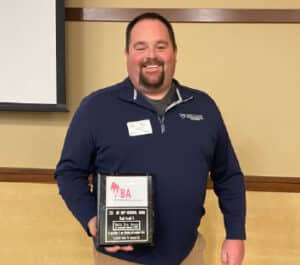
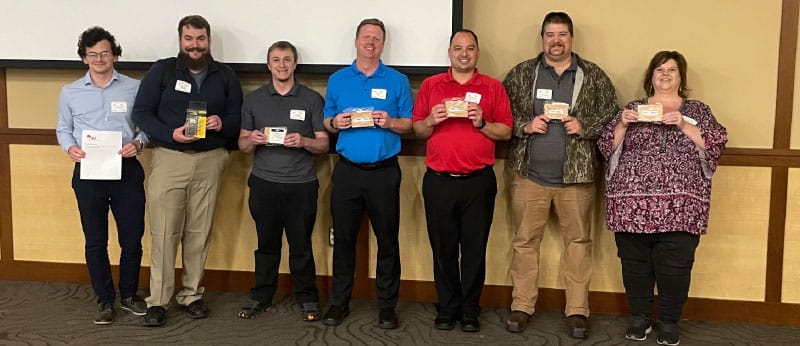
2024 Jim Kipp Winner
“He also served on the board of directors of the Biomedical Associations of Wisconsin (BAW), where he played a key role in securing the tax-exempt status that the WBA currently holds,” Budde adds.
The original organization was “plural” because it consisted of five regional associations. With many of the original officers moving on into retirement, a reshuffling and reorganizing of the former group resulted in the WBA of today.
The group has a scholarship fundraiser event every year that runs alongside its annual conference.
“We have done golf events, bowling events and even hosted a private event on a Mississippi River paddle boat. All proceeds go to the scholarships that we award annually in the fall,” Budde says.
The pandemic required many biomed associations to adapt to a changing environment.
“Prior to the COVID-19 pandemic, we conducted in-person meetings and conferences across the state. Since the pandemic, we have successfully hosted several in-person conferences; however, we have not yet resumed in-person meetings except for the annual conference meeting. This situation presents both advantages and challenges, as the convenience of online meetings has allowed us to maintain a greater presence in virtual settings,” Budde says.
The group hosts quarterly member meetings, and the board meets every other month. All meetings are held online.
ACTIVELY ENGAGING NEW BIOMEDS
The association has a conference that alternates among venue locations.
“We hold the conference throughout Wisconsin. Cities include Milwaukee, La Crosse, Green Bay and Wisconsin Dells. We plan to keep doing this in the future and adding a couple new cities,” Budde says.
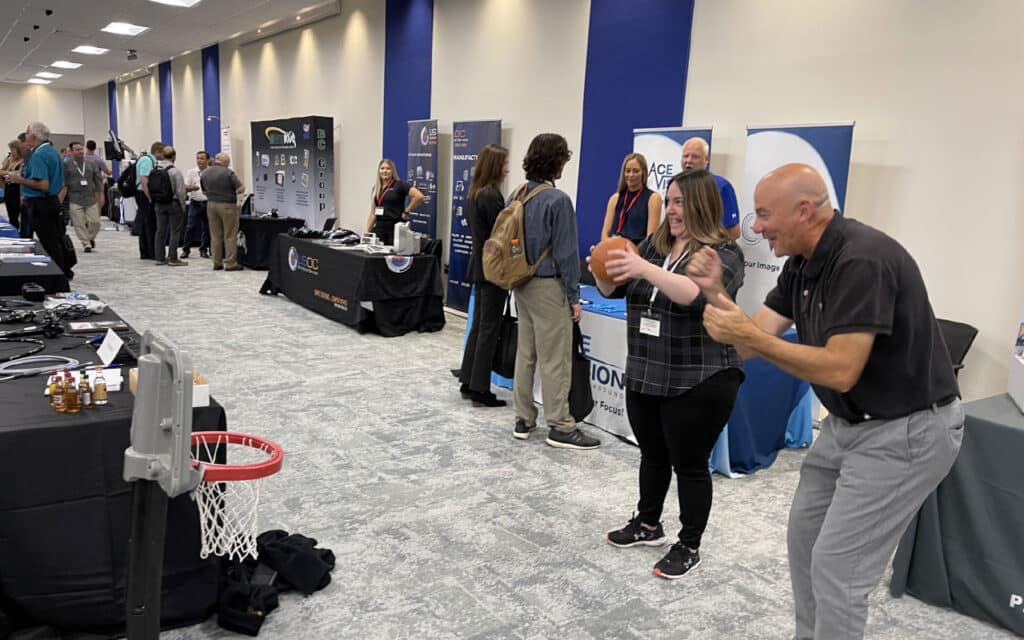
He says that it usually runs two days with education tracks and a keynote speaker. We usually include tracks for biomed, imaging and leadership. We usually have a social event in the evening of the first day.
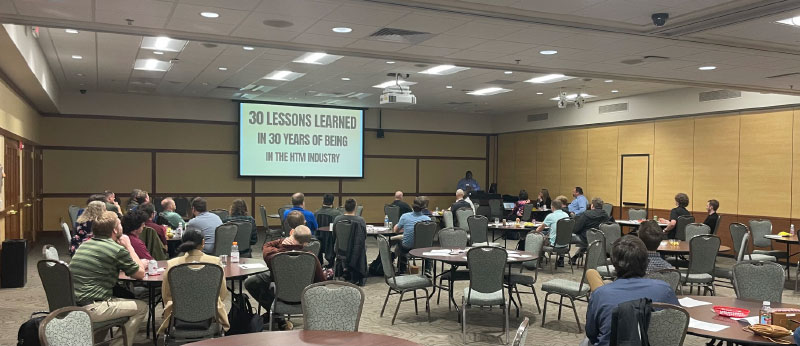
“We had two keynote speakers: Bryant Hawkins Sr. and Brian Udermann. We held this two-day conference in La Crosse, Wisconsin. We had our scholarship fundraising event on the La Crosse Queen, which was a private paddleboat ride on the Mississippi through the driftless area. We have an HTM Mixer coming July 31-August 1 in Milwaukee,” Budde says.
The group has worked to involve biomed students in the organization to bring them into the local biomed community, which also provides contacts.
“We encourage and offer free attendance for any student to attend the conferences. Over the past few years, we have tried to incorporate the campuses into our conference plans. We have held conferences at the Milwaukee Area Technical College and Western Technical College. Western Technical College and Milwaukee Area Technical College, along with their instructors, have been heavily involved with the WBA,” Budde says.
He says that unfortunately, Western Technical College in La Crosse, Wisconsin has shut down its program as of Spring 2025. He says that Milwaukee Area Technical College and Minnesota State College Southeast are other schools involved.
The effort to replenish the ranks of retiring biomeds continues even with one less program. The group reaches out to young people all the time.
“The WBA has actively engaged with educational institutions across the state, participating at both the elementary and high school levels, as well as at the collegiate level. I have personally delivered presentations on the biomedical field to groups of scouts. Additionally, we set up informational booths at various school workshops, targeting both college and grade-school audiences, with several events each year where we aim to make our presence known,” Budde says.
He says that every few years, they reach out to healthcare organizations statewide to obtain updated email lists.
“During social events, meetings, and conferences, we connect with different healthcare organizations as these events occur in their regions, ensuring our outreach is comprehensive across the state,” Budde adds.
In the Badger State, the WBA does its part to introduce new biomeds to the profession while engaging veteran biomeds with events and activities. Jim Kipp would be proud.
