



By K. Richard Douglas
The state of Michigan covers a lot of ground from its southern border with Ohio and Indiana to Traverse City in the northwestern portion of the lower peninsula and to Copper Harbor in the far northern portion of the upper peninsula. Surrounded by the Great Lakes, the state is a mecca for boaters, fishermen, hunters and more.
The state is also home to the Michigan Society for Clinical Engineering (MSCE), the statewide biomed organization that unites the state’s HTM professionals.
The group’s mission is to promote professional development, advance the development of excellence in patient care in hospitals and related healthcare facilities and to provide a forum for the exchange of information among the members and organizations.
Officers in MSCE include President Eric Ebejer, Vice President Jahan Azizi, Secretary Jason Walewski and Treasurer Johnson Philips. Members of MSCE Board of Directors include Jay W. Hall, M.S., P.E.; Kyle Farrell; Thomas Brown and Bill Fox. Lindsey Peterson serves as the MSCE webmaster.
The society has a long history going back to 1977. The same year that “Star Wars” hit theaters an initial focus group meeting was held in Lansing, Michigan, at the Michigan Hospital Association. It was at that meeting that a steering committee was established to consider how best to interact.
The steering committee had its first meeting two months later. By January of 1978, the core group had developed the new organization’s bylaws and structure. Those bylaws were approved in September of 1978. It was decided at that meeting that members of the newly formed organization should hold a degree in engineering or the life or physical sciences and work in healthcare. The bylaws were later amended to allow anyone actively employed in the field to become a member.
In 1982, incorporation papers were submitted to the state of Michigan and the society was officially recognized as a nonprofit society.
The new group’s first officers included President Tom Bauld, Vice President Chuck Jones and Secretary Dale Petty. One of the original board members – Jay Hall – remains an active board member today. While he is retired from the industry, he still has an active and welcome voice in the MSCE.
The society continued to develop and gain membership throughout the coming decades. In July of 1999, MSCE launched a new website designed by George Award.
While education is one element of the organization’s focus, Ebejer says that its goals are multifaceted.
“While our meetings are educational in format, the purpose of the MSCE is to promote the professional development of the membership, advance the development of excellence in patient care in hospitals and related healthcare facilities and provide a forum for the exchange of information amongst the members and with other organizations. With many boomers soon to retire in the HTM community, there are strong undertones of the MSCE trying to place graduates in these positions,” he says.
Ebejer adds that at every meeting MSCE takes time to announce any new job openings and provides information from the employers as to where someone can apply.
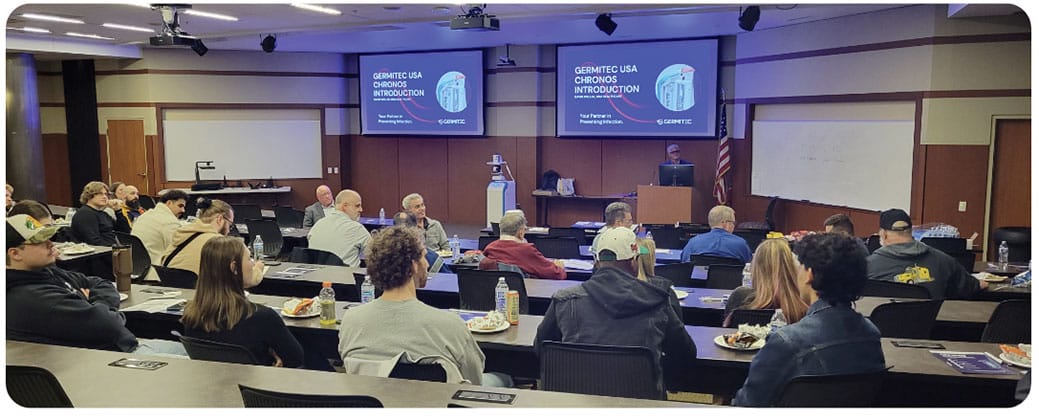
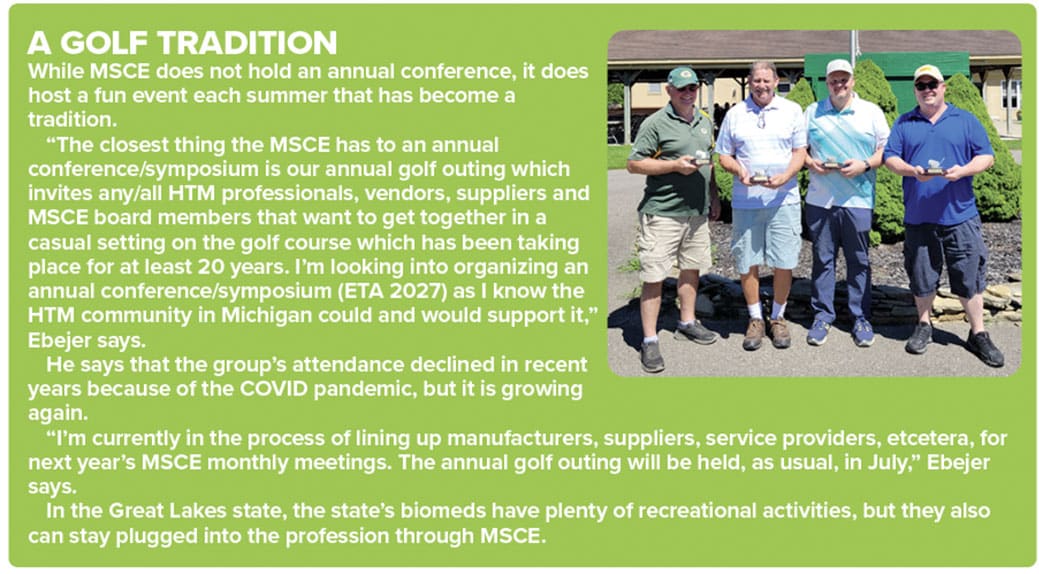
Those meetings include eight to 10 monthly meetings annually, February through November. MSCE also hosts an annual golf outing in July.
As Ebejer mentioned, MSCE is active in helping to replenish the ranks of HTM in the state and has partnered with some local biomed college programs, both in Michigan and in nearby Canada.
“The MSCE has been working closely with Schoolcraft College in Livonia, Michigan for years and even one of our current board members – Secretary Jason Walewski – is an instructor/teacher at the school,” he says.
Ebejer also says that MSCE has built a strong relationship with James Linton and the BME program at St. Clair College in Windsor, Canada, over the past year.
“Many of their students attend our meetings since they’re right across the border from Detroit, Michigan in hopes that they could also find employment here in Michigan and the U.S.,” Ebejer adds.
Many biomed organizations were impacted by the pandemic. Those restrictions caused MSCE to shift gears to continue operations.
“The pandemic halted any/all MSCE meetings but has allowed us to more easily hold meetings remotely or have presenters present from a remote location,” Ebejer says.
Association of the Year
"*" indicates required fields
