



Some biomed jobs may be more challenging than others. Not because of the equipment serviced, but everything else.
The HTM professionals in the Tanana Chiefs Conference Biomedical Equipment Support Department based out of Fairbanks, Alaska, face unique logistical challenges.
The Tanana Chiefs Conference region covers an area of 235,000 square miles in interior Alaska.
“Our team consists of one manager who also performs repairs and travels to remote sites, two biomed technicians who handle the majority of field service and travel, and one administrative assistant who supports scheduling, documentation, supply coordination and assists with minor troubleshooting and battery replacements when needed,” says Mark Harris, biomedical equipment support director.
Harris says that the department is responsible for supporting medical, dental, radiology, laboratory, ASC, infusion and pharmacy equipment at a main facility in Fairbanks and 30 remote clinics spread over an area roughly the size of Texas.
“Many of these clinics are not on the road system and are accessible only by small bush planes, boat, snowmachine (snowmobile) or ATV depending on the season. In addition to our main outpatient facility in Fairbanks, we support 30 remote village clinics that vary in size and scope of services. Our technicians must be prepared to support a wide range of equipment types in extremely isolated environments where immediate backup is not available,” Harris says.
He says that the main facility is the Chief Andrew Isaac Health Center in Fairbanks, Alaska.
“It is a comprehensive outpatient facility that includes an ASC, urgent care, pharmacy, 30 dental suites, eye clinic, radiology, behavioral health, women’s health, obstetrics, pediatric care, diabetes services, immunizations and specialty clinics including orthopedics. In addition to several support buildings in town, we provide service to 30 remote village clinics,” Harris says.
To understand the challenges the team’s biomeds face, it is important to understand the complex travel logistics involved.
“In some cases, aircraft can only land in one village, requiring coordination to cross a river by boat in summer or snowmachine in winter to reach a neighboring clinic. During freeze-up and breakup seasons, neither boats nor snowmachines are safe options. Spring breakup can cause severe flooding as large ice flows create temporary dams and force water into villages, damaging buildings and infrastructure. Travel planning requires careful coordination with weather, river conditions and available transportation to ensure safe and timely support of clinical services,” Harris says.
Biomeds must be generalists out of necessity. When one of the biomeds is at a remote location, they don’t have the option of calling in a specialist.
Harris says that this fact requires broad technical competency, strong critical thinking skills and the ability to adapt in unpredictable situations.
“Our team maintains certifications and ongoing training across multiple equipment platforms to ensure we can safely and effectively support all service lines,” he says.
SUPPORTING THE INDIGENOUS COMMUNITY
In addition to the logistical challenges, the biomed team engages in some functions beyond turning a wrench that highlight their worth to the community.
Harris says that because of their location, and the communities they serve, the team’s role occasionally extends beyond traditional biomed responsibilities.
“We support tribal health clinics that are deeply connected to cultural traditions and community events. On one occasion, we were asked to assist with harvesting a moose for a traditional potlatch gathering. A potlatch is an important ceremonial event practiced by Indigenous peoples in Alaska. Harvesting often occurs in extreme winter conditions, and our team has traveled in temperatures as low as minus 59 degrees Fahrenheit to support community needs,” he says.
“We have also assisted with distribution of salmon to elders when traditional harvests were impacted by low returns. In some cases, salmon must be commercially sourced and distributed to ensure elders receive this culturally and nutritionally important resource,” Harris adds.
Harris says that operating equipment, transporting supplies and traveling safely in those conditions requires planning, resilience and adaptability.
He says that from a technical perspective, one of the more complex projects involved acquiring a used Panoral X-ray unit from GSA surplus and installing it in a remote village clinic.
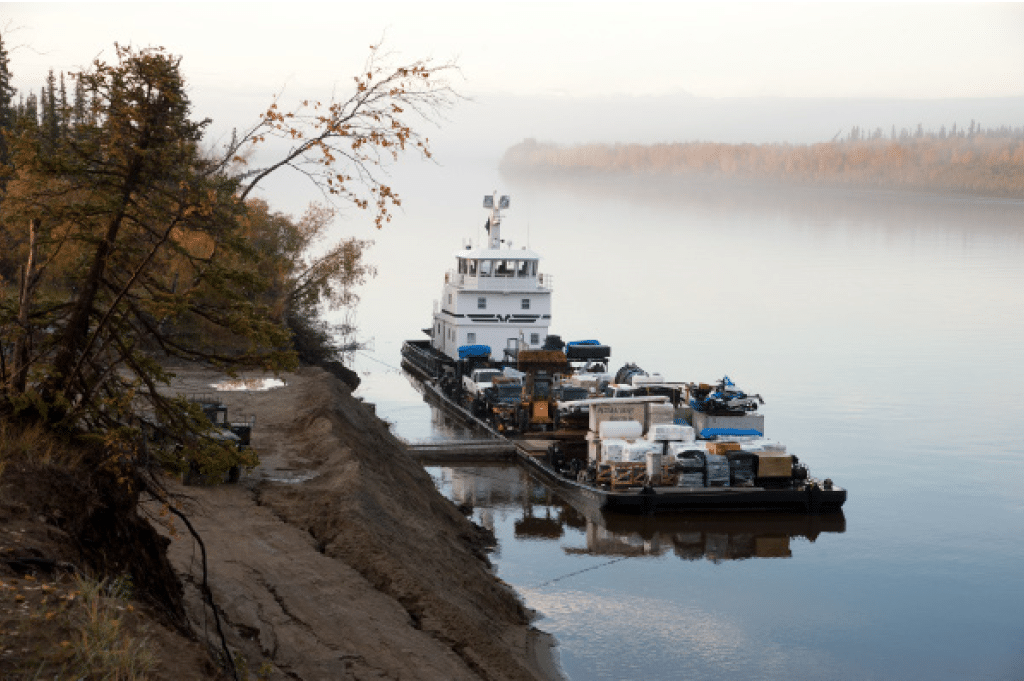
“The village has no road access and can only be reached by boat or aircraft. Larger equipment cannot fit in small bush planes, so we palletized the system and coordinated shipment via barge during the limited summer season before the river freezes, typically by late September. Missing that narrow window can delay installation for months. Careful planning, staging and timing are critical when moving large medical equipment into isolated communities before the rivers begin to freeze back up, which can begin as early as September,” Harris says.
Along with the extreme conditions the team operates in, it also engages in problem solving.
“We support 30 remote village clinics, most of which have two exam rooms and one or two dental chairs. Biomed typically visits each village once per year unless an emergency occurs. Because travel is expensive and weather dependent, we often provide real- time remote troubleshooting. We walk dental staff through repairs using video calls while standing next to similar equipment at our main facility in Fairbanks to demonstrate procedures step by step,” Harris says.
He says that providers in some villages use portable dental systems and maintain small tool kits with basic spare parts so they can assist with guided repairs.
“Extreme weather creates additional challenges. If a boiler or heater fails, clinics can freeze quickly. When that happens, many items frequently crack and must be replaced. In those situations, we coordinate emergency travel to restore services as quickly as possible. Due to our geographic isolation, we maintain a larger than typical parts inventory to reduce downtime. As a result, we are often able to achieve same-day turnaround on many repairs once equipment reaches our shop,” Harris says.
The biomed team actively pursues continuing education and maintains awareness of industry best practices to support its broad scope of responsibility.
For members of the Tanana Chiefs Conference Biomedical Equipment Support Department, the job description may look different than nearly any biomed position in the lower-48. It is a good fit for those who love the natural beauty of Alaska, dedication to community and a personality that thrives on overcoming challenges.
