



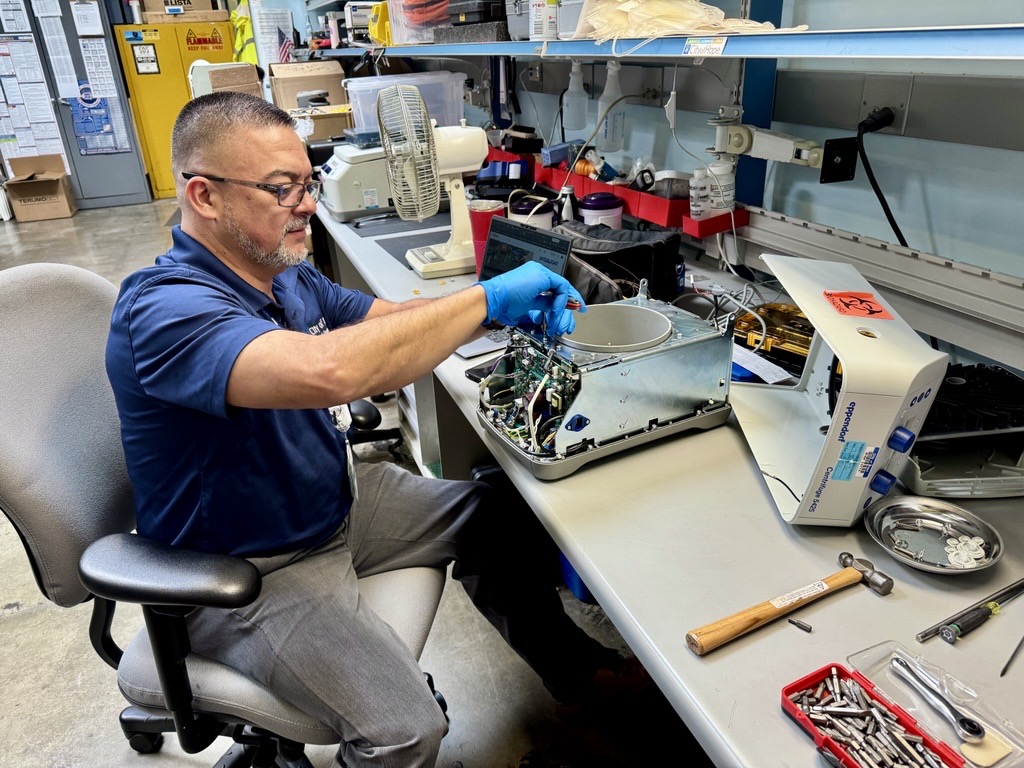
The recent aol.com post “18 Dull but Reliable Careers with Strong Benefits” listed biomedical equipment technician among its top 10 dull careers at number 8.
The article states that “biomedical equipment technicians repair and maintain medical devices such as infusion pumps, patient monitors, imaging equipment, defibrillators, and hospital beds with electronic systems. Average pay for this specific role is about $90,390 per year.”
TechNation reached out to several active healthcare technology management professionals or biomedical equipment technicians for comment.
There is some disagreement regarding the “dullness” of the career.
Zachary Silas, MBA, is a senior site manager in a clinical engineering department who is well connected in the HTM realm. He offered some grace to aol.com when asked if being a biomed is dull.
“I suppose the answer is: it depends on the individual. Like any profession, healthcare technology management (HTM) is largely what you make of it. For people who enjoy repairing things, solving problems and understanding how complex systems work, biomedical engineering can be incredibly rewarding,” Silas said. “As a former imaging engineer, I found my work highly meaningful. There was something satisfying about being called when a critical imaging system was down, knowing that every minute of downtime affected patient care and clinical operations. The challenge of troubleshooting sophisticated equipment under pressure was exciting, and when the system was restored, there was a genuine sense of accomplishment. I took pride in knowing that I had solved a problem and enabled caregivers to resume treating patients.”
“Some maintenance procedures can become repetitive, but the profession itself is far from dull. Every day presents new challenges, new equipment and new opportunities to learn,” he added.
Silas also said HTM is often misunderstood.
“Our shop is usually filled with laughter, collaboration and stories about how few people truly understand what we do,” he said. “In many ways, that’s one of the unique challenges of HTM. The profession operates behind the scenes, and there is often ambiguity around our responsibilities. Everyone wants something from biomed, and our challenge is balancing those expectations while remaining focused on our primary mission: ensuring medical equipment is safe, reliable, and ready for patient use.”
“What I’ve found is that BMETs genuinely enjoy fixing things. They are naturally curious people who want to understand how equipment works and how it supports patient care. The sense of accomplishment that comes from diagnosing a problem, making a repair, and returning equipment to service is what keeps many of us engaged,” he added. “For those individuals, biomedical engineering is anything but dull.”
Dean Skillicorn, BS, CBET, CHTM, AAMI-F, is manager of a medical imaging service team in HTM with many years of experience. He described biomedical equipment technicians as a job that is “very challenging, yet very rewarding.”
“I would say that anyone interested in being technical, who enjoys being challenged, is willing to work hard, and loves working with people, is well suited for this profession,” he added. “This profession is challenging.”
Skillicorn went on to dismiss it as a “dull” career field.
“If you love a challenge, this career field is for you. It is definitely not boring or routine. The people in the HTM profession are committed to the safety and efficacy of devices that monitor, treat and save individual’s lives. They are very special people with a gift of loving and caring for medial challenged people … and we love what do,” he said.
Mark Cooksey is a clinical engineer with Norton Healthcare. He quickly dismissed the idea when asked if being a biomedical equipment technician is “dull.”
“Not at all. In fact, my own career path is a good example of why this field is anything but dull,” he said.
Cooksey explained.
“On any given day, we’re troubleshooting complex devices, analyzing data to improve maintenance strategies, negotiating service contracts, or supporting regulatory compliance under standards like ISO 13485. There’s also a continuous problem-solving element – no two hospitals, device fleets, or failures are exactly alike,” he said. “You’re constantly applying engineering principles, Lean Six Sigma methods, and now even AI tools to improve reliability, reduce risk, and support clinicians. That combination of technical depth, variety, and patient care impact makes the work highly engaging – and far from dull.”
When asked what he would tell someone considering HTM as a career field he completed a detailed answer with the following:
“Finally, I’d say this: if someone thinks it might be “dull,” they probably haven’t seen the inside of a high-functioning clinical engineering department. When you’re supporting critical care environments, improving system-wide processes, and helping ensure equipment is safe and effective for patient use, there’s nothing dull about it,” Cooksey concluded.
Earl Morris is another biomed who does not find his career field “dull.”
“I don’t consider it dull at all,” Morris said. “What I like most about working in biomedical equipment technology is that each day brings something new. I’ve handled everything from patient monitors to infusion pumps to hospital beds and emergency equipment that saves lives. I like solving problems, finding out what’s wrong and helping clinicians get their equipment working again. It feels good to know my work helps support patient care and safety, and that’s what keeps the job interesting for me.”
Michael Ahmad, a system director in the City of Hope biomedical engineering department, echoed the sentiments of his colleagues.
“Biomedical engineering is generally considered a dynamic field because it sits at the intersection of healthcare, technology and problem-solving,” he said.
He went on to state, “Don’t view biomedical engineering or HTM as a job focused only on fixing equipment. The profession is increasingly about managing technology, improving patient safety, supporting clinical innovation, planning capital investments and improving healthcare deliverables.”
In other words, HTM professionals do NOT find their career field “dull.”
If you are a biomed TechNation wants to hear from you. Do you find your career field to be “dull?” Share this article and your comments on LinkedIn and be sure to tag @TechNation
