


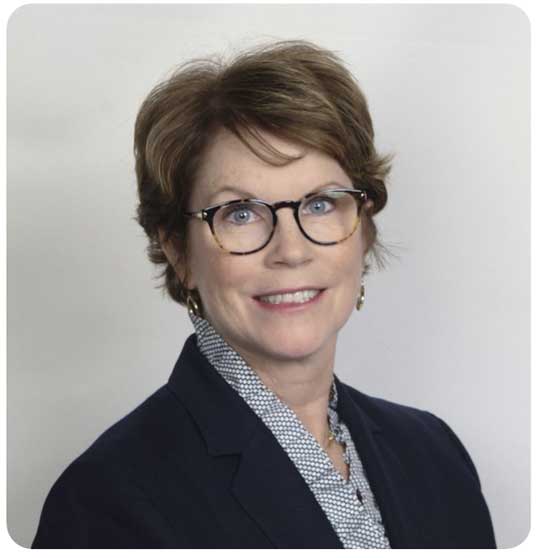
 Coasting has never been Sheila O’Donnell’s style. Even in retirement, she remains deeply invested in the healthcare technology management (HTM) field, where she spent over three decades – including nearly 10 years at Crothall Healthcare.
Her path to HTM, however, was anything but routine. O’Donnell began her career focused on supply chain issues, rising steadily at the University of Virginia to become associate director of materials management. Along the way, she deepened her expertise with coursework in purchasing and material management – earning the coveted Certified Purchasing Manager credential. Never one to stand still, she later returned to her alma mater, James Madison University, to complete an MBA and strengthen her leadership acumen.
That same curiosity proved invaluable at Crothall, where she served as senior vice president of the technical resources group. Her reach was broad – touching everything from quality and informatics to cybersecurity and capital planning. Under her watch, the company earned ISO 13485:2016 recertification – a key benchmark for medical device organizations.
O’Donnell became known for her high standards and steady hand. But it was her guiding philosophy – evolve or fall behind – that truly defined her leadership style.
Cronthall Healthcare
DRIVING INNOVATION THROUGH IT
That mindset served her well as she navigated the evolution of HTM. “One of the coolest things in the last 10 years has been seeing the rapid evolution of IT needs in HTM,” she says.
During O’Donnell’s tenure at Crothall, many HTM departments moved away from block-and-tackle CMMS platforms and adopted smarter systems – tools that did more than track work orders. These platforms supported real-time dashboards and deeper analytics into equipment performance, repair history, and service costs. Watching the transformation unfold, she says, was both exciting and rewarding.
“Clients’ demand for data transparency has pushed the industry to improve real-time data quality,” O’Donnell says. She likens it to a patient medical record: “We must enter data into the system on time, ready for instant consumption by our clients. Now, clients can have even greater confidence in their clinical engineering team, as real-time dashboards show exactly how their program is performing.”
Artificial intelligence, she believes, will push things even further – predicting system failures, fine-tuning labor needs, and driving smarter purchasing decisions.
“It’s an exciting new world,” she says.
THE BIGGEST SURPRISE IN HER HTM CAREER
Also exciting – and surprising, O’Donnell says – is the growing adoption of ISO 9001 and ISO 13485:2016 standards, which she views as a major force reshaping healthcare. These quality management systems have significantly reduced medical device risk and improved patient safety – cutting defective part rates for imaging equipment from double digits to under 2%. To O’Donnell, that shift stands out as the most unexpected innovation of her career.
TRANSFORMING TEAMS THROUGH LEADERSHIPWhile technology transformed HTM, O’Donnell’s leadership proved just as critical – especially early in her career, when she was tasked with rebuilding a team plagued by years of instability. With morale low and an internal bet she wouldn’t last two years, she took a methodical approach. In her first 90 days, she focused on understanding the team’s challenges, then launched a three-pronged strategy built on client service, team building, and operational excellence.
“I started with planes, trains, and automobiles,” she says, “trying to learn everything that I could.”
At the heart of her plan: hiring “wow” candidates – the kind who made interviewers stop and say, “Wow, this person brings something special.” But mapping out a plan with her team made the biggest difference. “I’ve always found that the more you share and discuss with your teams, the better buy-in and support you’ll receive,” O’Donnell says. “The financial performance modeled the results of the improvements in the other areas.”
Two years later, the team had reclaimed its spot as a top performer.
ADVICE FOR THE NEXT GENERATION
O’Donnell’s advice to rising HTM leaders is simple but powerful: stay curious, stay informed, network widely, and never stop learning. “Think positive,” she adds. “That’s the No. 1 thing that opened doors for me. Have a ‘can do’ attitude!”
She emphasizes that while AI can synthesize information, human strengths – like communication, emotional intelligence, and a relentless focus on quality – remain the bedrock of leadership.
One of the most important – yet often overlooked – skills, she says, is the ability to present ideas with clarity and conviction. “I actively sought out opportunities to present and sharpen my abilities, always welcoming feedback from my peers,” O’Donnell says. “And my peers encouraged me because they knew that improvement comes from practice.”
Throughout her career, she invested in sharpening those communication skills – training with Dale Carnegie, Toastmasters, and Ty Boyd. “The ability to tell a story that moves teams to action is critically important,” she says. Strong presentation skills, she believes, are one of the biggest differentiators in leadership – and something AI can’t replicate.”
“Seize the opportunity to develop this essential skill,” she encourages the next generation.
Grounded in curiosity, operational discipline, and powerful storytelling, Sheila O’Donnell continues to raise the bar in healthcare operations – bringing energy, insight, and innovation to every chapter. Even in retirement.
Editor’s note: O’Donnell continues to also serve on the AAMI Foundation Board of Directors. She shared more about this for the AAMI Foundation newsletter.
