



By K. Richard Douglas
Answering the call of duty and serving the U.S. in any branch of the Armed Forces is a commitment that deserves respect. The same can be said of people who commit to being a bone marrow donor. Although the latter does not hold the certainty of participation that enlisting in the military does, it is a selfless act meant to benefit others.
Some people make a commitment to military service and others make a commitment to registration with a bone marrow registry.
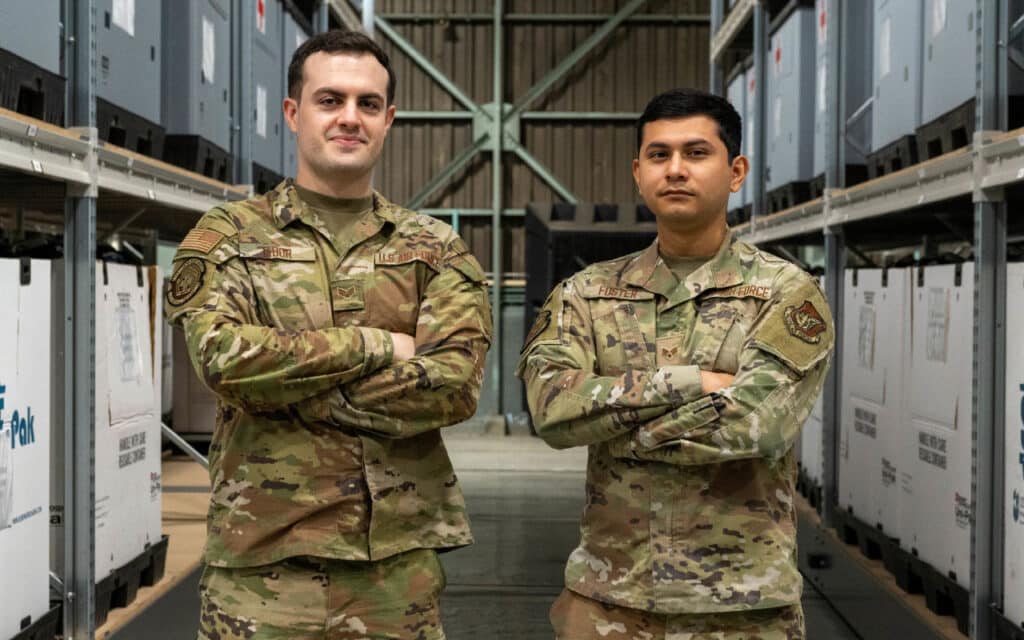
Yet a story about an Air Force biomed, which appeared in the Public Affairs news publication for Yokota Air Base in the western Tokyo area of Japan, described the experience of one Airman’s experience donating bone marrow.
The base serves as both a Japan Air Self-Defense Force and United States Air Force Base and is home to the 374th Airlift Wing and the 374th Medical Group.
Senior Airman Nikko Foster, an Air Force biomed with the 374th Medical Support Squadron, stationed at the Yokota Air base, attended the Medical Education and Training Campus (METC) at Fort Sam Houston in Texas for his biomed training.
One day, while leaving a class, he encountered a registration table for an organization called “Be The Match,” which registers people as potential bone marrow donors.
Biomeds know that their work is helping people, maybe even saving lives, so it wasn’t a stretch to understand why Foster signed up. At the time, one of the personnel with Be The Match took a swab from the inside of his cheek. This cheek cell sample allows clinicians to determine a tissue type.
Bone marrow donations have the potential to save lives. The donated stem cells can offer hope to persons afflicted with forms of blood or lymph system cancers or other life-threatening diseases.
Because Foster’s job in the military could have him stationed almost anywhere, he listed his sister’s phone number on the application. Foster completed the paperwork and then went on his way.
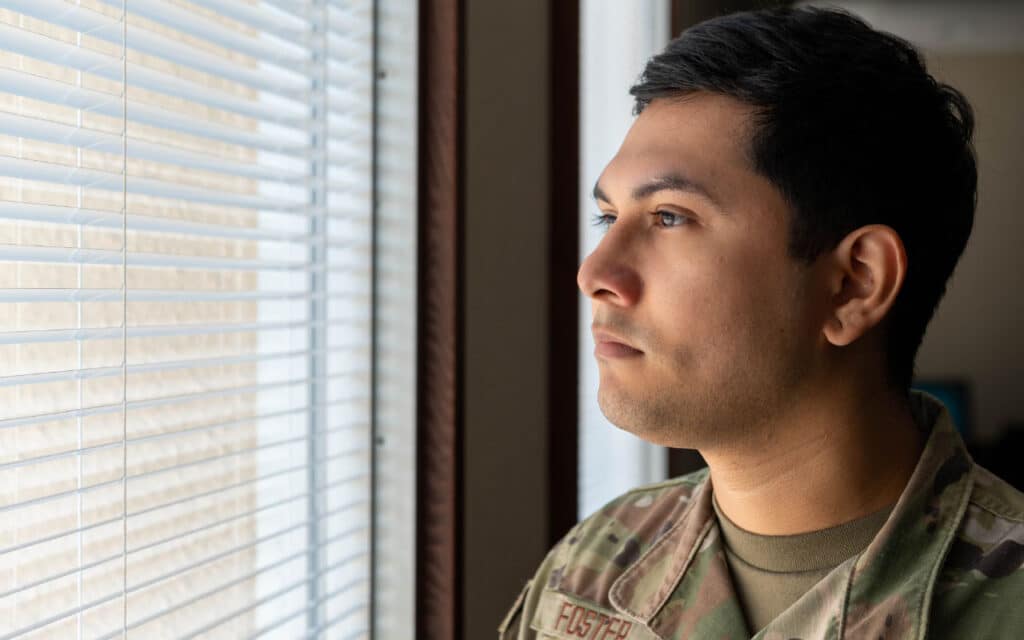
In January, Foster received a call from his sister. He had nearly forgotten about the bone marrow registration that he had completed two years earlier. His sister informed him that he had been selected as a transplant candidate.
In real terms, what this means is that there was a match for human leukocyte antigen (HLA), the protein that is used to match patients and donors for blood stem cell transplants. The majority of patients do not have a fully matched donor in their own family. The match is not made based on blood type.
Healthy blood stem cells have the power to cure diseases like leukemia, sickle cell disease, multiple myeloma, severe aplastic anemia, lymphoma and other diseases.
Traveling to Texas
After receiving the notification, Foster had about a month to prepare, which required flying back to the U.S. He first had to visit a doctor to ascertain that he was healthy enough to make the donation and then he booked a flight to San Antonio, Texas.
Although complications associated with the procedure are rare, the Be The Match organization suggested that Foster have someone accompany him on the trip. Foster took one of his fellow biomeds, which would also give the co-worker the opportunity to visit with family.
The process was going to take five days. In preparation, Foster had to go to a clinic to receive shots of a drug called filgrastim. This is a drug that stimulates the growth of blood-forming cells. The drug can have side-effects in some cases, that include bleeding/bruising, blood in the urine, elevated heart rate, fever, back pain and some others.
The blood-forming cells, peripheral blood stem cells (PBSC), are then removed from the blood via an IV in one arm, which is passed through a machine that separates out the cells, and then the blood is returned into the other arm.
After Foster received the injections, he and his co-worker were able to explore San Antonio and enjoy some American food.
When all injections were completed, Foster and his co-worker went to the location for the procedure. In his words, it was a “large, circular room with sunlight gently filtering through the window shades, creating a surprisingly cozy atmosphere.”
Foster, his co-worker and a nurse were the only ones in the room and the nurse brought them some breakfast tacos. The procedure took four hours, but can take up to eight.
The PBSC donation procedure can cause headaches or bone and muscle aches, as a result of the filgrastim, and these will fade within several days.
Foster says he would do it all again without hesitation. He is grateful for the chance to help someone, although he may never know who that person was. It is like enlisting in the military; you don’t always know all the people you are helping.
Be The Match can provide a kit to interested parties to swab the inside of their own cheek. The swab kit can be ordered online. The swab can then be dropped in the mail. Your HLA type will then be added to the donor registry. You will then be contacted if there is a match to a patient in need. As in Foster’s case, you may be contacted two or three years later.
For more information, visit BeTheMatch.org.
