



K. Richard Douglas
Turning a wrench is a lifestyle choice. It can mean many things, but it always involves hand or power tools, a knowledge of using tools and repair, maintenance or modification techniques and the foresight to complete a project.
Wrenching on a project car or on a medical device both mean that knowledge and tools collide in the hands of a skilled technician or mechanic. Something of value will result because of the effort.
In the world of car enthusiasts, there are projects meant to restore, modify, upgrade or enhance the vehicle. Whether the project is restoring a salvage car to pristine condition, increasing the horsepower of a daily driver or building a car for the track, there are skills, parts, tools and experience that all come into play.
Andrew Gutierrez, MBA, CBET, a clinical engineering technician in Stockton, California, understands the enthusiasm and wrenching skills needed to achieve a transformed and unique project vehicle. He also has the hands-on experience.
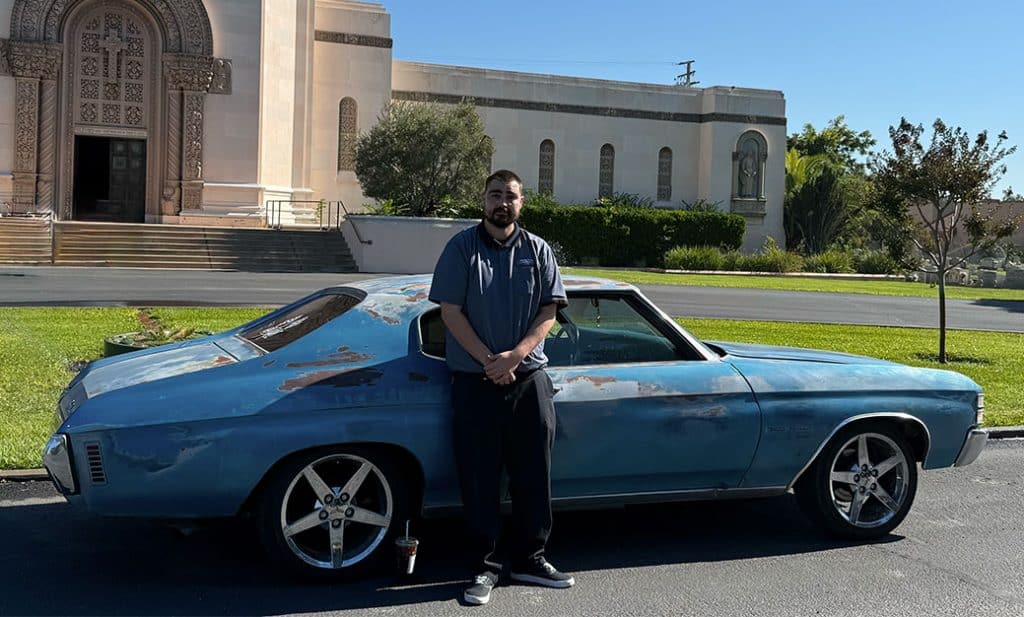
Gutierrez has been working recently on two project vehicles, a 1971 Chevelle and a 1951 Chevy classic truck. He has very specific future plans for the two project vehicles.
“My two vehicles are for my two boys, Andrew Jr., who is six and Nikolai, who is five. I have them help me do little things to get their problem-solving gears turning and ask questions,” he explains.
Since the boys will not be able to slide behind the steering wheels for at least nine years, are they excited about their future rides? What if they turn 16 and decide they want a Hellcat instead?
“My sons absolutely love the time we spend on these builds. For them, it’s not just about the car – it’s the bonding, the learning and the lessons about patience and hard work. Even if someday, they want a Hellcat, the foundation we’ve built together won’t change. They’re learning that these projects are more than machines; they’re quality time and life lessons,” Gutierrez says.

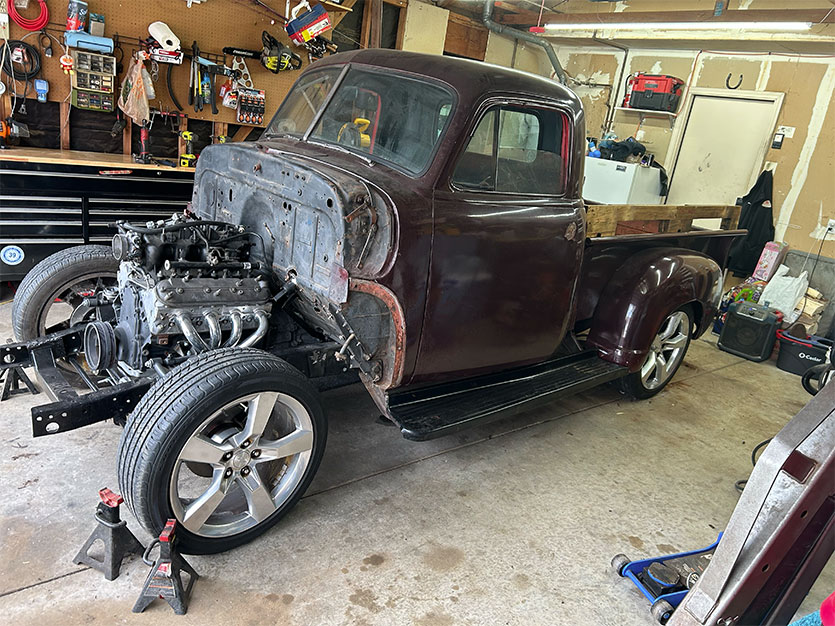 He says that the old truck brings back some childhood memories.
“This truck was chosen because when I was little, my dad had an old one similar to that. I could see through the floorboards, and I remember cruising with him as a kid,” he says.
The Chevelle is a vehicle that Gutierrez wanted since he was young.
“This car was a dream project as a kid. I’ve always loved the aesthetic and performance of muscle cars, and I wanted to create something that embodies speed, power and nostalgia,” he says.
The two project vehicles have already received nicknames from their future owners.
Andrew Jr. named the Chevelle “oralleys” because Gutierrez would take him all the time to the store for parts. Niko named the 1951 Chevy truck “Bubba G.”
Gutierrez embraced the hobby of working on cars many years ago.
“I really got into cars when I was little. My dad worked with me in the garage, and those early moments of wrenching together really stuck with me. That foundation shaped everything that came later,” he says.
These two projects have not been Gutierrez’s first.
“My very first big project was an LS swap into a 1957 Chevy pickup, just like my dad had. That build was special because it connected me back to him,” he says.
Interestingly, it was not working on cars that led to the biomed profession for Gutierrez. It was the other way around; his ability to work on fabricating frames, working on engines and transmissions and brakes all came out of his healthcare career.
“Honestly, I credit my career in biomed for that. Working in healthcare technology management taught me how to diagnose, repair, and fabricate – just in a different setting. Those skills translated directly into cars,” he says.
The vehicles have had a chance to dazzle local car-lovers. Gutierrez says that he took the Chevelle out to participate in the Modesto, California Graffiti Night Parade. He says it was a highlight of owning the car so far.
The vintage pickup truck is a mix of restoration and customization.
“The plan is to maintain the exterior’s classic lines but upgrade the engine to Gen 3 LM7. The suspension is Mustang II in front and rear four-link and the interior is from Range Rover,” Gutierrez says.
With the addition of the more modern engines, Gutierrez used engine-mount kits as well as reinforcing the older frames, not designed for modern torque.
T-SHIRTS AND A PUZZLE BOOK
In addition to his ability to wrench and restore classic vehicles, Gutierrez also has created a biomed crossword puzzle book and sells biomed/HTM T-shirts.
He says that the inspiration for coming up with a biomed crossword puzzle book came from wanting to give back to the HTM and biomed community.
“I didn’t know what to do, so I looked up a lot of biomed questions, and one day, it clicked. It was a real learning curve. I had to figure out how to navigate AI for the illustrations, and then piece together everything into a full book. It became more than just puzzles – it turned into a creative project that honored the biomed community,” Gutierrez says.
He says that the biomed T-shirts were created as part of Biomed Apparel, a brand he developed to celebrate the HTM field and give professionals something fun, meaningful and stylish.
“Some proceeds from select designs support related causes – i.e., cancer charities when tied to oncology-related themes,” Gutierrez says.
He said inspiration for the design of a new T-shirt comes directly from his day-to-day experiences as a biomed.
“Every work order, every repair, every perspective I see in the hospital sparks ideas. And I think about how it would connect with all healthcare workers; not just biomeds. That’s how I build designs that really resonate,” Gutierrez adds.
His design themes include slogans such as: “Biomed: The Backbone of Healthcare,” “HTM: We Keep It Running So They Can Save Lives,” and “Built for Techs. Powered by Purpose.”
“Each piece is carefully themed – from maternity tech to ESUs, pumps and lab departments – to ensure it resonates with professionals in that area,” Gutierrez says.
While the T-shirts, biomed puzzle book and car projects are all in his off-hours, Guttierrez says that his work involves repairing, maintaining and ensuring hospital equipment works safely so clinicians can save lives.
Several years from now, two high-schoolers in California might have the coolest cars of any of their friends. And, if either one drives a Hellcat instead, they will at least have spent some immeasurably important time with their dad.
