


A shortage of qualified biomeds is a major obstacle for the nation’s health care industry as more and more HTM professionals earn retirement status. A tidal wave of support for the HTM career field can be seen in trade publications like TechNation as well as on various social media accounts maintained by HTM experts throughout the nation and world. However, the need for an educated hiring pool remains.
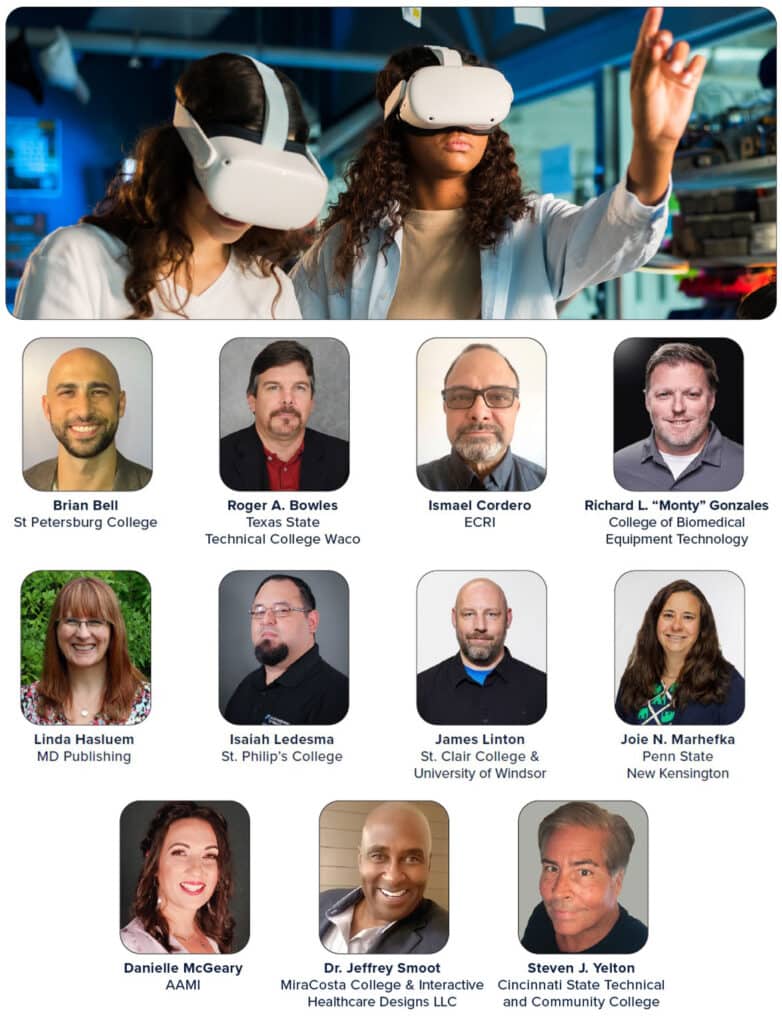
TechNation looks at HTM education in this month’s Roundtable article. Several experts took time to share their insights and offer tips. Participants in the article are:
- Brian Bell, Ph.D., faculty of biomedical engineering technology, St Petersburg College;
- Roger A. Bowles, professor-biomedical equipment technology program, Texas State Technical College Waco;
- Ismael Cordero, senior project engineer, device safety, ECRI;
- Richard L. “Monty” Gonzales, Ed.D., president, College of Biomedical Equipment Technology;
- Linda Hasluem, webinar coordinator, MD Publishing;
- Isaiah Ledesma, CBET, faculty instructor, biomedical engineering technology, St. Philip’s College;
- James Linton, MiM, PmP, Cmbb, AAMIF, professor/coordinator, biomedical engineering technology at St. Clair College and Sessional instructor at the University of Windsor;
- Joie N. Marhefka, Ph.D., biomedical engineering technology program coordinator, Penn State New Kensington;
- Danielle McGeary, vice president of HTM, AAMI;
- Dr. Jeffrey Smoot, professor of biomedical technology at MiraCosta College and CEO of Interactive Healthcare Designs LLC; and
- Steven J. Yelton, P.E., AAMIF, professor emeritus, Cincinnati State Technical and Community College.
Q: What degrees/programs are available for someone interested in an HTM career?
Bell: Some degrees/program available are:
- Certificate in Medical Equipment Repair
- Certificate in Medical Device Design and Manufacturing
- Certificate in Medical Device Networking and Cybersecurity
- A.S. Degree in Biomedical Engineering Technology
Bowles: At Texas State Technical College, we offer an Associate of Applied Science Degree in Biomedical Equipment Technology and an Associate of Applied Science Degree in Medical Imaging Systems Technology.
Cordero: There are several educational paths to suit a variety of HTM career goals. Key undergraduate and graduate degrees include biomedical engineering, healthcare technology management, clinical engineering, and healthcare information technology. Advanced studies, such as master’s degrees in these fields, and certifications like Certified Clinical Engineer (CCE), Certified Healthcare Technology Manager (CHTM), and Certified Biomedical Equipment Technician (CBET) are also important.
Gonzales: Degrees and programs available for someone interested in an HTM career include Biomedical Equipment Technology (BMET) and Healthcare Information Systems Management (HISM) certificate and degree programs like those offered at the College of Biomedical Equipment Technology. Experienced professionals from other industries and the military with transferable skillsets also have tremendous opportunities in this field. While there are other educational pathways in HTM, it is crucial that any academic program closely aligns with the industry to ensure that technicians are equipped with the skills demanded by the industry. As I like to say, “There can be no light between the education delivered and the industry skills demanded of new technicians.”
Hasluem: Here at TechNation, we offer free education through our Webinar Wednesday series covering a wide range of subjects from electrical safety workflow to cybersecurity. All of our webinars are eligible for 1 continuing education credit from the ACI.
Linton: At St Clair College, we offer a 3-year associate degree also known in Canada as an advanced diploma. After completion of this associate degree or any 3-year BMET educational program, a student with a “B” or better average may then enroll at the University of Windsor in the Bachelor of Engineering Technology-Biomedical Stream. Outside of this, there are a pair of two-year BME technician programs in Canada, in the USA there are apprenticeships, 1-year, 2-year and 3-year training options.
Ledesma: The degrees I have seen available now for someone interested in the HTM career field are associate degrees and certificates. The colleges offering these types of degrees have programs all across the nation and a quick search will place anyone at the front door of a new, exciting career.
McGeary: There are currently 60 HTM specific degree programs in the United States. Many are two-year biomedical technology degrees for those interested in pursuing a career as a biomedical equipment technician and there is also a master’s degree program in clinical engineering at the University of Connecticut for those who want to pursue the clinical engineering side of the HTM field. Additionally, AAMI offers a BMET apprenticeship, which is a two-year hybrid program that combines on-the-job learning with formal learning. It is a great alternative and pathway into the field for those who college is not an option for.
Smoot: If someone is interested in pursuing a career in HTM there are different avenues available for them. On-the-job training (which I do not recommend because of lack of foundational knowledge), certificate program, associate degree, bachelor’s, master’s, Ph.D. Associate degrees are the more popular because when the HTM community was developed junior colleges developed the curriculum.
Q: What are important factors to consider when looking for HTM education?
Bell: When I suggest or recommend programs in HTM – here is what I look for:
- Partners with industry (i.e. local health care organizations, manufacturers and third-party service providers) so that you can have a great entry point into a work experience or internship
- Provides opportunities for hands-on learning. In other words, “Do they let you use medical devices and test equipment that real biomeds use?”
- Includes courses in networking and computer repair as part of the degree. These are great skills that often set you apart as a top candidate.
Bowles: A candidate should look for an established program that provides hands-on training provided by instructors who have served time as technicians in the career field. Also, the degree should be accredited by one of the regional accrediting organizations so that it is easier to transfer credit in the future to a four-year university. Some technicians will want to pursue a four-year degree to advance their careers into management positions. Many universities allow block transfers of technical credits, as well as some academics from accredited two-year schools.
Cordero: Ensure that both the institute and the program are accredited. Look for comprehensive programs covering medical device technology, healthcare IT, regulatory compliance and clinical engineering. Select programs with robust hands-on training, internships and simulation labs. When I obtained my degree, I did not get much support or assistance from my university in landing my first job in the field. I recommend looking into the institution’s job placement services and its track record in finding jobs for its graduates.
Gonzales: When looking for HTM education, important factors to consider include return on investment and career potential, by examining the career services and placement rates of the institution to determine ROI. Additionally, students should consider the anticipated skills and competency level that will be acquired upon completing the program. It is crucial for students to select a program that is closely aligned with the job they are seeking, as not all programs are equal in preparing students for their desired career path. Students should also ensure that the program offers strong career services to support job placement requirements and carefully examine the organization’s reputation to determine if it is the right fit for them.
Hasluem: 1. Reputation – This year Webinar Wednesday is celebrating 10 years of providing up-to-date information on products and services to the HTM industry, and over the years has built up a reputation that the industry can rely on.
2. Cost – Our webinars are free!
3. CE credit
4. Convenience – you can view our live and on-demand webinars without going anywhere.
Linton: The most important thing to consider is how many courses are being taught by people who have actual biomedical experience. Outside of this, it is good to consider the rate of graduate employment, professor/school connections to industry, school reputation, do you get along with the professors (seriously go to an open house and have a chat!), the variety of equipment they have to work on, the variety of career paths they will expose you to (dialysis, general, imaging, management, cybersecurity, etc.) are just some of the things to look for. Some things to avoid would be programs with low job placement rates, instructors who can “do” but not teach, places that are too easy (diploma mills), anywhere that professors are condescending, places where professors left the industry long ago and are not active in the biomedical community and can’t tell you of any upgrading they’ve done. In the age of “Google” there’s no reason to not do the research and even reach out to look for a fit/match. Picking a place to get HTM/BMET education from should be treated like when you’re looking for a job.
Ledesma: Some important factors to consider when looking for HTM education are delivery methods such as in-person, online, synchronous, and asynchronous as well as location and cost. There are many colleges across the nation that may be in a city near someone interested in the HTM industry. There are programs and resources for individuals who may not have the means to travel, but still want to change career fields to HTM.
Marhefka: I still feel that a hands-on component is important in HTM education. I recommend a program that has good connections for internships. I also recommend that, if you are looking at a certificate or associate degree program, you look for one where the credits will count toward a bachelor’s degree, should you decide to pursue one later.
McGeary: It’s important to find a school that offers a forum of education that works for you. With the advent of so much virtual education, it’s important for the student to determine if they learn better in a traditional brick and mortar setting or in a virtual one.
Smoot: Some of the main factors to consider (no particular order):
- Who are the instructors for the BMET subjects and have they worked in a hospital?
- Site visits
- Understanding test equipment: electrical safety analyzers, patient simulators, defibrillator analyzers, etc.
- Troubleshooting of systems and equipment.
- NFPA 99
- The attitude and temperament of the HTM pro.
- Foundation for entry level BMET jobs.
Yelton: The successful student will have a passion for electronics, mathematics and science and will enjoy working in the health care environment.
Q: What are the latest trends in HTM education?
Bell: Three trends in HTM education are:
- Blended/hybrid education models that allow students more flexibility for classroom delivery. For example, a class may have both in-person labs and online activities. Reducing driving and costs for students while maintaining hands-on medical device lab activities.
- Innovative Digital Experiences – for example, NVRT labs virtual reality modules for BMETs, increasing number of industry driven content from YouTube to podcast.
- Colleges collaborating with high schools to offer certificate and degree options for students in high school.
Bowles: Virtual technology in training. I like the idea. First, especially in areas like ultrasound, it allows students to perform complex tasks without disassembling an actual machine. Second, it opens up recruiting opportunities.
Cordero: The dynamic nature of the HTM field requires professionals who are not only technically proficient but also adaptable to new technologies and regulatory environments. Educational programs are starting to cover technological integration with courses on Artificial Intelligence (AI), Internet of Medical Things (IoMT) and cybersecurity. Educational programs are also combining biomedical engineering with health informatics and business management, emphasizing eco-friendly practices and understanding global health issues and standards.
Gonzales: The latest trends in HTM education include the integration of information technology, cybersecurity, and medical device integration as essential skills for biomedical equipment technician competency. We also see a broad recognition of the importance of critical skills such as effective communication and customer service skills in the field. Additionally, there is an emphasis on a competency-based approach to education and training, with employers prioritizing skills mastery over the time spent obtaining education. Lastly, we support ethics training as a valuable component of education, especially given the rapid advancements in technology, including Artificial Intelligence (AI), and other revolutionary changes shaping the HTM career field.
Hasluem: New Tools of the Trade product demos, where attendees can see a product being demonstrated live, are very popular, as are our podcasts series – again free to register and CE eligible. Our Tools of the Trade product demos launched in May of 2023.
Linton: The increasing demand for people skills! Yes, the hot thing to say right now is teaching about AI and cybersecurity (which we do), but truthfully teaching those are fair easier than people skills such as learning how to “put out a fire” with a customer. On the job, one can always learn and improve cybersecurity/AI knowledge but if a new grad screws up with a lack of empathy, emotional intelligence, communication skills or confidence then they are done for. Due to this, the latest trend I believe, is that schools need to recognize the need for non-technical skill training as well to complement it. One way we do this is by replacing exams with in-person scenario training that puts students “in the OR with a frantic surgical staff” or similar.
Ledesma: The latest trend in HTM education is bringing the cybersecurity process into our industry. With a vast amount of medical equipment being put on hospital networks, HTM professionals need to know how to help install, secure and defend against bad actors. We are considered to be on the front line and continue to further bolster support and help in securing patient information.
Marhefka: Content-wise, I think networking and communication are current topics being emphasized. VR/AR and AI are technologies that are being incorporated into education.
McGeary: VR is a major new trend in HTM education. The advent of VR education in HTM now allows students to learn technical concepts anywhere really enabling schools to expand their reach.
Smoot: Home health, artificial intelligence in health care, remote diagnostics (patient and equipment), sensor technology, VR/AR training and troubleshooting.
Yelton: HTM education generally includes a mix of live and remote education and some of the latest trends include the use of virtual reality or virtual augmentation.
Q: How can HTM professionals obtain continuing education?
Bell: Three ways to stay educated in HTM are:
- Local biomed associations (i.e. Florida Biomedical Symposium, North Carolina Biomedical Association’s Symposium, CABMET 2024 Symposium)
- National conferences (i.e. AAMI eXchance and MD Expo)
- Biomed content creators (HTM On The Line, BeardedBiomed, HTM Workshop, TechNation TV)
In addition, if you can find someone within your organization you trust who has more experience that you, ask them to mentor you and teach you what they have learned.
Bowles: Attend as many in-person events like MD Expo and the AAMI eXchange as possible. Take advantage of webinars and online certification programs.
Cordero: Continuing education is essential for HTM professionals to stay current with the latest technologies, regulations and industry best practices. Several ways HTM professionals can obtain continuing education include professional certifications, online courses and webinars, vendor-specific training, conferences and workshops, and local and regional professional society events. Attend events like the Association for the Advancement of Medical Instrumentation (AAMI) eXchange and HIMSS Global Health Conference for learning and networking.
Gonzales: In today’s educational landscape, it is a mistake to categorize education levels based on traditional 2-year and 4-year concepts as they no longer accurately reflect the reality of modern academic paths. Instead, students and employers should consider the anticipated competency and skills-based metrics associated with educational programs. For example, one can attain an associate degree in about a year and a bachelor’s degree in approximately three years in many cases, rather than the traditional 2 and 4-year timelines. The critical factor is ensuring that the academic pathway chosen aligns with the individual’s professional ambitions and trajectory. It is beneficial for students to pace their education and career growth by earning certificates or associate degrees, gaining industry experience, and then determining their next steps towards further education. Aligning academic and professional growth is essential in today’s dynamic job market and evolving educational landscape.
Hasluem: Visit our website webinarwednesday.live, where we have a calendar of all our upcoming webinars, including Tools of the Trade demos and podcasts, plus we have an archive of all our podcasts and past webinars, where you can still obtain a CE credit for webinars broadcast within the past calendar year. Click. Watch. Earn – easy as that!
Linton: Continuing education is what keeps us all from becoming dinosaurs in the industry and as a HTM educator I am always at risk of this. I combat it by taking BME webinars, being an active member of BME communities such as AAMI and always looking for new training opportunities specifically in newer areas such as AI integration into medical devices and digital health. Since HTM is multidisciplinary it’s important to always look just outside the “normal” HTM realm as well to keep on the cutting edge. For example, following and taking education from CHIME for digital health items that may be more IT related but have a place in HTM as well.
Ledesma: HTM professionals can attend TechNation’s expos and online webinars to help in their pursuit of continuing education. In addition, AAMI offers additional online webinars/resources and does host a conference to bring HTM professionals together. A majority of the colleges offer additional degrees, certificates, enhanced skills awards, and occupational skills awards to provide HTM professionals the opportunity to specialize in particular health care modalities.
Marhefka: There are so many ways to obtain continuing education. Some options include taking a college class, pursuing a bachelor’s degree (or advanced degree), obtaining a certification (such as CBET, CRES, CHTM, or a networking certification), attending conferences such as AAMI eXchange or MD Expo, participating in webinars on relevant topics, and reading technical publications.
McGeary: A two-year degree is a great entry point into the field. However, if folks want to move up into HTM managerial positions or hospital administration roles, they will eventually need to go back and get at least a four-year degree.
Smoot: There are several ways to obtain continuing education but the HTM professional has to decide what path they desire. One of the ways is through local chapter meetings that have continuing education unit (CEU) certified presentations. Another way is through regional and national conferences where CEU classes are presented. MD Expo is a fantastic way of obtaining CEUs.
Yelton: HTM professionals are encouraged to continue their education in several ways. They may pursue live or remote education with local colleges and universities as well as through continuing education with organizations such as AAMI.
