This month, TechNation magazine asked HTM insiders to share their expertise regarding tool kits, cases and carts. These are often overlooked pieces of equipment that can play an important role when it comes to the efficient maintenance and repair of medical devices.
Participants for this discussion are:
• BC Group International Director of Business Development Justin Barbour;
• Pronk Vice President of Business Development Greg Alkire; and
• Southeastern Biomedical Co-Owner Boyd Campbell CBET, CRES, CHTM.
Q: HOW SHOULD HTM PROFESSIONALS EVALUATE DURABILITY, ERGONOMICS AND INFECTION-CONTROL CONSIDERATIONS WHEN SELECTING TOOL CASES OR MOBILE SERVICE CARTS FOR CLINICAL ENVIRONMENTS?
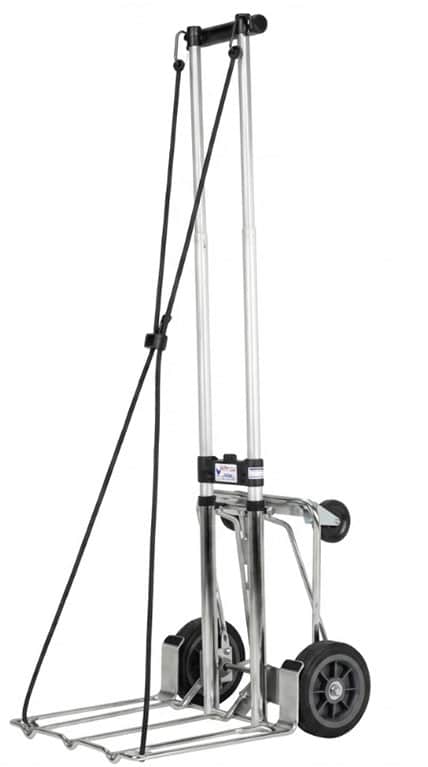
Barbour: The most important requirements of a technician’s cart are functionality, mobility and cleanability. Most modern carts are constructed from polymer materials, which reduce overall weight and provide superior resistance to harsh hospital grade disinfectants. Carts should be equipped with large diameter casters and either two-way or four-way swivel/locking casters to allow for safe and controlled movement across varied floor surfaces. To maintain infection control compliance, carts should be kept free of clutter and should not contain non-sanitizable tape, stickers, labels or adhesives that can harbor contaminants. Care should also be taken to prevent carts from becoming top heavy, which can create stability and tip over hazards. If power strips are installed, they should be inspected regularly.
Alkire: When selecting equipment, HTM professionals should require proven durability, such as drop-test verification, and the security of a multi-year warranty. Pronk meets these needs by providing high-quality, rugged solutions that have been drop tested and backed by a standard 4-year warranty. Beyond durability, our products feature a minimized footprint to limit pathogen exposure and an intuitive interface designed specifically to make a biomedical engineer’s job easier.
Campbell: As with any device – whether a hand tool or a piece of test equipment – quality is the primary consideration, and quality is not always reflected in the lowest initial cost. All of the factors discussed above contribute to what defines a quality device. First, consider the expected life expectancy, which is largely determined by the materials used in its construction. Second, do your research. Reach out to colleagues and ask for their opinions on the tools they use. Ask how the tool performs, how it feels in their hands, whether it assists them in completing their tasks, and if it ultimately makes their work easier and more efficient. When evaluating a tool kit, also consider whether the entire kit can be properly disinfected, which again is determined by the materials used.
 Q: HOW CAN STANDARDIZED TOOL KITS AND CARTS HELP HTM DEPARTMENTS IMPROVE CONSISTENCY, TRAINING AND ONBOARDING ACROSS IN-HOUSE TEAMS, THIRD-PARTY SERVICE PROVIDERS AND ISOS?
Barbour: Technicians who work on the same types of equipment should generally have similar tools and test equipment. This helps keep work consistent, improves efficiency and makes training easier. Using one universal tool kit or cart for every team is not a good practice. A patient monitoring team has very different needs than a medical imaging, laboratory or surgical maintenance team. Each group supports different devices, performs different tests and follows different procedures. Trying to make one cart fit everyone usually leads to extra weight, clutter, slower workflows and a higher chance of not having the right tools when they are needed. Tool carts and equipment setups should be built around the type of equipment being serviced and the testing requirements for that area rather than using a one size fits all approach.
Alkire: Standardization is the bedrock of scalability. When every technician opens their case to find the exact same set of compact, multi-functional tools, you eliminate variables in the service process. But hardware is only half the battle – true consistency comes from standardizing the workflow as well. The Pronk Mobilize Wireless App solution provides advanced test equipment automation with step-by-step procedures that standardize testing and service reporting to a CMMS. This transforms a tool kit from a bag of individual devices into a guided, automated tool kit solution, ensuring the service is completed with greater efficiency.
Campbell: Standardization will always make the onboarding process quicker and easier. When a technician can look at a tool kit and immediately know where everything belongs, it not only speeds up the repair process but also makes it easier to quickly determine if a tool is missing. This consistency reduces delays, improves efficiency and supports better overall workflow.
Q: WHAT COMMON MISTAKES DO HTM ORGANIZATIONS MAKE WHEN SELECTING OR DEPLOYING TOOL KITS, CASES OR CARTS – AND HOW CAN THOSE PITFALLS BE AVOIDED?
Barbour: One of the biggest mistakes management can make is giving new technicians a collection of leftover or unwanted tools. Doing so sets them up for frustration, slows their learning and can impact the quality and safety of their work. There should be at least an annual review of shop tools and test equipment to make sure every technician has what they need to support the current workload as well as the expected needs for the coming year. This helps keep teams effective, improves morale and ensures the shop remains prepared as equipment, procedures and technology continue to change.
Alkire: The most common mistake is “over-carting,” particularly when servicing large healthcare facilities or traveling to sites as it limits mobility and convenience. Investing in tool kits that are both portable and functional – able to accommodate test tools, required cabling/accessories and a laptop/tablet – will allow a technician to have everything they need readily and save time traveling between service locations.
Campbell: In my experience, the biggest mistake is failing to thoroughly evaluate a tool kit to ensure it is truly suited for its intended use. Tool kits can be purchased from many different sources, and they often differ greatly – particularly in terms of durability. Taking the time to compare materials, construction and overall build quality can prevent premature failure and ensure the tools perform reliably in real-world conditions.
Q: HOW ARE VENDORS INCORPORATING TECHNICIAN FEEDBACK INTO THE DEVELOPMENT OF NEXT-GENERATION TOOL STORAGE, ORGANIZATION AND MOBILITY SOLUTIONS?
Barbour: While they can cost more up front, custom fit tool storage solutions make it much easier to see when a tool is missing and help protect tools from unnecessary damage. Having a predictable tool load out and consistent storage locations improves efficiency, reduces wasted time searching for tools and helps minimize downtime.
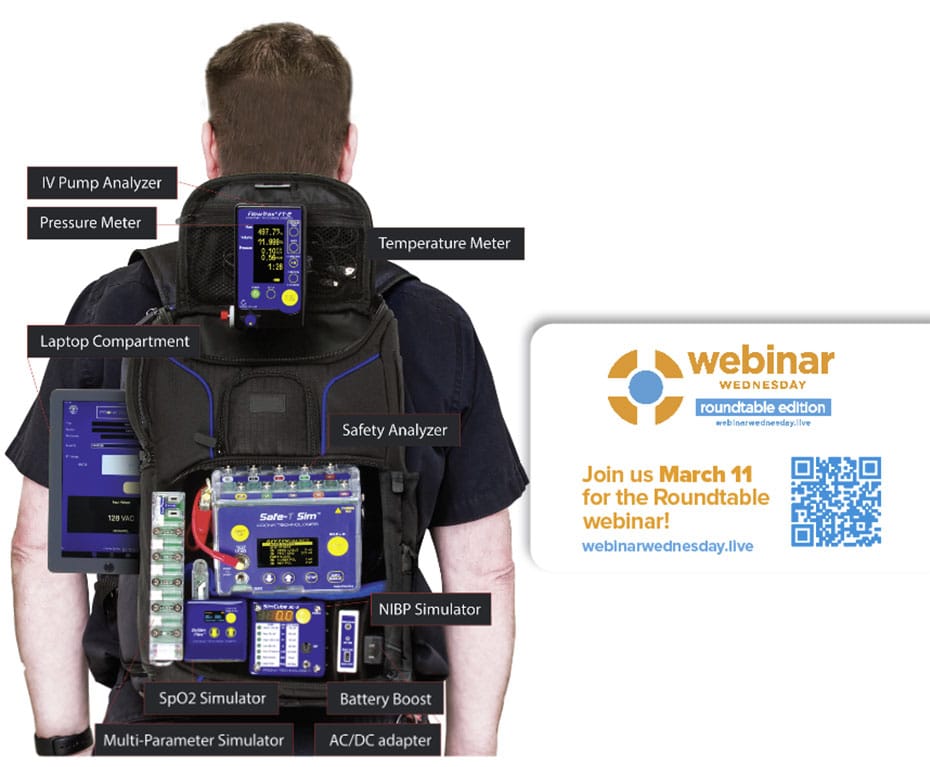
Alkire: In a field where every minute counts, an HTM professional must have their tool kit equipped and ready for a service call. Tool kits should provide flexible configurations to include everything that could be needed. This is our focus in our product offerings whether the need is a single or multi-product tailored portable tool kit or our signature BMET Pack – which organizes all your Pronk gear into a single, sub-18-pound Pack – a customer can tailor their tool kit to include the right products and all the accessories needed.
Campbell: When Southeastern Biomedical began developing tool kits, it was out of necessity. We were looking for a solution to meet the needs of our own technicians. After a few customers saw the kits being used in the field, we were repeatedly asked, “How do I get one of those?” At that point, we sent the tool kit to six different biomedical shops to gather their input. We then refined the design by listening closely to what our customers told us. When purchasing any tool or tool kit, it’s important to ask about the manufacturer’s development process and whether the voice of the customer was incorporated into the design. Tools developed with real-world feedback are far more likely to meet the demands of daily clinical use.
 Q: LOOKING AHEAD, WHAT INNOVATIONS OR TRENDS DO YOU EXPECT WILL MOST INFLUENCE HOW HTM PROFESSIONALS EQUIP THEMSELVES OVER THE NEXT THREE TO FIVE YEARS?
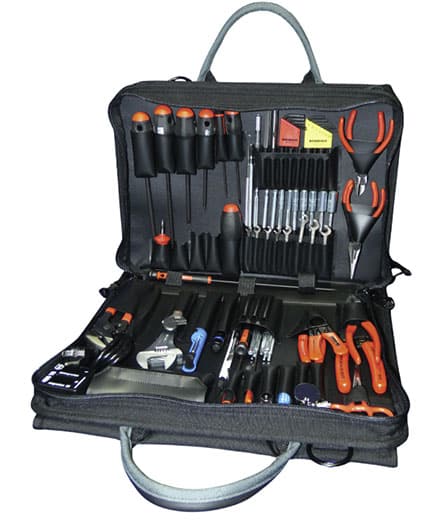
Barbour: Multi-tools and multi-use tools have made technicians more capable while carrying less clutter and weight. As expectations continue to rise, technicians are being asked to work faster and more efficiently than ever before. The days of the giant, overfilled tool bag are quickly fading. Modular tool systems such as the Milwaukee Pack Out have made it easier to tailor each response to the situation. Consumables and specialty tools can be selected as needed, organized effectively and stored until they are required, improving both readiness and productivity.
Alkire: We anticipate a continued trend towards test equipment solutions featuring advanced, user-customizable automation with seamless CMMS integration that includes live data capture directly from work orders. These solutions eliminate manual entry and reclaim critical technician time. Complementing this are portable tool kit systems that prioritize functionality and flexibility over simple tool storage, including additional support tools such as rechargeable power banks that power the test equipment and smart devices, miniaturized hand tools and interface cables.
Campbell: While hand tools will always be a staple for the biomedical technician, the most significant innovation lies in the test devices used in conjunction with those traditional tools. Companies that offer a full, integrated range of test equipment – such as testing devices designed to work together with a unified software platform – provide a clear advantage. As biomedical technicians continue to be in high demand, these types of tools will play a critical role in helping technicians perform preventive maintenance faster, more accurately and with greater consistency. Standardization across devices and testing procedures also shortens the learning curve, allowing technicians to become productive more quickly while maintaining a high level of quality and compliance.