



By K. Richard Douglas
In January of 2025, the Sanford Health system and the Marshfield Clinic Health System (MCHS) merged resulting in a large nonprofit health system serving communities in the Midwest, including Wisconsin and Michigan’s upper peninsula. The merger created an integrated health system with nearly 56,000 employees, 56 hospitals and 4,500 providers. Today, the Marshfield Clinic Health System serves Wisconsin and Michigan’s Upper Peninsula and is headquartered in Marshfield, Wisconsin.
Medical equipment management within the system is handled by the in-house Marshfield Clinic-Sanford Biomedical Services Department.
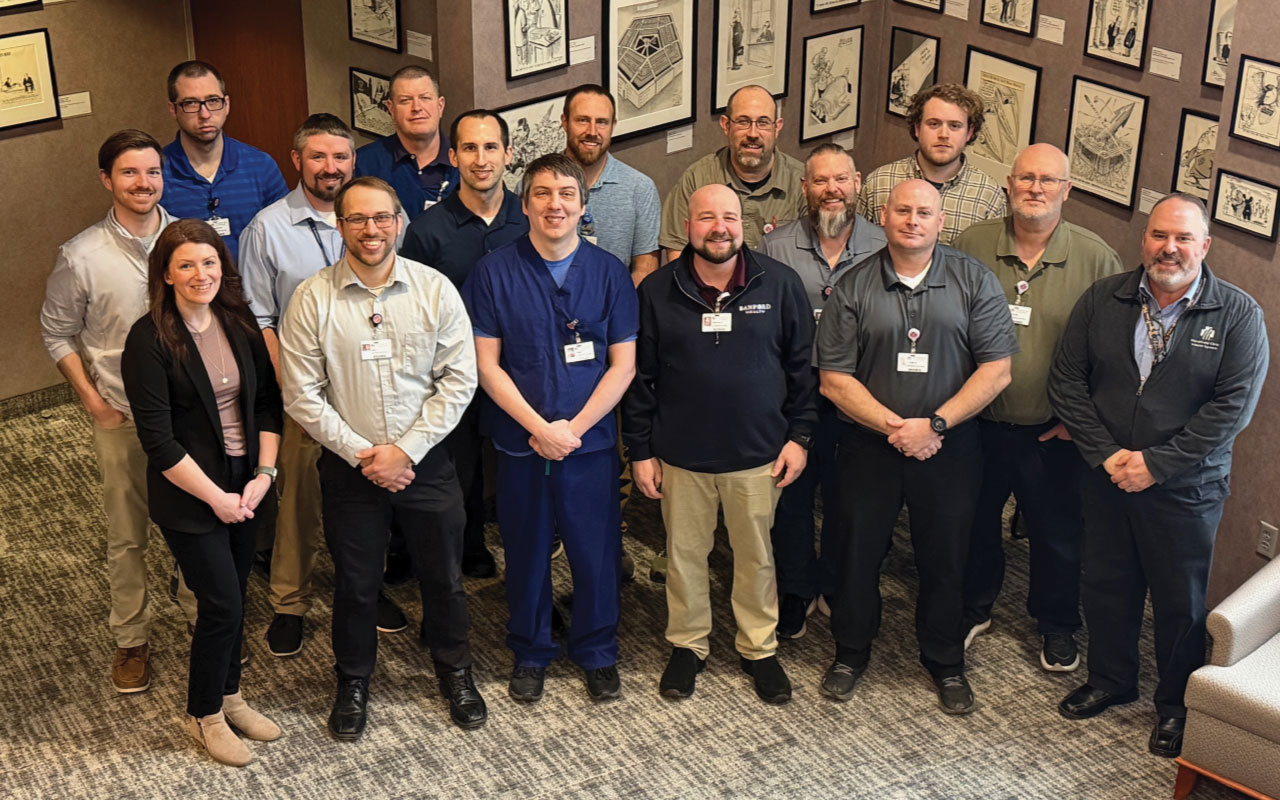
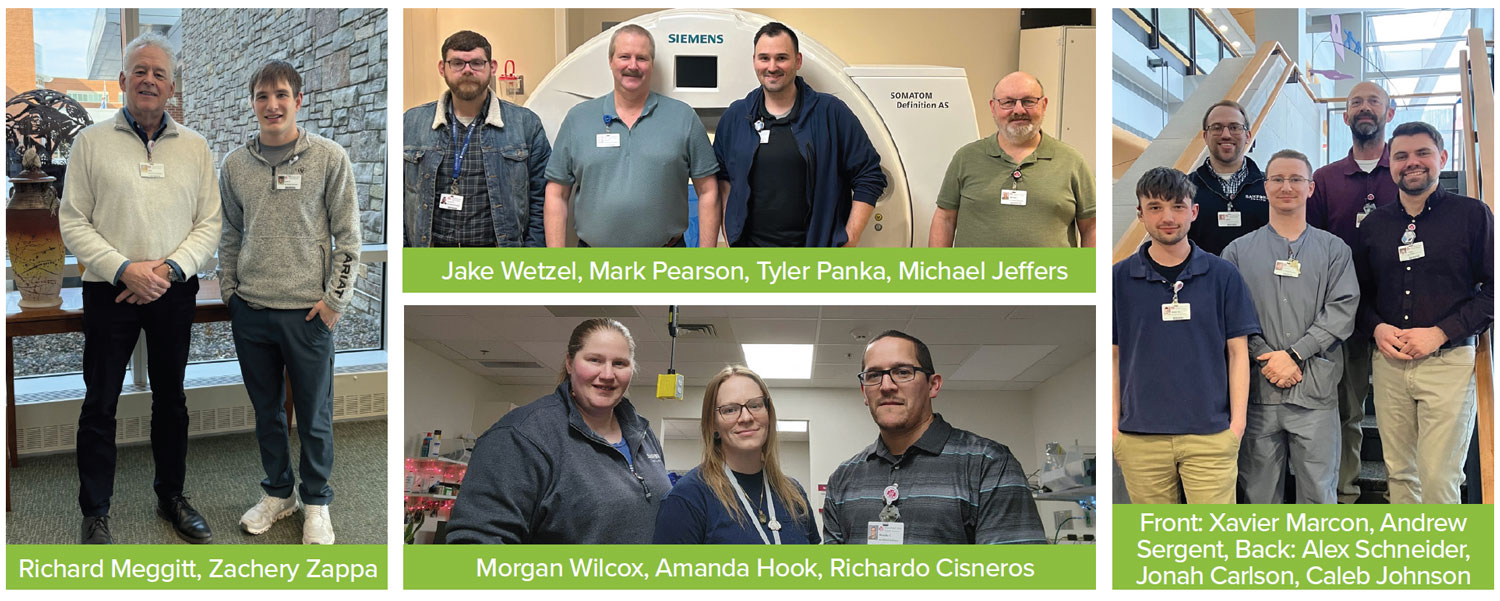
The biomed team includes 32 members located in six regional biomed shops. The team reports to Tim Eddy, director of business management office, technology solutions. The team is headed by Jay Olson, director of biomedical services.
The department is responsible for medical equipment in 12 hospitals and 59 clinics across Wisconsin and Michigan. The combined inventory includes 39,000 medical devices.
“The regional biomed team operates a central dispatch service from Monday to Friday, between 7 a.m. and 4:30 p.m. In addition to daily coverage, they offer after-hours services for urgent or emergency calls, ensuring complete 24/7 coverage. During the hours of 7 a.m. to 4:30 p.m., you can submit a web repair request or call directly, and within minutes, a work order will be assigned to an available technician,” Olson says.
He says that the team allocates a substantial budget for training and uses the funds each year to foster the success of every individual team member.
“The team offers a career progression that caters to even the most ambitious work ethic. It encompasses biomed levels 1-3, diagnostic imaging levels 1-3, lead technicians and managerial roles. With a robust training budget and an encouraging work atmosphere, it creates a pathway for long-term commitment and growth,” Olson says.
He adds that the team also collaborates with the local Northeast Wisconsin Technical College by conducting mock interviews for students, offering engaging shop tours and participating in various events.
The biomed team maximizes the use of its CMMS to gain greater efficiencies for the benefit of its customers.
“With clean data sourced from a single CMMS and standardized policies, biomed has laid the groundwork for a standardized environment of care reporting. This reporting can be tailored to reflect local trends and needs. Additionally, the clean data [has] enabled us to capitalize on system efficiencies, such as an alternate equipment management system (AEM) across the hospitals,” Olson says.
He says that one more benefit of the centralized CMMS is its impact on capital purchases.
“Biomed has emerged as a significant source of truth for assessing priorities regarding large equipment. We can compare all modalities based on age, cybersecurity risk, expenditure and utilization, thereby assisting in determining which equipment should be prioritized for replacement,” Olson adds.
He says that the cost-of-service that the in-house team has achieved is very competitive compared to third-party providers or larger biomed organizations.
“The biomed team has significant investment in managing costs effectively. The entire expenditure for the 39,000 pieces of medical equipment is overseen from a single, centrally managed cost center. This budget encompasses contracts, service events, parts and labor. The scale of this expenditure creates a sufficiently large risk pool to mitigate most time and material services, enabling a reduction in contracted services,” Olson says.
He says that the department’s unique advantage is that the savings from the risk model are retained locally and can be reinvested into the hospital’s capital requirements.
“They provide intensive training for technicians to enhance uptime, decrease service contract expenses and lower inflation costs on new equipment. All these factors contribute to the biomed team’s role in delivering the highest quality care for our patients,” Olson says.
GENERATING CAPITAL AND KEEPING COSTS DOWN
Olson says that the biomed team is consistently seeking methods to enhance operational efficiency. He says that one initiative included an equipment reuse/resale program that has recognized $374,784 in resale value and $1,743,706 in reuse value to date.
“We have centralized the management of vendor service contracts, enabling us to reduce or consolidate these contracts. The biomed program is also engaged as beta partners in uptime reporting, Glassbeam and AI development through data integration,” he says.
Off the clock, the biomed team works to ensure that those aspiring to join the HTM profession have the opportunity.
“Each autumn, the team organizes a scholarship golf outing on behalf of the Wisconsin Biomedical Association (WBA) to generate funds for students aspiring to enter the biomed field. This event not only serves as a remarkable networking opportunity but has also become somewhat iconic, with legendary stories and a rich history dating back to 2001,” Olson says.
The WBA has presented an award in the past known as the Jim Kipp Memorial Award. Kipp established the first biomedical electronics department at Marshfield Clinic in 1968. He remained the manager until his passing in 1989. He also started the WBA and was one of the first 50 biomeds to earn AAMI certification.
Olson says that the team’s biomed technicians and their families reside in the same communities they serve.
“They are committed to maintaining the equipment at optimal performance, understanding that our families might become patients in the future. The technicians also take pride in the safety and savings they contribute to ensuring our system remains robust,” he says.
The team decided to retain the biomedical services moniker because, as Olson says, it keeps them at the top of the department list alphabetically and it is just what their clinician colleagues identify them with.
With the integration with Sanford Health, the team is thrilled to be a part of the larger system and are always focused on continuing the trust and support they have cultivated with their customers.
