


By K. Richard Douglas
How does your region compare to others in the industry?
Healthcare technology management (HTM) is an industry in constant motion. Medical device technology rapidly evolves, new tools arrive, cybersecurity threats morph and compensation and staffing shift. To measure where the profession stands now – and where it’s headed – TechNation and AAMI partnered to conduct the 2025 State of HTM Survey.
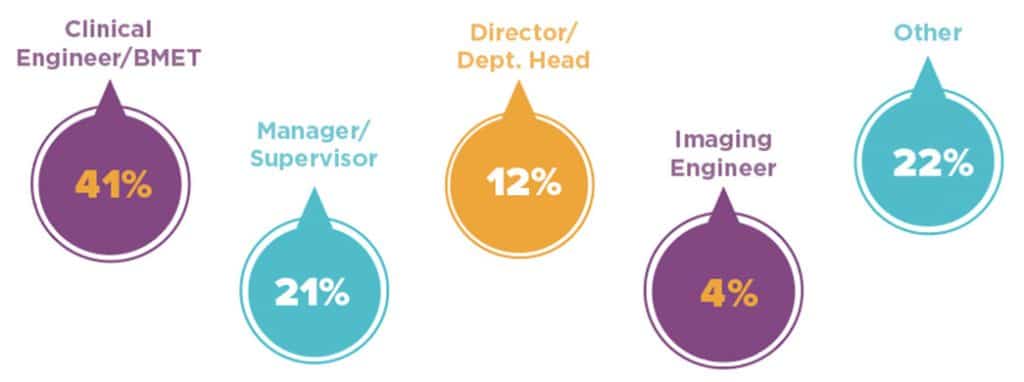
Who participated in the State of HTM Survey?
“I am truly ecstatic that our two organizations could join forces to bring this survey to life. The best leaders benchmark, and providing the field with meaningful data that can drive education and real change is one of the most important things we can do for the profession we support,” said AAMI Vice President of HTM Danielle McGeary, CHTM, PMP.
HTM has moved far beyond “break/fix” repair work. Today, the profession is tightly linked to capital planning, IT, advanced connectivity and predictive analytics.
Artificial intelligence (AI), Generative AI and predictive maintenance platforms are reshaping workflows. Intelligent systems are shifting HTM from reactive repairs to proactive, risk-based planning.
One challenge for HTM and the delivery of quality healthcare is the ongoing exodus of baby-boomers. Baby boomers and expert colleagues with decades of on-the-job experience are retiring. Right to repair and cybersecurity are additional areas of concern for biomed departments.
This change is unfolding while national healthcare spending rises toward a projected $6.8 trillion by 2030.
WHO RESPONDED
Survey responses came primarily from the United States (88.8%), with 60% working in-house. Most respondents work in community hospitals, followed by academic medical centers; 69% report being part of a larger health system.
Education levels were spread across associate degrees (35%), bachelor’s degrees (31%) and master’s degrees (16%).
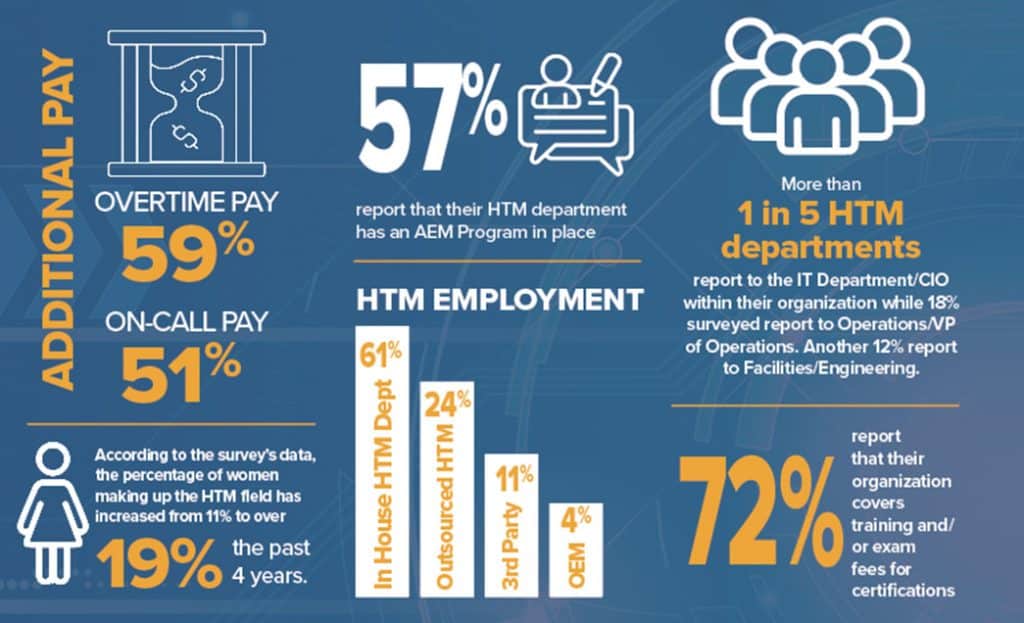
Certification is not required for most HTM roles; 83% said their organization does not require it, yet 72% said their employer covers certification exam fees or training costs.
“While certification may not be required by most employers, its value to the profession is undeniable. Earning a certification demonstrates that an HTM professional has achieved a minimum standard of knowledge, but the more important impact comes after the exam. Certification reflects a commitment to staying current and continually educating oneself, especially since maintaining any certification requires earning 30 CEUs every three years. This dedication to ongoing learning strengthens not only the individual but the entire field,” McGeary said.
More than half (56%) regularly work on-call, and 57% report their department uses an alternative equipment maintenance (AEM) program.
Opinions on AI vary sharply: 41% see it as potentially useful but overhyped, 33% see it as an exciting opportunity, and 17% call it risky or concerning.
COMPENSATION & BENEFITS
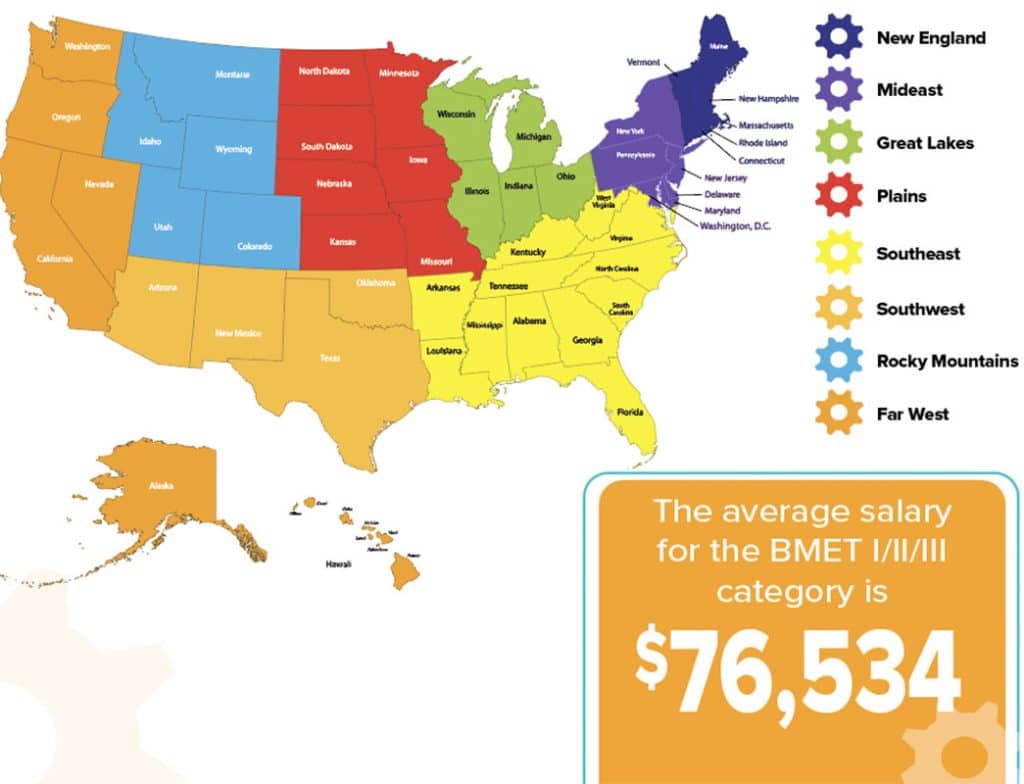
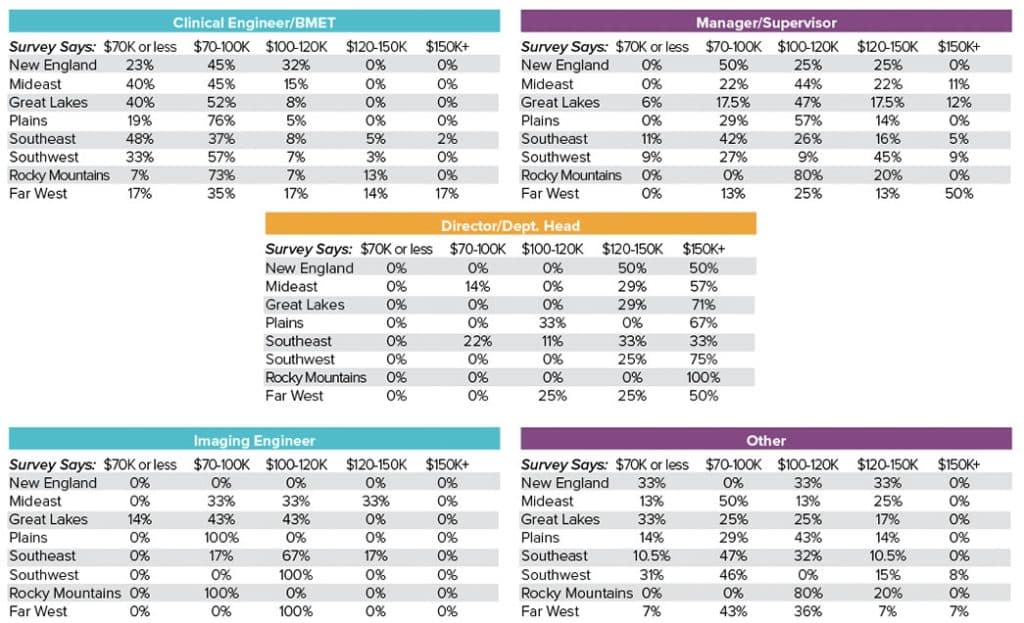
Compensation and job-fulfillment are key factors in any occupation. Total compensation often is the determining factor in taking a position. Based largely on the cost of living in different regions of the U.S., base salaries can vary. In addition to base salary, many employers offer a variety of benefits that add up to a total compensation package.
“We send a significant number of technicians to training each year. We pay for CBET/CRES/CHTM training and testing, as well as renewals. We provide AAMI and local HTMA memberships. As an organization, we have a very robust tuition reimbursement program, healthcare benefits, retirement and PTO benefits,” says Josh Virnoche, MBA, AAMIF, CHTM, CBET, director of clinical engineering at UT Southwestern Medical Center.
When an HTM professional saves his or her organization money, their paycheck should reflect it.
“In other words, if we send you to training or if you become an expert on something that otherwise would be costing the organization more money, we make sure you get that recognition. We don’t just continue to pile up on you – as your value increases, so does your paycheck,” says Benjamin Scoggin, MBA, MMCi, senior director of clinical engineering at Duke Health Technology Solutions.
Survey responses show continuing education is highly valued; 72% call it very or extremely important to their career.
Most respondents (68.9%) share the cost of health insurance with their employer; 18% are fully covered by their employer. Health plan satisfaction ranked largely positive, with 33% calling their coverage “good,” 25% “very good” and 15% “excellent.”
Retirement plans were widely available: 53% reported having a 401(k), with an additional 25% having a 403(b). Nearly 89% reported that their employer offers matching contributions.
Nearly 30% are satisfied with their salary, and 14% are very satisfied. About 25% are “somewhat satisfied,” while 11% are dissatisfied.
Work-life balance fared well: 34% rated it “good,” 31% “very good,” and 10% “excellent.”
LEADERSHIP PERSPECTIVES
Industry leaders shared views on HTM’s direction.
“There are still far too many inside and outside of the industry that see us as a commodity. PMs and repairs are the most basic, bread and butter part of the job. We should report on those items only what is required from a regulatory/operational standpoint. What we should really be bragging about and building our value proposition around is true life cycle management of technology, integrations for data and alarm management, and anything else that help healthcare providers deliver exceptional patient care consistently and at scale,” says Scoggin.
Douglas Redwine, regional director of biomedical engineering at Piedmont Healthcare in Georgia says that the HTM field is in a great place right now – full of energy, opportunity and room to grow.
“Sure, there’s some uncertainty around areas like right to repair, cybersecurity, and AI, but that’s what makes it exciting. Where some industries see disruption, I see HTM adapting, innovating, and leading the way forward,” he says.
Workforce challenges remain. The retirement of baby-boom professionals has inflated wages and intensified the need for strategic recruiting.
“As always, HTM is in a state of transition. We’re rapidly moving from a break/fix reactive response model to data-driven analytics, planned, preventive and predictive maintenance. We’ve been saying for decades now that we’re facing a significant staffing issue with the impending retirement of baby boomers, and while we’re still observing this in real time, it has created an environment where wages are rapidly rising to attempt to keep and retain talent,” says Virnoche.
HTM DEMOGRAPHICS
Demographic results closely reflect national trends. White respondents made up 61.6%; Hispanic respondents, 13.7%; African American/Black respondents, 6.5%.
According to AAMI’s data, the percentage of women making up the HTM field has increased from 11% to 19% over the past 4 years. Women now make up nearly one in five members of the profession.
Experience levels skew older: 21% of respondents have more than 30 years in the field.
Nearly half of HTM workers entered directly into HTM (49%) while 46% transitioned from other careers.
Military-trained professionals represent 25.6% of respondents; 71.7% are civilian-trained, and about 2.5% are active duty or reservists.
McGeary noted that this diversity of pathways must be embraced.
“I find this statistic especially intriguing because it shows that strong HTM professionals can come from non-traditional backgrounds, and our field needs to start embracing this. The State of HTM Survey still shows that our workforce is aging, and it is essential the field be creative in how we develop and recruit the next generation. AAMI’s BMET Apprenticeship is a great way to capitalize on individuals from non-traditional backgrounds and still ensure they are trained to a minimum standard of knowledge and competency,” McGeary said.
WHAT’S NEXT FOR HTM?
Despite roughly one-third of the profession expected to retire within five years, HTM remains a field of opportunity and professional fulfillment.
Recruiting should remain strong, with outreach encouraged across demographics, military channels and nontraditional pathways.
The survey results suggest HTM is advancing, adapting and providing a meaningful career for those who choose it.
