



By Carol Davis-Smith
Being a clinical engineer isn’t for the faint of heart. Ask the UCONN clinical engineering interns. They will tell you it’s demanding, confusing, intimidating, exciting and inspiring all at the same time. I could not be more proud of them for realizing and articulating this so early in their careers. But then, not everyone gets to be a UCONN clinical engineering intern. These young people are driven and it’s my job to be their initial compass.
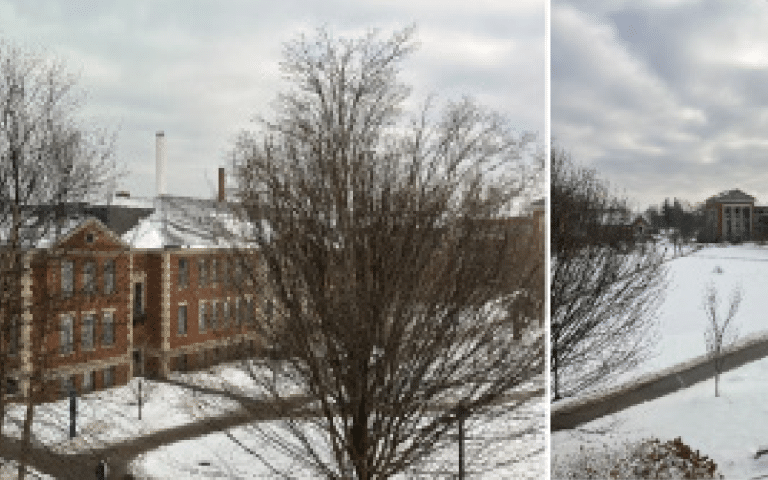
In my January column, I shared a glimpse into Clinical Engineering Week. Today, I’ll pull the curtain back a bit further. This past February, we met on the UCONN Storrs campus. Beautiful but frigid.
Our 3½-day agenda included video calls with speakers sharing their career journeys along with education about their current fields of practice – i.e., specialties. I can assure you their silence and/or hesitancy to ask questions was not indicative of their interest. They were inspired and intrigued. They were processing. I know so, because they asked questions afterwards like … “Would it be okay if I reach out to [insert name]?” Ok, so the interns didn’t hear the speaker say they would provide their slides and to reach out if there are questions later. The point is, the interns heard the message and were internalizing it. Mission accomplished!
Accomplished professionals are great, but recent alumni graduates with full-time jobs and full-time paychecks is in another league – especially in these chaotic times. For decades, the program’s alumni have supported the program directly as internship hosts and guest speakers. When I first arrived on the scene, I invited alumni from across the ages to speak with the interns (in person and/or via video call) to share their experiences and wisdom related to the topic of finding a job. Great advice! However, in the past few years, it became apparent that the world was changing and the nuances of finding a job – especially that elusive first job – were different. So, this year, I invited last year’s graduates. Again, a great experience. The interns asked great questions and the recent graduates answered like seasoned pros. I was pleasantly surprised (OK, maybe not) how poised these individuals were given their aversion to public speaking the year before. Another mission accomplished.
I’m not one to rely on traditional resources such as the campus Career Center. I didn’t as a student nearly 40 years ago. I don’t now. Why? Because department budgets and the talented individual bandwidths are stretched everywhere, so specificity of expertise becomes thin. This is especially true for niche professions like clinical engineering. So instead, I invite colleagues who are accomplished in their own rights as human resource professionals. Some provide guidance on resumes and interviewing, while a very specialized colleague explains the components of a “total rewards” package – i.e., the job offer. Then, to complement these presentations, we talk. We have discussions over lunch that the interns refer to as “Carol’s life hacks.” How does PTO really work? How should I invest? Like a good clinical engineer, I frequently respond with “It depends.” That leads to deeper conversations during which interns offer their own perspectives based on their parents, social media and occasionally their own experiences. Other interns sit quietly and seem disengaged or maybe working on a class assignment due later that evening. Nope. Most of them are listening. Processing. I know this because they ask thoughtful questions later.
I also want to send a shoutout to our colleagues in the VA HTM program. Some of them host our interns. Some of them would like to host our interns but budget constraints hamper them just like in the private sector. Leaders in the VA HTM community still show up to present their HTM structure and “day in the life” information along with guidance around how to apply to positions. Like so many other aspects of healthcare and HTM, their world is exactly the same as ours but completely different.
Of course, I also include presentations from the American College of Clinical Engineering (ACCE) and the Association for the Advancement of Medical Instrumentation (AAMI). The presenters focus on why clinical engineers should become members, especially as students. I take time to talk with the interns about how the organizations are complementary and can support their careers in very different ways. While this may seem obvious to us seasoned professionals, it absolutely is not to anyone new to our community.
Last, but certainly not least, are the workshops. I’ve supported, planned, and organized numerous conferences and conference-like events over my career. You would think I’d know what I was doing when planning Clinical Engineering Week. Well, I made plenty of mistakes – some within my control, others completely outside my influence much less my control. The workshops, for the most part, have been a success. The magic of workshops is the peer-to-peer engagement. The disruption to just sitting there while “talking heads” ramble on the screen. The movement from one physical space to another. Even if it’s just across the room. Workshops are sort of the adult education version of “labs” in engineering school. You test theories. You test your understanding of those theories. And maybe best of all, workshops behave like purposeful networking.
Some workshops address a typical problem or assignment a clinical engineer might be asked to complete. Yes, the underlying theory is presented within their academic courses but plays out sometimes very differently across the health systems where they complete their internships. Remember, hospitals (and health systems) are exactly the same and completely different. In the workshop, interns are grouped so that they must consider diverse perspectives. In the end, they can take home real-world ideas to their host health systems.
One workshop that has become a favorite is the Puzzle Game. It requires inexpensive puzzles, tables and creativity on everyone’s part but especially the facilitator. If the tables vary in size, shape and height that adds to the challenge. The size of the group obviously affects the complexity. The objectives are too many to go into here and, honestly, are somewhat dependent on the players. Yes, I am being protective of the workshop details to allow future interns the full experience. The call to action is – leverage adult learning practices. As formal or informal educators – I’m talking to you, CE managers and directors – we need to learn and develop new knowledge and skills that meet the developmental needs of the next generation of HTM professionals, not to mention the next iterations of medical technology and healthcare delivery.
Graduation and conferences are ahead of us. No doubt those will bring more teaching and learning opportunities. I suspect I will find myself on both sides of those opportunities. Until then, feel free to reach out to me if you have questions or suggestions. And don’t forget to read about the great things Steve Yelton (Cincinnati State ) and Joie Marhefka (Penn State New Kensington) are doing with their students!
Carol Davis-Smith, MS, CCE, FACCE, AAMIF, is the director of the clinical engineering internship program at the University of Connecticut. She is also president of Carol Davis-Smith & Associates LLC.
