



Technologies in health care are rapidly changing and hospitals need to have great foresight in order to plan appropriately for them. One of the areas where ECRI Institute sees movement towards technology-rich environments are the critical care units. What do future critical care areas look like? What technologies will be in use? How are hospitals going to be able to take advantage of these technologies, while at the same time keep patients safer and be more cost effective? These are challenging questions and this is why “future proofing” your current hospital design is more necessary than ever before.
What are critical care units? The sickest patients are cared for in these units. While each type of unit cares for different patients of different demographics and ages, they all have a high acuity level and longer-than-average lengths of stay. Because of this, critical care units are revenue generators and facilities must keep up with the associated rapid advances in critical care technology.
Some of those rapid advances are in the areas of medical device integration, infrastructure, medical equipment, and communication technologies. Even beds, mattresses, and patient lifts are among the ever-evolving pieces of the patient care puzzle. Particularly up and coming are the “smart room” technologies, which include medical device integration solutions, alarm integration systems and real-time location systems.
Medical Device Integration
Medical device integration is, essentially, the process of transferring information gathered by medical devices to a facility’s electronic medical records (EMR) system. Without this interconnectivity, the federally mandated process of EMR adoption will be greatly hindered. Medical device integration bypasses the manual data transcription process and thereby decreases workflow inefficiencies. Research has shown that medical device integration increases patient safety and the automated/increased data collection reduces nursing documentation time. Additionally, the Health Information Technology for Economic and Clinical Health (HITECH) Act is driving the need for more comprehensive and up-to-date documentation in EMRs and other clinical information systems.
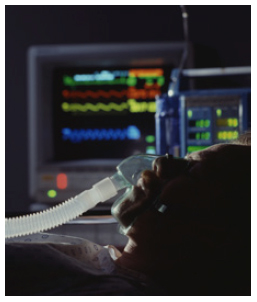 Developing the interface for this complex technology is challenging. It’s complicated to connect legacy devices, especially if the devices don’t have the ability to export data. Other capabilities, such as pushing clinical waveforms automatically into an EMR for documentation, are still not possible. It’s always wise to plan in advance what medical devices are critical priorities for integration and which ones are not. ECRI recommends that facilities start with continuous monitoring devices (like physiologic monitors) that do not require third-party integrators or point-of-care (POC) devices in order to capture vitals into the EMR. As these devices are already networked, the vendor gateway can capture and transmit all data to the EMR.
Medical device integration and big data analytics in the critical care unit of the future have the potential to provide health systems with various patient profiles and alerts. Middleware can sync a facility’s medical device integration and real-time intelligent monitoring process to automatically identify those patients at risk for deterioration. These types of middleware can offer information regarding sedation, infections, antibiotic controls and can be used for research.
Real-time Location Systems
Real-time location systems (RTLS) are a method of automatic identification and data capture which are used to identify and track objects or people. Typically, small tags are placed on the objects to be identified and are read by a scanning device. Different communication technologies can be used to exchange information between the tag and the reader. Used with patients, this technology can help control wandering and elopement and track patients waiting to receive tests or other services. Patients can also be tracked during transport or when on telemetry. This tracking of telemetry patients is beneficial in the event of an emergency and a code team can be dispatched to the correct location. Real-time location systems assist in the identification and association of patients with their personal admission or transfer records. Some systems even permit the storing of medical records.
RTLS technology can track equipment and inventory, as well, and to verify that equipment and medical instruments were cleaned between uses. RTLS benefits the biomedical engineering department as it can help manage inventory and supplies and alert when equipment requires planned maintenance.
Other Technologies to Note
The disinfection technology marketplace tackles a huge problem in health care today. An estimated two million patients are affected with hospital-acquired infections (HAI) each year, resulting in nearly 100,000 deaths per annum. The U.S. Centers for Disease Control and Prevention (CDC) estimates that HAIs add anywhere from $28 billion to $45 billion to U.S. health care costs per year. Technologies utilizing copper surfaces are “surfacing” in the marketplace, and antimicrobial copper is the only hospital touch surface with a U.S. Environmental Protection Agency (EPA) public health registration which allows manufacturers to claim that copper surfaces can kill specific bacteria. These surfaces are being incorporated into a variety of components such as bedrails, handrails, door handles, IV poles, sinks, faucets, etc. The added cost for this technology is about 10 to 30 percent more than a typical hospital room. A clinical study of ICUs in two leading institutes showed that rooms with copper alloyed surfaces had lower instances of HAI than in standard ICU rooms.
Disinfection by robot is another technology that is being utilized to combat HAIs. Ultraviolet (UV) light robots are designed to kill microorganisms by deactivating their DNA or RNA, while another type of disinfection robot uses hydrogen peroxide vapor to kill harmful microorganisms. The cost of the UV robots is around $100,000, while hydrogen peroxide vapor robots range from $45,000 to $65,000.
“Alarm integration” is a popular buzz phrase in the health care industry today, especially with The Joint Commission’s National Patient Safety Goal on alarm management (effective January 1, 2016). Alarm integration systems are complex – especially in critical care settings. They require a multidisciplinary approach and are unique to each organization. They are being implemented rapidly and require careful consideration regarding key functionalities. ECRI Institute recommends that facilities should utilize a middleware system that can collect alarm and alert information from the primary alarming devices and then prioritize those incoming alarms and alerts. Alarm integration should provide reporting abilities, be able to indicate nursing assignments, and easily accommodate advance escalation schemes.
Getting critical care bed technology right is extremely important since patients in these units typically stay longer and are not ambulatory. These beds differ from typical hospital beds as they are models with the most technical functionality, are designed specifically for the critical care environment, and offer features such as X-ray access, chair positions, and other therapeutic features. The mattresses are designed to reduce the risk of decubitus ulcers and relieve pressure points during extended hospital stays. When choosing these beds, facilities should look for:
1) Radiolucent window for radiographic purposes
2) In-bed scale to minimize the need to transfer patients for weight reading
3) Pressure-reducing mattress
4) Bed-exit alarms
5) Continuous lateral rotation therapy to prevent pneumonia
6) Quick-release control to adjust the bed to a flat and stable position for CPR administration
Design is evolving to focus on the concepts of both patient safety and a pleasant healing environment. Over the past three years, every CCU that we have planned has had both ceiling-mounted patient lifts and equipment booms mounted on either side of the patient bed. Previously, hospitals preferred traditional headwalls to supply data, power, and medical gases rather than using ceiling-mounted booms. The latest thinking is that ceiling-mounted booms can be used to deliver gas, power, and data to the various medical devices which are mounted on the booms. This configuration frees up floor space and eliminates clutter and the issue of wires and cables laying on the floor as tripping hazards. While there is no definitive clinical evidence that suggests one option is better than another, there has been literature published which indicates that ceiling-mounted booms offer greater flexibility and better access to patient and bed positions.
While high-tech devices have radically changed the way critical care units work and look, one thing remains the same – the personal care remains the most important factor in a patient’s successful outcome.
Contributors to this article include ECRI Institute’s Michael Linehan, director, Medical Equipment Planning, and Rikin Shah, senior associate, Applied Solution Group. To learn more about ECRI Institute’s medical equipment planning services, visit www.ecri.org/MEP; call 610-825-6000, ext. 5655; or email consultants@ecri.org.
