
Lewis Lennard, product manager at Rigel Medical US, shares some insights on the current trends and strategies driving advancements in the biomedical test equipment sector.
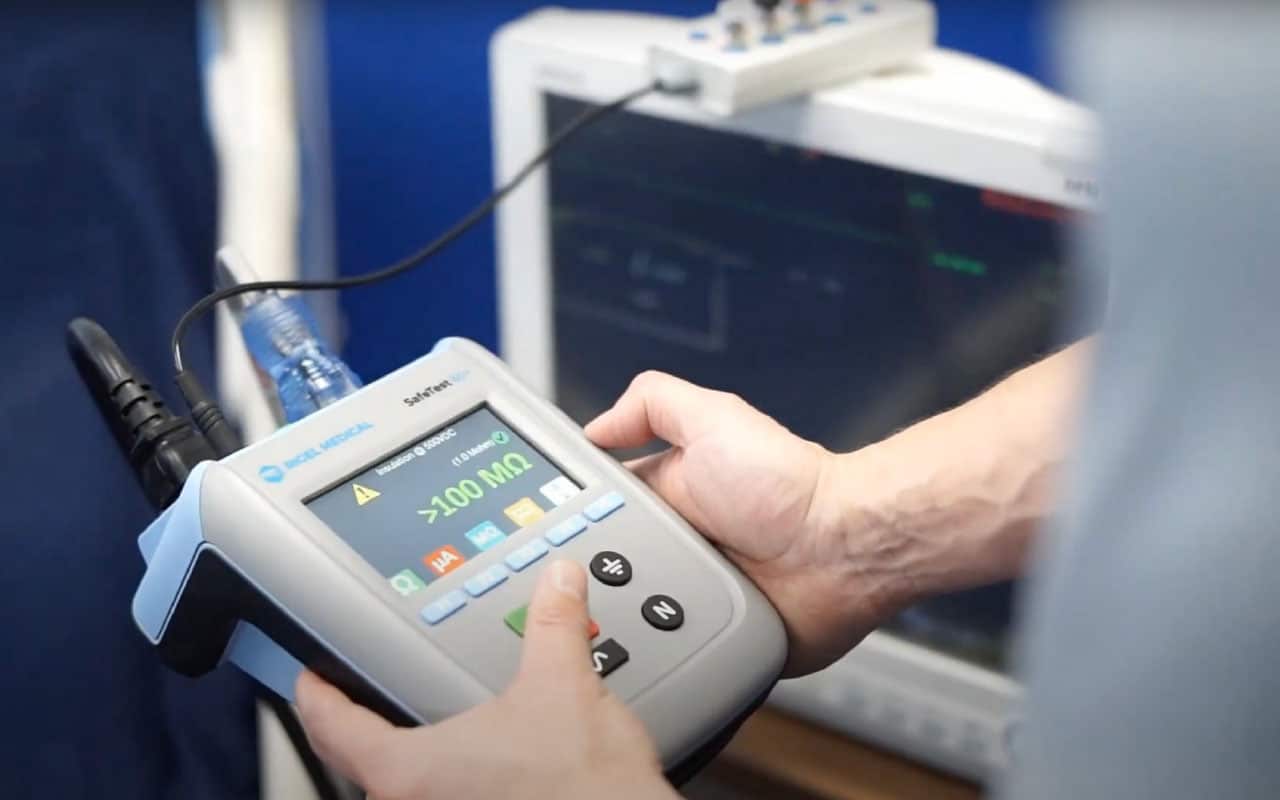
There is a trend toward portability in biomedical test equipment to meet the demand for compact, lightweight, and handheld devices. Portable analyzers enable healthcare facility testing and field service applications, expanding access to testing capabilities in remote or resource-limited environments. Several of Rigel’s portable analyzers have been used in harsh, remote conditions, and the durability of the equipment has been recognized.
Integration with IoT technology stands out as another prominent trend. We recently released an app that can generate PDFs and test reports, which helps facilitate real-time data capture and storage, simplifying the management of test results and documentation. As with many other areas in healthcare, workflow automation is becoming a focus in the biomed arena. Most biomedical test equipment companies are now offering some form of automation.
Q. WHAT ARE SOME OF THE BIGGEST CHALLENGES FACING THE BIOMEDICAL TEST EQUIPMENT SECTOR TODAY, AND WHAT STRATEGIES ARE BEING EMPLOYED TO OVERCOME THEM?
Keeping pace with rapidly evolving technology is challenging. Test equipment manufacturers need to be innovative with the next generation of test equipment. Collaborating with biomeds, biomedical equipment technology colleges, and medical device manufacturers keeps us up-to-date on emerging technologies and ahead of the curve.
One of the biggest challenges is connected devices and IoT integration. If biomedical test equipment is on the same networks as patient data, the risk is clearly high. To enhance cybersecurity measures, test equipment must implement encryption protocols and secure network processes in the same way that medical devices do.
Q. HOW DOES YOUR COMPANY ENSURE EFFICIENT, FLEXIBLE SERVICING OF MEDICAL DEVICES, ESPECIALLY IN EMERGENCIES, AMID THE GROWING DEMAND FOR PORTABLE SOLUTIONS IN BIOMEDICAL TESTING?
Rigel is seeing strong growth in testing requirements for smaller, remoter healthcare facilities. The design of portable test equipment is important so that it can be easily transported to healthcare facilities, clinics, or remote locations during emergencies. These devices are lightweight, compact, and often battery-powered, enabling rapid deployment and onsite testing without the need for a specialized infrastructure. Test equipment solutions need to be diverse, catering to a range of settings, from large metropolitan hospitals to remote communities in Alaska.
Q. WHAT MEASURES DOES YOUR COMPANY TAKE TO ENSURE THE PRECISION AND DEPENDABILITY OF TEST EQUIPMENT CALIBRATION AND SERVICING, PARTICULARLY IN ENVIRONMENTS WHERE ACCURACY IS CRITICAL FOR PATIENT SAFETY?
A test equipment manufacturer must have calibration to standards such as ISO 17025 for calibration laboratories, and at the very least ensure reference standards and calibrated equipment are traceable to national or international standards. This ensures the accuracy and traceability of measurements and minimizes uncertainties in calibration processes. Our service and calibration arm, Calibrationhouse, has [United Kingdom Accreditation Service] (IEC 17025) capabilities for biomedical test equipment and counts worldwide medical device manufacturers and healthcare organizations among its customers.
Q. HOW ARE YOU ASSISTING HTM OFFICIALS IN UTILIZING AND MAINTAINING TEST EQUIPMENT THROUGH TRAINING AND EDUCATIONAL PROGRAMS?
We assist biomedical engineers by providing comprehensive training and education initiatives. These include online webinars, onsite training sessions, and video tutorials covering equipment operation, troubleshooting, and preventive maintenance. Rigel also offers certification programs, continuing education courses, and technical support to address topics, regulatory compliance, and any issues biomeds encounter.
We strongly believe in cultivating the next generation of biomeds. We have donated test equipment to colleges as this greatly benefits students by providing enhanced access to new learning experiences and preparing them for future careers in the field. Through hands-on experience with equipment, students develop crucial technical skills in equipment operation and maintenance. Additionally, networking opportunities with HTM professionals may arise, helping students’ educational experiences.