



K. Richard Douglas
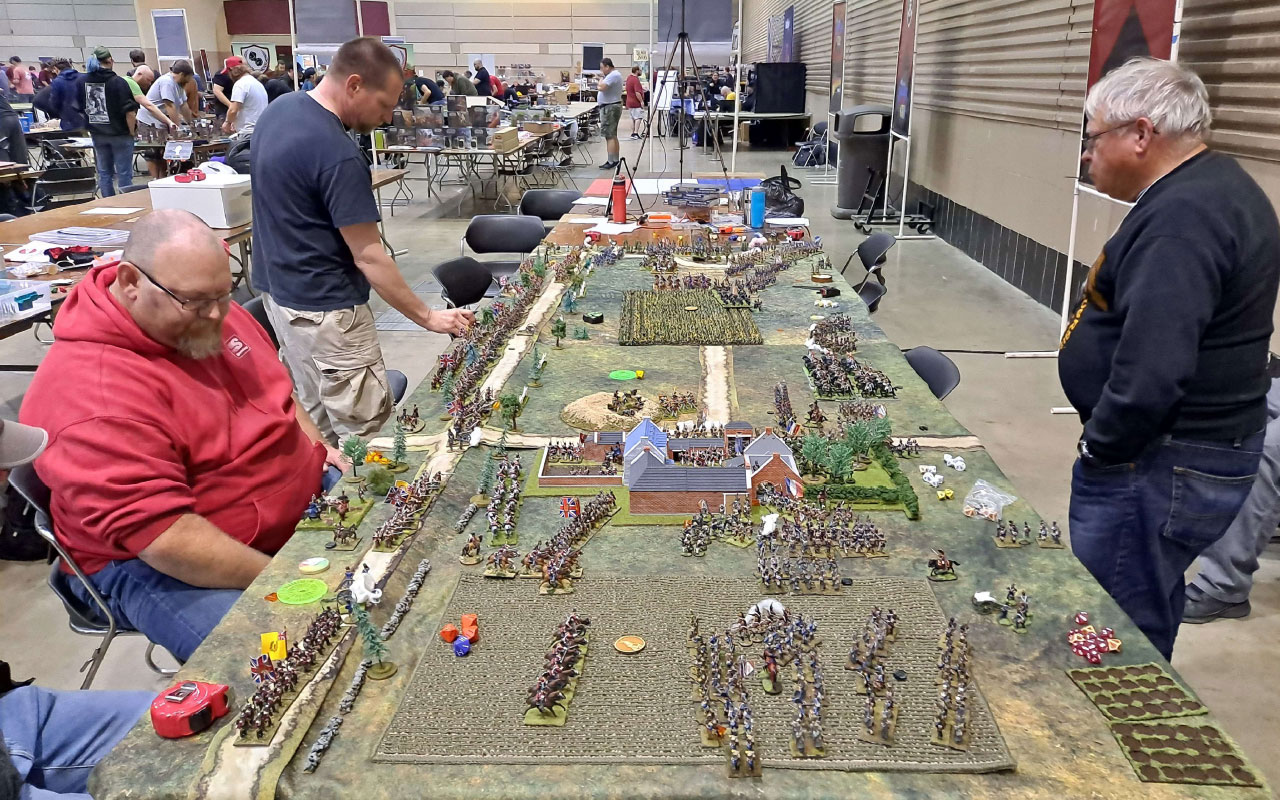
How many kids have played war, Army or some form of mock battles with toy figures over the decades? As adults, many individuals have replicated scenes of towns or the countryside around a model railroad set-up. In both cases, imagination and detail play a role.
It is not hard to extrapolate from those experiences that creating a detailed battlefield, complete with detailed figures, battle strategies, historical precedent and unique accessories would be appealing for many of the same reasons.
This is the motivation and fascination for those who enjoy tabletop miniatures wargaming. The hobby embraces creativity, the enjoyment of participating with like-minded enthusiasts, creating rules for game play and the outcomes.
“As the name implies, players use armies of hand-painted miniatures (my preference is 28mm in scale), 3D terrain, tape measures for measuring distances, dice to determine outcomes and a rules set that tell you how troops move and fight, as well as rules to govern outcomes of contact,” says Paul Neher, MBA, CBET, supervisor of biomedical services at Parkview Health in Fort Wayne, Indiana.
Neher isn’t only an enthusiast of miniatures wargaming but wrote and published his own game called “Hounds of War” about 13 years ago. Other enthusiasts can purchase his game through sources like Amazon.
“Back in the early ’80s, my brother and I got into Dungeons and Dragons, and we played with miniatures to represent visually where things were in the game. We got so hooked on collecting and painting minis that we soon collected small armies of them. We loved chess and ‘wargaming’ with plastic army men,” Neher says.
He says that when they discovered that there were games that incorporated their fondness for painting miniatures with strategy games, it was a natural next step.
“I went to my first gaming convention in Fort Wayne, Indiana in 1987 and have been collecting, painting, playing and writing tabletop wargames ever since.”
Neher says that some games are set up and you can “walk on” and be taught. Some are set up based on a scenario. Some are objective-based.
“It is best to have that determined and described ahead of time. It may be a hold an objective game or a capture the flag type. Historical games are often scenario based. The most fun are story driven,” he says.
He says that he has even played in yearlong campaigns where each game had a cause and effect on the next with long term goals and implications. Participation can include local groups at a player’s home or at conventions.
Neher says that participants can keep in touch, often through methods determined by a manufacturer.
“Often there are online chat groups, Discord servers, social media pages, etcetera. The key is to keep players engaged, connected, and thinking about the next game. Many manufactures have websites and online stores to keep players equipped and buying product,” he says.
IT’S IN THE DETAILS
Imagination is an essential element of the hobby and participants go about creating something unique and interesting. The result is a tabletop theater of war that is the platform for the battle.
“It all starts with imagination. What interests you, and how do you make that ‘come to life.’ I draw inspiration from movies, history and reading,” Neher says.
He says that when it comes to making the terrain, nature plays a huge part as he begins to try to envision what that setting looks like.
“YouTube is a great resource for ‘how-to’ videos for those who are more creative, and there are hobby stores and an entire industry that makes products for tabletop wargaming from everything including terrain, miniatures, rules, paints, crafting, etcetera,” Neher adds
He adds that over the course of time, he has always tried to find new techniques to make the visual as appealing and realistic as possible.
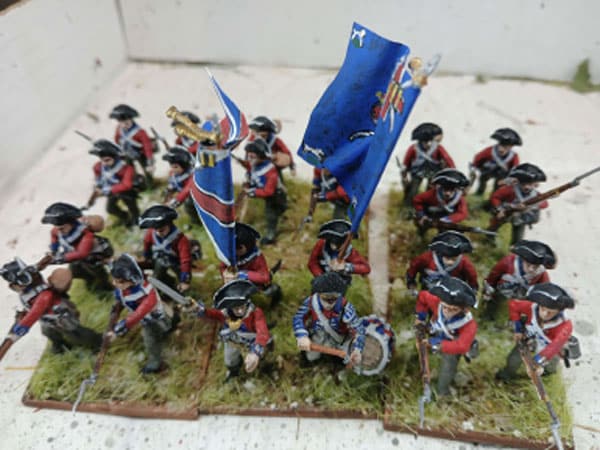
“Nothing will make the game better or more attractive to prospective players than a visually stunning tabletop with well painted armies on it,” Neher says.
For someone new to the hobby, how do you decide on figures and where do they come from? How do you decide on scale?
“Depending on the genre, I research and find models in the scale and aesthetic that I am after. Lately, I have gravitated to the 28mm range for the level of detail this scale provides, but also as my eyes get older, they are easier to see. I also like that scale as it is easy to see from a distance for players and observers alike. I paint my models to reflect either in the vision I have in my head or on paper, or I find books or online materials for color images when it comes to historical recreations,” Neher says.
He says that there are even artists who will paint your models for you if you have the money, but not the time nor inclination for the artistic side.
“I get great satisfaction in turning the mental or historical visage into something tactile I can interact with,” he adds.
How does someone new to the hobby create an army, including designing and finishing the figures?
“Pick your genre or game. This will set some parameters for you to follow. Design something you will find fun to play within those parameters. Research the subject to ensure you are doing it the right way as befitting history or artwork or your imagination; the key is to plan before you begin. I know many people who just wade in, and that is fine, but can cause ‘grief’ as you find your grove later and redo the first ones,” Neher recommends.
He says to acquire the models, paints and tools you will need. Build the models. Primer goes on first to prepare the metal, plastic or resin to accept the paint.
“Once painted, it’s time to have fun. Some people use a sealer to keep the paint from wearing off, but I have never seen the need,” he says.
Neher adds that everyone gravitates to something different.
“There is no right or wrong way to do it. Depending on the game, there may be organizational restrictions or preferred manufacturers, but I always tell new players to collect and play with what is fun for you. Find a friend or local store to give you suggestions, but don’t let someone tell you what you have to play with or do,” he adds.
Neher has been in the HTM field since 1998 and earned his CBET in 2011.
“I work as a supervisor, one of two, leading 38 biomeds in 15 hospitals across 9,000 square miles. I am also a husband of 19 years and a father of two late teen girls. I am in the final stages of writing a biomed equipment technology AAS degree program for Educational Affiliates and Fortis College. Like all in the HTM industry, I am busy,” he says.
Whether overseeing biomed professionals or a miniature battlefield landscape, this HTM professional pays attention to the details and aims to push forward with the campaign.
