


By Gay Gordon-Byrne, Executive Director, The Repair Association
Wheelchair Right to Repair (R2R) is going national and it’s about time. Users of durable medical equipment have been continually thwarted from having any control over their purchases under the OEM theory that only the manufacturer is capable of maintaining the unit. Post-purchase, ownership law does not support the limitation. The sale is the end of OEM control.
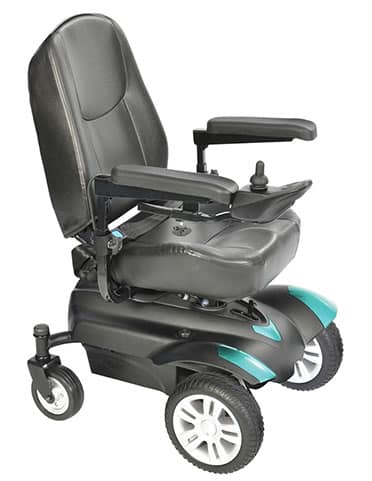 Contracts restricting ownership are invariably deceptive on this point even if we think the user is not in the best position to make a request. So long as there is no issue of mental competence, the equipment owner is the only party that has authority to control their property.
R2R legislation does not change anything about competence. R2R legislation does not prevent the chair owner from using the OEM – it only adds legal options. OEMs that do not want to allow competition for repair services cannot block repair instigated by the owner. That’s the key value of R2R.
Fortunately, state legislators readily embrace right to repair advocacy without partisanship. Removing paperwork limitations is clearly something that legislatures can do without difficulty. A few bills have been eviscerated by OEM lobbyists, but the trend is strongly positive.
The next obvious expansion of law is to include durable medical equipment and lab equipment in general – adding CPAPs, O2 generators and hearing aids to the mix of owner-directed repair options. Disability rights communities have done terrific work with personal advocacy making meetings with legislators in a visible way. It’s far more difficult to send a group of people hooked up to ventilators around to lobby legislative offices – so most of the products that need access to repair remain relatively mysterious and don’t get media attention.
General R2R for medical equipment has proven more challenging. Legislators are told that medical equipment is too complex or dangerous for any party other than the OEM to make a part swap.
Computerized parts just do math – but if we are to believe AdvaMed and MITA lobbyists – the same products cease doing math correctly based on who gets paid to swap the part. The only way for a spare part from the OEM to cease working as intended is for the OEM to have designed and built the product unsafely. Repair techs cannot fix bad designs or manufacturing defects. If we are going to press for patient safety – we have to press OEMs to do a better job.
There are some signs of hope on the horizon. The U.S. Armed Forces are advocating strongly for Right to Repair, which applies not just to bullets and bombs but to hospital and test equipment. We are keeping our fingers crossed that unlike last year – major prime contractors do not get their way at the last minute lobbying in opposition.
The U.S. Copyright Office is getting set to consider new rules for copyright protection – which will likely address control of medical equipment as well as computer games. The U.S. Copyright Office is already working on the triennial review process for exclusions under Section 1201 but it’s not smooth sailing. We have heard that AdvaMed is advancing the legal theory that unlocking DRM for purposes of repair is in the same legal category as a “transformative work” in the manner of an Andy Warhol depiction of Prince. I’m still confused – since I never considered repairing a literal work of art could be in any way illegal.
In the world of digital parts – replacing a broken part with an identical spare is not transformative. In the medical equipment world, a “transformation” would have to be approved by the FDA which does not meet the definition of “repair” as restoration and not “modification.” Under other sections of the DMCA of 1998 (copyright law) – modification is also legal but the modifier cannot put the mods on the market without approval of the original OEM.
Stay updated and get involved in the Right to Repair at Repair.org.