


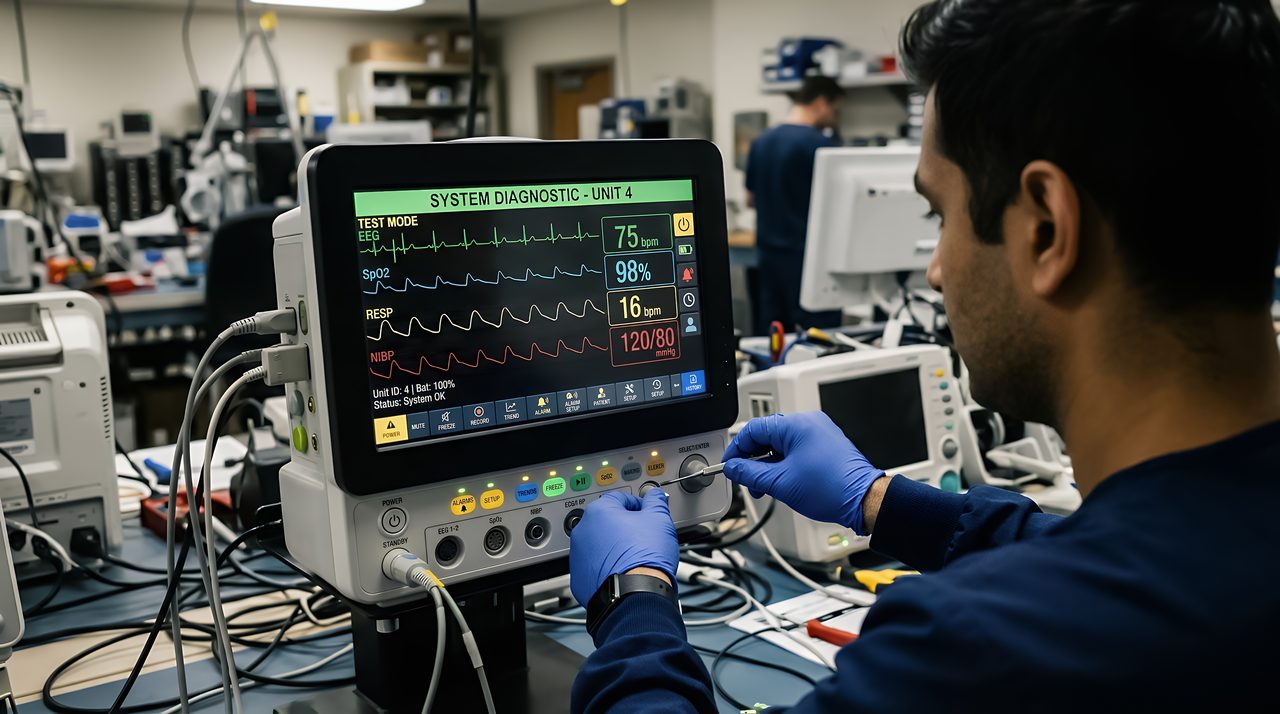
As medical devices become increasingly sophisticated, connected and software-driven, the test equipment used to maintain them is evolving just as quickly. Today’s healthcare technology management (HTM) professionals need tools that deliver more than accurate measurements. Automation, connectivity, digital documentation, CMMS integration and streamlined workflows are becoming increasingly important as departments look to improve efficiency, maintain compliance and make the most of limited resources.
TechNation invited industry experts to discuss the changing role of biomedical test equipment, strategies for evaluating investments and the technologies shaping the future of medical device testing.
Participants in this roundtable are:
- BC Group International Director of Business Development Justin Barbour;
- Datrend Systems Inc. Director of Business Development Owen Liu;
- Fluke Biomedical Sales Engineer Jamie Spragis, CBET;
- Pronk Technologies Vice President of Marketing Julio Castro; and
- Southeastern Biomedical Co-Owner Boyd S. Campbell, CBET, CRES, CHTM.
How the Role of Biomedical Test Equipment Has Changed
Q: As medical devices become more sophisticated and increasingly software-driven, how has the role of biomedical test equipment changed over the past five years? What capabilities are now considered essential?
 BARBOUR: Modern medical equipment has more configuration options, more alarms, greater facility integration and more network-dependent functionality than ever before. As a result, our test equipment needs to be just as flexible, with user-configurable profiles, multiple units of measurement, built-in technician help and pictures showing proper test setups and connections. Medical devices have become more complex, which means our testing procedures have also become longer and more involved, while the number and variety of devices we are responsible for continues to grow. Modern testing needs to help guide the technician through these increasingly complex procedures, while also providing consistency and quality control to ensure the same test is performed correctly every time.
 LIU: I think biomedical test equipment has evolved from being primarily a measurement tool to becoming part of the broader digital workflow of the HTM department. As medical devices have become more software-driven and interconnected, I think test equipment needs to do more than simply produce an accurate measurement. It should guide the user through the procedure, automate repetitive tasks, document results and make that information available within the organization’s maintenance management system. When I look at what is becoming increasingly important, I would include automated test sequences, intuitive user interfaces, CMMS connectivity, electronic documentation and the ability to update procedures or software over time.
 SPRAGIS: Test instruments have always evolved alongside the medical device industry, but over the past five years that evolution has moved in one clear direction: software. Automation is where medical equipment testing is headed. The capability I would now call essential is the ability to run a procedure automatically and send the resulting measurement straight into the CMMS, without a technician documenting anything by hand. That closed loop between the instrument and the service record is what saves real time, and it removes the most common source of documentation error.
 CASTRO: Today’s medical devices are far more software-driven, networked and complex, and the equipment used to service them has had to evolve just as fast. Essential capabilities of biomedical test equipment should also evolve to include wireless connectivity, automated test sequencing and the ability to capture and document results digitally rather than by hand. Our Pronk Mobilize wireless solution reflects this shift directly: it lets a biomed control Pronk test equipment, such as the Safe-T Sim Electrical Safety Analyzer, from a smart device, run an automated test sequence and have the results populate a CMMS work order in real time. Compliance with manufacturer requirements has become just as essential as the test itself, which is why we built Pronk CheckMate into that same Mobilize platform: it runs the manufacturer-based PM checklist and automatically produces a timestamped, traceable record, so the documentation an auditor asks for already exists rather than having to be compiled after the fact. Test equipment is no longer just a measurement tool; it has become an automated documentation and workflow system that must keep pace with the sophistication of the devices it services and better support incredibly busy biomeds.
 CAMPBELL: Previously, test devices were stand-alone and required no interface. Now that more capabilities are being developed, networking and computer skills are becoming more relevant. In addition, we now have data that was not previously available, so the question becomes what do we do with this information? How do we change processes? And how do we validate the results? The traditional PM doesn’t stop when the sticker is applied, but now with the information we can capture, we must use that to increase the quality and efficiency of the HTM department.
Test Equipment Features That Deliver the Greatest Value
Q: When evaluating new test equipment, what features deliver the greatest value for HTM departments? Consider factors such as automation, accuracy, portability, connectivity, cloud integration, cybersecurity or ease of use.
BARBOUR: Value is subjective because every HTM department has different needs. Is your organization focused on standardization and modernization? Do you have a team of experienced technicians, or are you developing newer technicians who may benefit from more guided testing? Is your team overwhelmed with workload and looking for automation to improve efficiency? That’s why I prefer to discuss both a customer’s current needs and their future plans rather than simply recommend the newest or most feature-packed product. Just because a device is loaded with features and the latest buzzwords doesn’t mean it’s the best solution for everyone. With nearly 40 years of test equipment manufacturing experience and a broad product catalog, BC Group can offer multiple solutions and help customers choose the equipment that best fits how their HTM department actually operates.
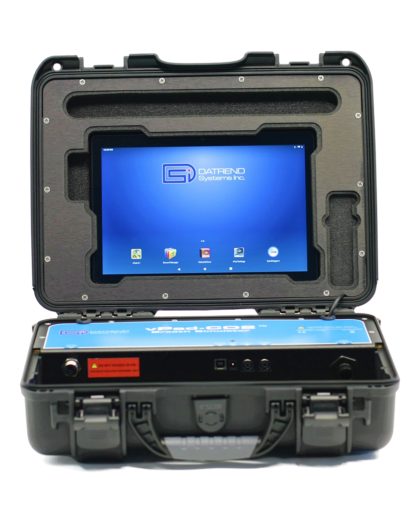 LIU: I think the greatest value comes from looking beyond the specifications of the instrument itself and considering the overall workflow. Accuracy and traceability will always be fundamentally important, but in my experience, a highly accurate instrument that takes significant time to zero, set up, operate and document can still create inefficiencies. I look at automation, ease of use, portability and connectivity as areas that can have a significant impact on overall productivity. Automated procedures with cloud synchronization can also help standardize testing between technicians within the same organization. Ultimately, I don’t think the best equipment is necessarily the instrument with the longest specification sheet. I look for equipment that helps technicians complete the job accurately, consistently and efficiently while meeting OEM or hospital testing requirements.
SPRAGIS: Reliability comes first. An instrument you cannot trust, or that is out of service when you need it, delivers no value no matter what else is on the spec sheet. Once reliability is established, the conversation shifts to efficiency and how the instrument fits the way your team actually works: how quickly a technician becomes productive on it, and how well it connects to the systems you already have in place. Automation belongs in that second group, and I would encourage departments to assume they will be using it. It is far easier to buy into automation deliberately now than to retrofit it later.
CASTRO: Automation and connectivity deliver the greatest value today, but only when they don’t add bulk or user complexity. When we design our products, our goal is a compact device with single-button operation and no complex menus to navigate. Portability and durability matter just as much, and that holds true across our whole product line. Every Pronk product is engineered to be the smallest and most portable in its category, built to travel in a bag or a pocket rather than sit on a bench or cart. That’s the standard we hold ourselves to for every product, because a biomed working in the field can’t afford to transport large, fragile equipment. Accuracy must meet or exceed the medical device manufacturer’s specifications for testing. Full stop, no compromises.
CAMPBELL: When evaluating new test equipment, all of these factors should be considered. The days of assuming that products from major manufacturers offer the same capabilities and performance are over. HTM departments must assess not only how they operate today, but also where they want to be in the future. Features such as automation, connectivity, cloud integration, cybersecurity, accuracy, portability and ease of use all play a role in determining long-term value. The right solution should align with the department’s workflow, support strategic goals and help improve efficiency. Return on investment is also a critical consideration. This extends beyond the initial purchase price and expected lifespan of the device. Departments should evaluate the impact on labor hours, workflow efficiency, data management and additional capabilities that can help technicians work more effectively and consistently. The greatest value comes from equipment that not only meets current needs but also supports future growth and operational improvement.
Justifying Test Equipment Investments and Proving ROI
Q: Many healthcare organizations face budget constraints. What strategies help HTM leaders justify investments in new test equipment, and how can they demonstrate return on investment?
BARBOUR: Clinical engineering needs to develop a test equipment (and staff) resource plan. I recommend an annual inventory before scheduling calibrations, where management physically puts their hands on each piece of test equipment and asks some basic questions: Do we still need it? Is it redundant? Are all the required cables and accessories present? Is it still serviceable and capable of supporting the equipment we maintain? From there, every device should be considered in terms of immediate needs as well as a five-year technology improvement and efficiency plan. An analyzer may be perfectly serviceable today, but if it lacks automation, CMMS integration or the capabilities needed to support a growing medical device inventory, its eventual replacement should already be part of the budget. ROI can then be demonstrated through reduced test time, fewer manual processes, better equipment utilization and increased technician productivity. Clinical engineering leaders need to budget for technology improvement as their departments and medical device inventories grow, rather than waiting until aging test equipment becomes an operational problem.
LIU: These constraints are always challenging for HTM leaders. I would start by looking closely at the testing requirements of the organization. Having worked with many healthcare organizations, I’ve found that it is definitely not one size fits all when selecting test equipment or working with automation. How many devices are managed internally? How frequently are they tested? How is the team structured, and what is their skill level? What is the current completion rate, and which devices are at risk each quarter? Then, I would look at what the investment is expected to improve. How much productivity can I gain through automation? If I integrate the test equipment with my CMMS, how much time could I save per team member? Can I increase my completion rate? I would also consider the instrument’s life expectancy, upgradeability, maintenance costs and calibration turnaround time. All of these factors become part of the overall ROI calculation.
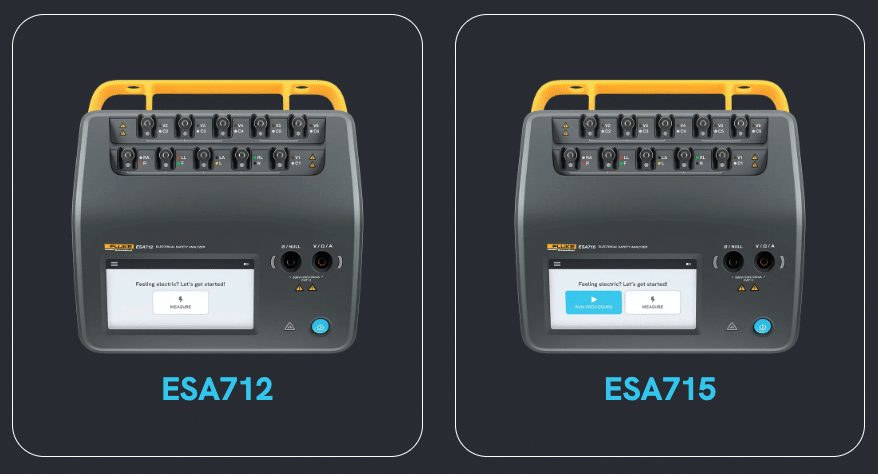
SPRAGIS: Budget has always been a real factor in any test equipment purchase, and we design around that. We offer a wide portfolio across a range of price points, and we include OneQA Basic software at no cost with the purchase of an ESA710, ESA715 or IDA-6. That allows a department to build and run automated procedures without additional spend, and to see the value firsthand before deciding whether to upgrade to the full version. When it comes to demonstrating ROI, the argument that resonates with finance is almost always time: hours per PM, hours spent on documentation and the labor cost attached to both. We also work with customers globally to map how their test equipment program should grow over time, so the investment can be staged against real workload instead of made all at once.
CASTRO: The clearest ROI argument is time savings. For example, an electrical safety test that used to take several minutes of manually selecting test parameters, handwriting results and entering them later can be automated and wirelessly logged into a work order in a fraction of that time, across an entire fleet of devices and technicians. The labor savings add up quickly and are easy to demonstrate to finance leadership. We’d also encourage HTM leaders to look past the initial cost and look at the total cost of ownership. Ask about the warranty; we back all the products with an industry-leading four-year warranty at no extra cost, which directly lowers total cost of ownership by cutting down on unplanned repair and early-replacement expenses over the life of the equipment. The Pronk CheckMate feature automatically captures a traceable manufacturer-based PM checklist, so a department walks into a Joint Commission or CMS survey with audit-ready documentation already in hand rather than scrambling to compile all the information.
CAMPBELL: Successfully justifying an investment in new test equipment requires HTM leaders to move the conversation beyond purchase price and focus on the total value the technology delivers. The most effective strategy is to connect investment to measurable operational, financial and clinical outcomes. Return on investment should be calculated using both direct and indirect benefits. Direct savings may include reduced labor hours, fewer outsourcing expenses, lower training requirements and the elimination of duplicate equipment purchases. Indirect benefits can be even more significant, including increased technician productivity, improved compliance documentation, reduced risk of testing errors, better asset utilization and enhanced readiness for regulatory inspections.
How AI and Automation Will Change Test Equipment
Q: Artificial intelligence, automation and digital workflows are beginning to influence many areas of healthcare technology management. How do you see these technologies changing biomedical test equipment over the next three to five years?
BARBOUR: I believe documentation will be affected the most by AI. We’re already moving toward automated capture and reporting of test results, but over the next three to five years, I expect AI to play a much larger role in reviewing those records as well. Clinical engineering has historically had a lot of flexibility in how testing and documentation are performed, but AI could make it incredibly easy for compliance teams to identify inconsistencies, missing information, skipped steps or differences in testing practices between technicians. The same applies to legal discovery, where years of service records could potentially be analyzed in seconds following a patient-care incident. That puts a much larger magnifying glass on not only whether a device was tested, but exactly how it was tested and how well that work was documented. Automation and AI will ultimately push HTM toward more standardized, repeatable testing with better documentation and greater consistency from technician to technician.
LIU: I think automation will continue to expand, particularly around test setup, procedure execution, data collection and documentation. AI could eventually help interpret test results, identify unusual measurements, suggest troubleshooting steps or recognize trends across large amounts of historical service data. More importantly, AI should help reduce administrative and repetitive work while giving technicians better information to make decisions. It could also help identify when a device may require additional attention based on its testing and service history. Eventually, I see test equipment becoming an intelligent participant in the HTM workflow, supporting technicians rather than simply providing measurements.
SPRAGIS: Building automation software into the instrument itself has permanently changed biomedical test equipment. Automated test procedures are the visible part, and they matter — you get consistency from technician to technician and less time spent per device. But the bigger shift is in documentation. When a measurement moves directly from the instrument into the CMMS, the record is created as the work is performed rather than reconstructed afterward. Over the next three to five years, I expect that to become the baseline expectation rather than a differentiator, and I expect the data those workflows generate to start informing how departments schedule and prioritize their work.
CASTRO: We expect the biggest near-term impact to come less from AI making decisions and more from AI having good data to work with. Our Pronk CheckMate is built from RI (Real Intelligence) from a former biomed with years of frustration from digging through 300-page service manuals to do the right testing and even test equipment manuals to find features needed. Pronk CheckMate procedures are designed to make it easy for a technician of any experience level to meet the requirements of the manufacturer. None of this replaces a technician’s judgment, but it does remove the repetitive, error-prone parts of the job, freeing biomeds to spend their time on the devices and situations that actually need hands-on expertise.
CAMPBELL: With the data that we now have at our fingertips, AI can help HTM departments analyze and manage information. It is not a replacement for the biomedical technician or managers, but more of a tool that is at our disposal. I can also see that these features can assist the technician to more quickly diagnose problems which get the device back in service faster, increasing patient throughput, thus helping to control loss of revenue but also increase patient satisfaction.
Emerging Trends and Regulations Shaping Medical Device Testing
Q: Looking ahead, what emerging trends, technologies or regulatory changes do you believe will have the greatest impact on biomedical test equipment and the way HTM professionals maintain today’s medical devices?
BARBOUR: I’m hopeful that ISO 13485 certification could eventually provide a pathway toward greater access to OEM service resources as part of Medical Right to Repair. It’s a complicated industry with a strong OEM lobby, but I’m encouraged to see more independent medical equipment repair companies pursuing ISO 13485 certification. Medical equipment repairs and calibrations should be well-documented processes with strong quality controls to ensure both consistency and patient safety. This is also why we’re seeing more healthcare technology companies move toward standardized testing. A well-documented process shouldn’t just include a checklist of tasks to complete; it should also provide guided instructions for how each test is performed, helping ensure that the process is repeatable and consistent from one technician to the next.
LIU: I think one of the biggest impacts will be the increasing complexity of the devices HTM departments are responsible for maintaining. Medical devices are adopting new technologies that can change how they behave and how they need to be tested. For example, there are ESUs operating at 3-4 MHz rather than the traditional 300-500 kHz range, which can require a different approach to test-load characterization and calibration. As medical devices continue to evolve, test equipment manufacturers will need to keep adapting testing methods rather than simply adding more features to existing analyzers. I also think HTM departments will increasingly look at risk-based testing, using service history and device performance data to determine where their resources are best spent.
SPRAGIS: The greatest impact will come from being able to capture every measurement and place it into a quality-controlled document automatically. Audits and accreditation surveys ultimately come down to whether you can produce defensible evidence of the work you performed. A workflow that generates that evidence as a byproduct of testing is worth far more than one that requires you to assemble it after the fact. Beyond that, the direction of travel is consistent: fewer steps and more efficient workflows. We are always working on both at Fluke Biomedical, and listening to our customers is how we keep pace with where testing is actually going.
CASTRO: Cybersecurity requirements are only going to tighten, and that applies to test equipment itself, not just the medical devices being tested, so any truly Wi-Fi-based platform has to be designed with data protection built in rather than added on later. We saw this coming years ago and chose Bluetooth connectivity to avoid potential involvement in IT and cybersecurity issues. We also expect continued pressure toward interoperability: HTM departments don’t want a different app or dashboard for every instrument; they want one platform that can control multiple pieces of test equipment, including multiple brands, and feed a single CMMS. We see both of these as the baseline for where test equipment is headed, not optional extras, and it’s the direction we’ve already built Mobilize products around.
CAMPBELL: I think that as more cloud-based applications emerge and CMMS integrations occur as well as remote diagnostic capabilities, technicians are moving even more toward being technology managers instead of repair technicians. There is still most definitely a need for traditional BMETs, but skills must change to be able to adapt to what the future holds.
One Piece of Test Equipment to Add or Upgrade
Q: If you could recommend one piece of test equipment that every HTM department should consider adding or upgrading within the next two years, what would it be and why?
BARBOUR: I highly recommend equipping every technician with a ruggedized Android tablet. Access to information has never been easier, especially with resources like iFixit’s FixBot AI assistant. A tablet allows technicians to quickly photograph equipment condition, document damage, identify faulty parts, capture contractor service reports for work order attachments and access service information right at the equipment. Many medical test equipment manufacturers also offer apps that support automated test result reporting and digital workflows. Beyond testing, technicians can answer emails, communicate with medical staff, coordinate with other members of the biomed team and update work orders without having to return to a workstation. A rugged tablet has become one of the most versatile tools you can put in a technician’s hands.
LIU: Rather than recommending one particular piece of test equipment, I would apply the same approach we discussed earlier around ROI. Start by looking at the oldest test equipment in the organization. In many cases, these are good candidates for replacement because they may have higher maintenance costs, limited support or lack capabilities available in newer instruments. Then, look at which test equipment is used most frequently. If a department has dozens of technicians using the same manual, outdated analyzers every day, replacing those could have a much greater impact on productivity than replacing an instrument that is only used occasionally. I would look at age, frequency of use, number of units and potential productivity gains. That gives HTM leaders a practical way to prioritize investments based on the impact to their department, rather than simply replacing equipment because the budget is available.
SPRAGIS: The ESA700 Series. It is an all-around electrical safety analyzer with software automation onboard, which makes it useful across the widest range of work a department performs — incoming inspections, preventive maintenance and verification after a major repair. Electrical safety testing touches nearly every device in the inventory, so it is the place where automating the test and capturing the documentation pays back the fastest.
CASTRO: If a department only adds or upgrades one thing in the next two years, we’d point to Pressure MAX, a pocket-sized, incredibly accurate pressure meter with the range needed for any medical device. Recently one of the most popular pressure meters on the market was obsoleted, which can be very frustrating for end users especially when the replacement device is bigger and much more expensive. To add to this complexity, often more than one pressure meter is needed to meet the specs for various medical devices’ requirements. Pressure MAX was designed to eliminate the need to search the biomed shop for the right pressure meter with the right range and accuracy based on the devices due for PM. Combined with a four-year warranty and a form factor designed to survive daily field use, it’s the kind of investment that keeps paying back well past the initial purchase.
CAMPBELL: I wouldn’t suggest any particular product but instead develop a road map of where you want to be in the future and then determine your needs based on that and start working in that direction.
Related: See the hand tools, test equipment and digital resources HTM professionals rely on in this month’s cover story, Top HTM Tools: What Biomeds Use Today & Want Tomorrow.