
As healthcare technology management (HTM) continues to evolve, training and workforce development remain critical priorities for the industry. From apprenticeships and certifications to emerging technologies such as artificial intelligence, virtual reality and remote learning, today’s professionals have more opportunities than ever to build their skills and advance their careers.
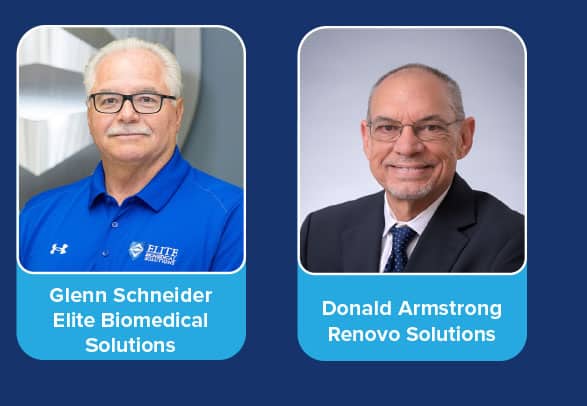
TechNation spoke with Elite Biomedical Solutions Chief Service Officer Glenn Schneider and Renovo Solutions Technical Training Program Manager Donald Armstrong, CBET, CHTM, CRES, AAMIF, about the future of HTM education, the growing value of apprenticeships and the competencies the next generation of biomeds will need to succeed.
Q: HOW ARE APPRENTICESHIPS EVOLVING IN THE HTM FIELD, AND WHAT MAKES THEM VALUABLE IN TODAY’S WORKFORCE?
SCHNEIDER: I think the importance of apprenticeships and cooperative education is becoming more recognized. AAMI’s Apprenticeship Program provides a thorough outline of education and work-related expectations necessary for students to be successful. The students enter full-time employment in the HTM field with valuable work experience gained during their apprenticeship and provide employers with technicians at a reduced pay rate while they are in training. Apprenticeships can become a source of full-time employees.
ARMSTRONG: It is not always easy to find and hire entry-level technicians, and it is even more challenging in hiring deserts or rural areas. Apprenticeship and internship programs have created new entry points into the profession while allowing employers to develop talent internally. Although these programs are still evolving, they have already proven to be a very positive addition to the HTM workforce and will play an important role in addressing future staffing needs.
Q: WITH SO MANY TRAINING OPTIONS AVAILABLE (OEMS, ISOS, SCHOOLS, ONLINE PLATFORMS, CONFERENCES, ETC.), HOW CAN BIOMEDS ENSURE THEY ARE CHOOSING HIGH-QUALITY, RELEVANT TRAINING?
SCHNEIDER: I recommend two things from the start. One would be to compare the education that they are receiving with the AAMI EQ education standard. This will give them a guide as to what entry-level competencies should be expected upon graduation. Secondly, they should sit for an AAMI certification exam (initially CABT, then CBET). This will prove to prospective employers that they have the necessary competencies to do the job.
ARMSTRONG: This is where having a strong professional network becomes invaluable. Connecting with experienced HTM professionals can help determine whether a particular training program is worthwhile and whether it aligns with your career goals. At Renovo, we have a robust internal training program, and Renovo leadership along with the training program leaders carefully evaluate outside training opportunities before recommending them. I would never advise a biomed to enroll in a training course without thoroughly researching its quality and relevance.
Q: HOW ARE EMERGING TECHNOLOGIES SUCH AS REMOTE LEARNING, VIRTUAL REALITY, AI, AND SIMULATION TOOLS CHANGING THE WAY HTM PROFESSIONALS ARE TRAINED?
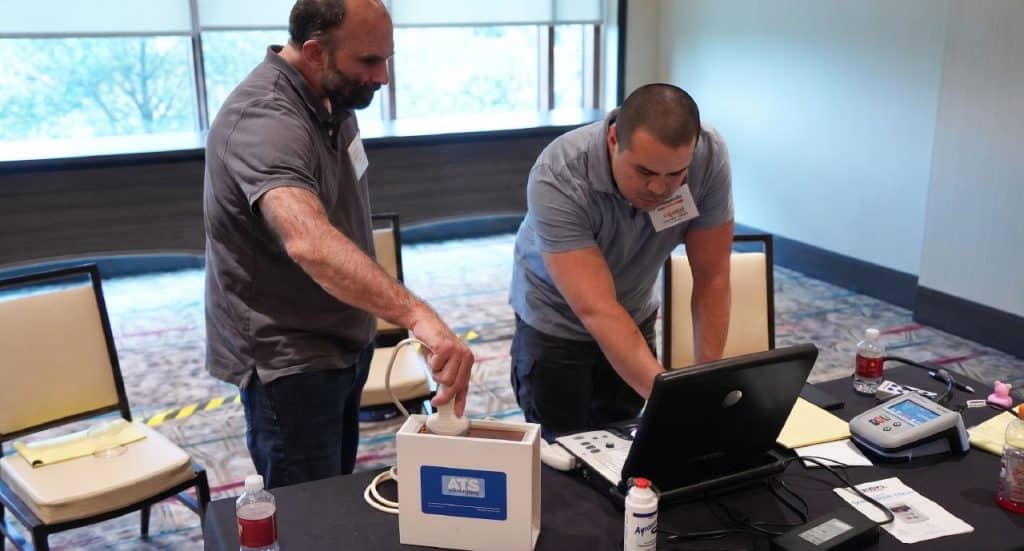
SCHNEIDER: These technologies are emerging rapidly. Any educational program should include how VR, AI, and simulation tools are being utilized and provide at least a basic understanding of the technology. These are extremely valuable tools to familiarize the student with a particular device/modality but are strictly tools. They can be used to effectively supplement “hands-on” experience but do not replace it.
ARMSTRONG: Emerging technologies are transforming many aspects of HTM education, but it is still difficult to replace quality hands-on training. AI virtual reality and remote learning all have an important place in modern training programs, especially for teaching foundational concepts and theory of operation. For complex devices such as ventilators or anesthesia machines, however, hands-on experience or immersive VR training is essential. I believe the future will be a blended approach that combines online instruction with practical lab or simulation experiences.
Q: WHAT ROLES DO CERTIFICATIONS (CBET, CABT, CRES, CLES, ETC.) PLAY IN CAREER ADVANCEMENT, AND ARE THEY BECOMING MORE IMPORTANT IN 2026?
SCHNEIDER: As I mentioned earlier, I feel that this is a great way to validate education and educational programs. These certifications provide employers with an understanding of the minimum knowledge level of a potential employee. Also, many employers are using these certifications to justify promotions.
ARMSTRONG: Professional certifications are more important than ever for career advancement in HTM. As an instructor for the AAMI CBET Review Course, I continue to be encouraged by the growing number of professionals pursuing certification each year. I am admittedly biased because I strongly believe certification demonstrates a commitment to professional excellence and lifelong learning. If you have the opportunity to pursue one or several, as I did, I highly encourage taking that step.
Q: WHAT SKILLS OR KNOWLEDGE AREAS SHOULD THE NEXT GENERATION OF HTM PROFESSIONALS PRIORITIZE AS MEDICAL TECHNOLOGY CONTINUES TO ADVANCE?
SCHNEIDER: The next generation should possess the traditional skills of communication, writing, electronics, troubleshooting, IT networks, computer hardware and software skills, and the use of AI, machine learning, virtual reality and simulation. Interaction with customers (patients, families, physicians and clinical staff) will always be a part of this profession, so soft skills continue to be important. Also, the next generation of HTM professionals must be comfortable with remote learning and collaboration.
ARMSTRONG: HTM will always be a highly technical profession, but IT and networking knowledge have become critical components of the modern biomed’s skill set. Equally important are communication and interpersonal skills, sometimes referred to as “soft skills,” because biomeds are an integral part of the larger healthcare team. We must be able to clearly explain the equipment we maintain, the issues we encounter, and the recommendations we make to clinicians and leadership alike.
Q: WHAT ELSE DO YOU THINK TECHNATION READERS SHOULD KNOW ABOUT TRAINING, APPRENTICESHIPS OR PROFESSIONAL DEVELOPMENT OPPORTUNITIES IN TODAY’S HTM LANDSCAPE?
SCHNEIDER: I feel that readers should be open to new methods of gaining information and should be open to new experiences. I also feel that they should be totally committed to apprenticeships, cooperative education and professional development as a job requirement for the entirety of their careers. HTM professionals should also remember that employers are investing in them when providing costly continuing education.
ARMSTRONG: If you are already working in HTM, you should always be looking for new learning opportunities and ways to expand your skills. Many employers offer education benefits or training incentives that can help cover the cost of conferences and courses, including events like the AAMI eXchange and MD Expo. If you are new to the profession, consider entering through an apprenticeship, internship or by earning the CABT certification. We need the next generation of HTM professionals, and there has never been a better time to join the field.