


By K. Richard Douglas
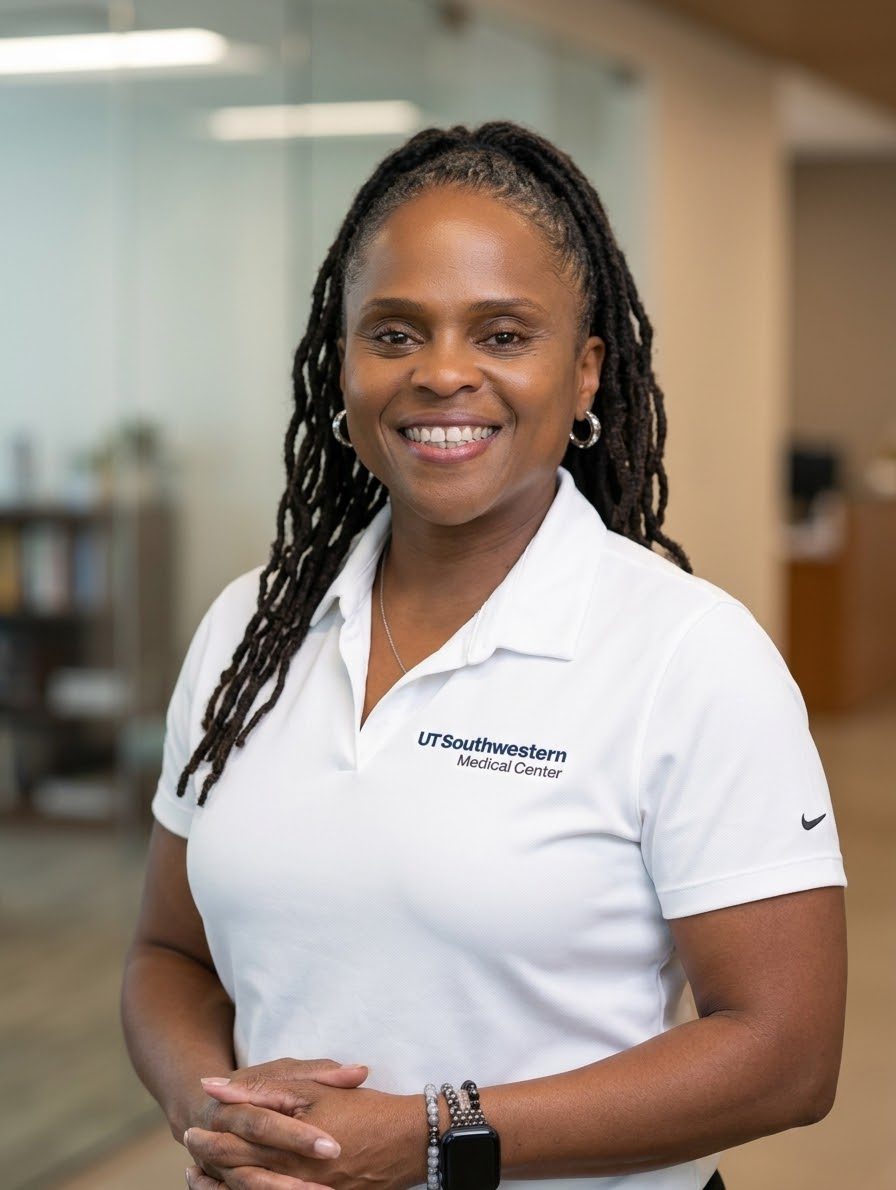 Two measures of accomplishment are to build something from scratch and to work your way up the career ladder.
By either measure, Tomisha Johnson, CHTM, has accomplished much.
Johnson, an HTM biomed manager at UT Southwestern Medical Center in Dallas, has experienced both life in the field as an entrepreneur and as a manager for an in-house biomed department.
“My passion for the field sparked during high school after a college visit to Texas State Technical College in Waco. Seeing the vital intersection between advanced technology, engineering and patient care immediately resonated with me. I knew right away that I wanted a career where my technical problem-solving skills could directly impact and improve lives behind the scenes in healthcare,” she says.
Johnson earned an Associate of Applied Science in Biomedical Equipment Technology degree from Texas State Technical College.
“That hands-on technical curriculum provided the foundational knowledge required for modern medical device architecture, electronic troubleshooting and patient safety standards, establishing the launching pad for my continuous education and growth in the field,” she says.
After college, Johnson began her career as a biomedical intern at Hillcrest Hospital and then advanced through technician roles to a supervisory position at a third-party company.
Embracing the entrepreneur role, she founded and served as CEO of her own independent service organization (ISO) for 15 years, overseeing end-to-end technical service delivery, regulatory compliance and business operations.
She then transitioned back into health systems as a biomedical equipment technician (BMET I, II, III), clinical engineer and, currently, healthcare technology management (HTM) manager at UT Southwestern Medical Center.
Johnson holds a Master of Science in Engineering Management degree.
Transitioning From ISO Owner to Biomed Manager
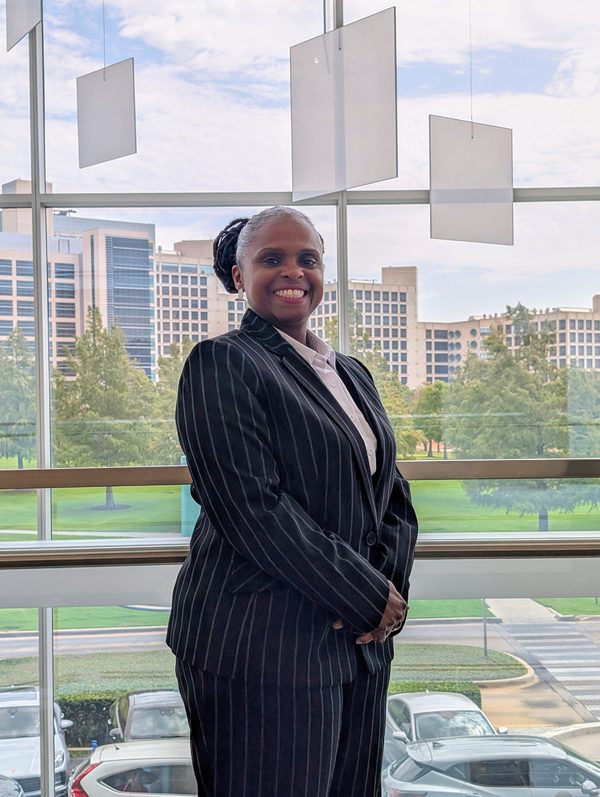 The career challenges have been varied as Johnson has both hung out a shingle as the owner of a biomed ISO and then returned to a leadership role on an HTM team after advancing through several roles.
“One of the most defining chapters of my career was building my own business and qualifying as a primary service vendor for the Dallas VA Medical Center to support and repair specialized research equipment and hospital sterilizers,” she says.
She says that navigating that venture came with significant operational and financial hurdles. One of those was cash flow and government billing cycles.
“Managing payroll for my team of technicians and securing credit lines to maintain critical parts inventory, all while navigating standard 45- to 90-day government disbursement terms,” Johnson says.
She also cites supply chain and regulatory rigor that included sourcing specialized components on tight turnarounds to keep mission-critical sterilization and research equipment fully compliant and operational.
Another business challenge involved sustained growth and continuous learning while running a business.
“Successfully leading an independent enterprise for 15 years while simultaneously funding my own undergraduate and graduate degrees, pursuing specialized technical certifications and mastering emerging medical device technologies,” Johnson explains.
She says that at UT Southwestern, that entrepreneurial resilience translates directly into leading enterprise-level medical device initiatives, system-wide equipment deployments and standardizing operational quality across clinical environments.
Leading an Enterprise-Wide Suction Regulator Rollout
One of those initiatives was an equipment replacement project.
“A prime example of a major project was directing the enterprise-wide transition from outdated, high-maintenance plastic suction regulators to standardized, precision Boehringer suction regulators across all 12 inpatient floors at Clements University Hospital (751 beds) and eight floors at Zale Lipshy Hospital (148 beds) and critical care units,” Johnson says.
She says that managing a multi-facility equipment rollout requires far more than logistics; it demands rigorous risk management, clinical consensus and zero disruption to daily patient care.
To execute the project, she says, she established a centralized operational roadmap.
That roadmap included strategic procurement and vendor integration through coordinated direct supply schedules and delivery pipelines to match real-time unit turnover rates, eliminating clinical downtime.
She says that another element of the project was standardized clinical workflows.
“Partnered directly with nursing leadership, respiratory therapy and clinical educators to deliver targeted, shift-friendly in-service training, ensuring 100% staff competency prior to go-live,” Johnson says.
She adds that standardized maintenance protocols within the CMMS ensured rapid incoming inspection of more than 2,300 regulators and consistent regulatory documentation.
Commissioning a 292-Bed Behavioral Health Hospital
“Since stepping into my management role, one of my most significant accomplishments was leading the healthcare technology management commissioning for the opening of the new 292-bed Texas Behavioral Health Center. Bringing a specialized facility of this scale online demanded meticulous technical governance, cross-departmental coordination and an uncompromising focus on both patient and technician safety,” Johnson says.
She explains that in a behavioral health environment, standard medical device operations require specialized oversight. “I directed the complete onboarding for all clinical assets across the 292-bed campus,” she says.
It was an effort that required CMMS asset integration as well as rigorous safety assurance.
“Cataloged, barcoded and built out comprehensive maintenance profiles for every incoming piece of medical technology within our CMMS to establish full audit readiness from day one. Led and oversaw comprehensive electrical safety inspections, performance verifications and manufacturer-baseline calibrations on 100% of the facility’s clinical fleet before clinical go-live,” Johnson adds.
She says that she also authored and implemented targeted standard operating procedures tailored to the unique behavioral health environment, establishing clear protocols for tool control, escort procedures and safety practices so technicians can perform routine maintenance and urgent repairs securely and effectively.
Beyond the rigors of the workplace, family comes first for Johnson.
“Outside of my professional career, my greatest foundation and pride is my family. I have been married for 27 years and am blessed with five daughters and four granddaughters,” she says.
No test seems too great for this HTM manager who has experienced the full spectrum of the profession’s challenges.
BIOMETRICS
Favorite BOOK: “The 7 Habits of Highly Effective People” by Stephen R. Covey
Favorite MOVIE: “Hidden Figures”
Favorite FOOD: Classic Southern soul food
Hidden Talent: Interior design and DIY home remodeling (especially working with epoxy finishes and modern aesthetic design)
Favorite part of being a biomed? “Knowing that behind every calibration, repair and safety check, our work directly safeguards patients and ensures clinical teams can deliver lifesaving care without hesitation.”
Why do you read TechNation? “It keeps me connected to the pulse of the HTM community — offering valuable insights on emerging medical technology trends, leadership strategies, regulatory shifts and peer perspectives across healthcare systems.”