



By Eric Massey
One of my directors was drowning.
Not because he lacked capability. Not because he didn’t care. He was drowning because he was reacting to everything – every call, every text, every email. The moment something came in, he stopped what he was doing and jumped to it. By the end of the day, he had worked on 10 things and finished none of them.
He was exhausted. His team felt his stress. And it was bleeding into his personal life.
I see this pattern constantly in HTM leadership. And if I am being honest, I have lived it myself. What that director needed was not a new system or a better app. He needed someone to coach him through a different way of working. That is what real coaching does. It does not give people the answer. It helps them find it and build the discipline to live it.
MANAGING VS. COACHING: UNDERSTANDING THE DIFFERENCE
Most HTM leaders are strong managers. They know how to direct work, set expectations and hold people accountable. However, managing and coaching are not the same thing. When you manage, you tell people what to do.
When you coach, you ask questions to find where the problem is, and you guide them to the answer. You let them do the work.
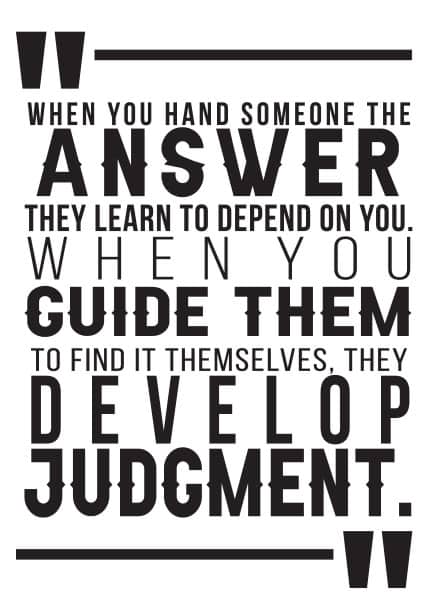
That distinction matters more than most leaders realize. When you hand someone the answer, they learn to depend on you. When you guide them to find it themselves, they develop judgment. They build confidence. They start thinking like leaders.
Coaching is not a soft skill. It is a leadership multiplier.
 THE COACHING CONVERSATION: ASK BEFORE YOU TELL
The most common mistake leaders make in coaching is jumping to solutions. Someone walks in with a problem, and the leader immediately offers the fix. It feels helpful. Actually, it is a missed opportunity.
Effective coaching starts with curiosity. Before offering direction, ask:
• “What do you think is driving this issue?”
• “What have you already tried?”
• “What do you think needs to happen next?”
• “What support do you need from me?”
These questions do something powerful. They communicate belief. When you ask instead of tell, you are saying: “I trust your ability to figure this out.” That trust is often the thing people need most to grow.
The goal of a coaching conversation is not to win it. The goal is improvement.
A CASE STUDY
Back to that director.
When I started coaching him, I did not walk in with a plan and tell him to follow it. I asked questions. What does your morning look like? When do you feel most productive? What keeps pulling you off course? What would change if you could protect your best hours?
Through those conversations, we landed on a structure together. He began blocking his first three hours every morning for high-impact work only – no calls, no texts, no email. After that block, he scheduled a dedicated 30- to 60-minute communication window to respond to everything that had come in.
It sounds simple. It was not easy. Leaders in this industry are wired to respond immediately. Every ping feels urgent. Stepping back from that instinct requires real discipline.
But he committed to it. And over time, something shifted. The most important work got done first. His team saw a calmer, more focused leader. He stopped ending his days behind and exhausted. The change followed him home, he became more present, more settled, more confident in who he was as a leader.
The outcome was the result of coaching – asking the right questions, creating space to think and holding him accountable to the structure he built for himself.
THE REACTIVE TRAP
I have worked all over the country and one thing that keeps showing up in leadership is reactivity.
Leaders stop what they are doing every time something comes in. A text, a call, an email, a walk-in. They shift constantly, work on everything at once, and finish very little. They are motion without progress.
The root of this pattern is not laziness or poor intention. It is a belief that responsiveness equals leadership. That being available means being effective.
It does not.
True leadership requires protected time to think, plan, coach and execute at a high level. Without structure, leaders spend all day fighting fires and wonder why they are not moving the team forward.
When I coach leaders on this, I guide them toward two non-negotiables:
• A protected morning block for high-impact, high-focus work
• Defined communication windows so responses are intentional, not reactive
These two disciplines have already transformed how my directors operate and my goal is to bring this same coaching to leaders across the entire HTM industry. Not because the ideas are revolutionary but because coaching creates the accountability to actually implement them.
HOW TO BUILD A COACHING CULTURE ON YOUR TEAM
Coaching is not just a one-on-one leadership tool. It is a cultural standard.
When leaders consistently coach rather than direct, teams begin to think differently. They bring solutions instead of just problems. They take ownership instead of waiting for instruction. They develop judgment that does not require constant oversight.
Here is how to build that culture:
• Ask before you answer. When someone brings you a problem, ask what they think before you offer a solution.
• Schedule regular one-on-ones with a coaching focus. Not just status updates. Conversations about growth, obstacles and development.
• Follow through. Check back on the commitments made in coaching conversations. Accountability is what separates a coaching culture from a conversation culture.
• Model it yourself. If you want your team to be coachable, show them what it looks like to receive feedback, adjust and grow.
Coaching is a skill. Like any skill, it improves with intentional practice.
FINAL THOUGHT
The leaders who build the strongest teams are not the ones with all the answers.
They are the ones who ask the right questions, create space for growth, and hold people accountable to becoming better versions of themselves.
In HTM, where technical demands are constant and leadership capacity is stretched, coaching is what separates programs that maintain from programs that grow.
Start with one conversation this week. Not to direct but to coach.
Ask the question. Create the space. Let them do the work.
That is where growth begins.