



Story by Andrea Jenkins
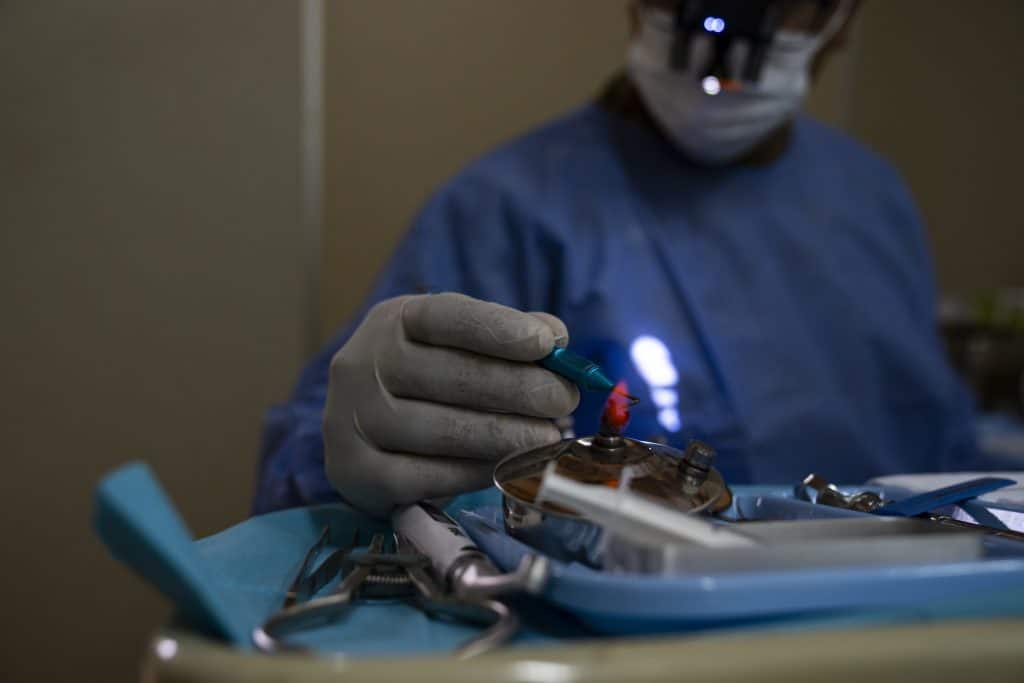
ASUNCIÓN, Paraguay | Repairing and maintaining dental equipment has been a behind-the-scenes but critical mission during Amistad 2025, where U.S. and Paraguayan biomedical technicians worked side-by-side to keep clinics operational.
Master Sgt. Andrew Oliverio, a biomedical equipment technician with the 943rd Aerospace Medicine Squadron, teamed up with Juan Alfonso, a Paraguayan dental equipment specialist with more than 30 years of experience, to service 18 dental facilities during the mission. Alfonso, who oversees over 500 chairs at about 250 sites across Paraguay, often works alone to keep equipment functioning.
“It’s not a big country, but for one person, it’s a lot of work,” Alfonso said. “Working with Andrew has been a great experience – we’ve learned from each other, and I’ve enjoyed seeing how he approaches repairs. Even with the language barrier, we understand each other because our work speaks a common language.”
The day-to-day repairs have ranged from replacing brittle hoses to troubleshooting missing components in donated dental chairs. In some cases, parts are simply unavailable, forcing the team to improvise solutions to restore functionality. Alfonso’s resourcefulness has made a strong impression on Oliverio.
“In the States, if a unit stopped working, we’d probably just replace it,” Oliverio said. “Here, Juan finds a way to fix it – he’s very creative. Like installing that transformer – that’s smart. I wouldn’t have known how to do that.”
One of Oliverio’s major contributions to the mission has been developing a new dental equipment tracking system for the Ministry of Health. Built at their request, the tool establishes a cradle-to-grave record for each device, including its location, service history, maintenance documentation and work orders.
“They asked for a tracking system to help manage equipment,” Oliverio said. “In the U.S., we call it lifecycle management – tracking a device from cradle to grave. I built a version of that for them so they can maintain records and service history long after we leave.”
The system replaces what Alfonso described as a patchwork process with no central recordkeeping. Instead of relying on memory or paperwork, clinics will now be able to log new equipment as it’s received, document all maintenance actions and track each item for its entire service life.
“This new tracking system will make it much easier to keep records and maintain our equipment,” Alfonso said. “It will help us respond faster, make better use of resources, and ensure our dentists can continue providing care.”
Oliverio said the tool is designed to be user-friendly and sustainable without U.S. support. “It’s something they can build on,” he said. “The idea is that 10 years from now, they’ll still be able to pull up the history of any device in the system.”
Amistad 2025 is a recurring medical readiness exercise designed to strengthen partnerships, enhance interoperability and provide real-world care alongside partner nation medical teams. For Oliverio and Alfonso, the mission has been about more than fixing equipment – it’s been about building professional relationships and sharing expertise that will endure beyond the exercise.
“The troubleshooting skills I’ve learned from working with him are something I’ll carry forward,” Oliverio said. “He knows the equipment inside and out, and I haven’t seen a problem he couldn’t solve. This has probably been one of my favorite things I’ve done. People are appreciative – even if we can’t fix something, they’re glad we’re here.”
“When you have two people who understand the equipment and share a common language in their work, you find ways to communicate even without words,” Oliverio added. “That’s what this mission has been all about – working together to solve problems.”
