




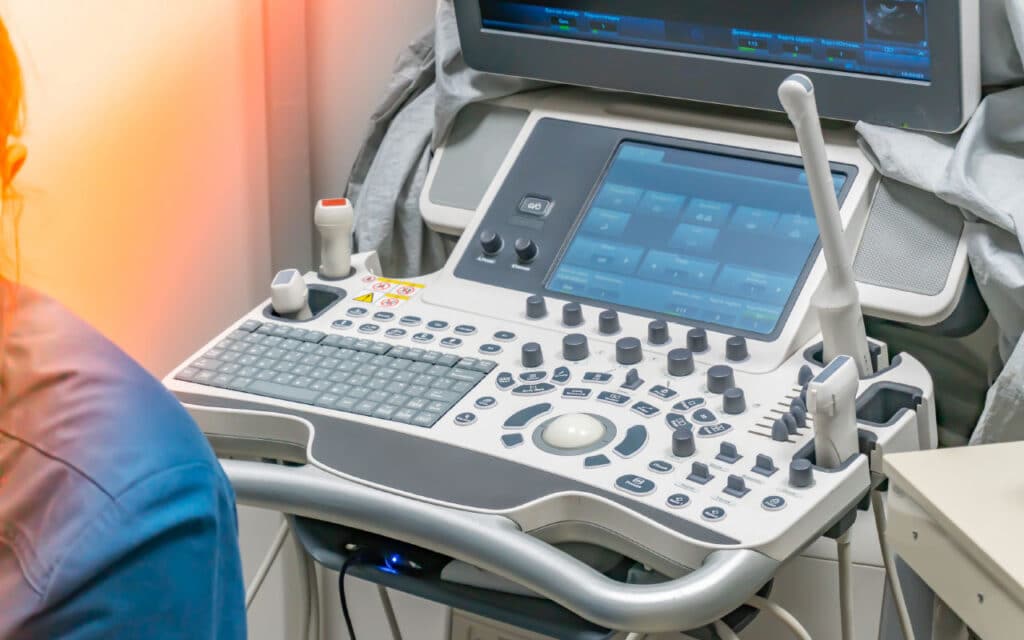
Ultrasound continues to be a hot topic in health care because of its many uses and technological advances. In this month’s roundtable article, TechNation shared valuable insights from HTM professionals with experience working with ultrasound systems and probes.
Participants in the ultrasound roundtable article are:
- AllParts Medical Multi-Vendor Ultrasound Modality Manager Joni S. Charles;
- Avante Health Solutions Senior Field Service Engineer Lyle Cmerek;
- MW Imaging Senior Service Director Tom Hanak;
- Summit Imaging Senior Vice President Larry Nguyen;
- Philips Senior Marketing Manager Juan Pablo Miranda Pantoja;
- Philips Ultrasound Senior Product Manager Terri Richardson;
- Innovatus Imaging Vice President of Sales and Marketing Matt Tomory;
- Philips Ultrasound Marketing Communications Leader Leigh White; and
- Philips Director of Product Marketing for Access to Care and OB Ultrasound Ann Marie Young.

Q: What are some of the latest features facilities should consider when purchasing ultrasound devices?
Charles: Shear wave elastography, contrast-enhanced ultrasound (CEUS), ultrasound fusion imaging, and the integration of AI are noteworthy advancements in medical imaging. Additionally, keep an eye out for innovations in transducer technologies, including both design and functionalities.
Cmerek: The world of ultrasound is constantly evolving. New technologies, ideas, and features are ever-present. Not all the new developments stick around for the long haul. Here are some of the newer things that I believe are standing the test of time:
- Handheld – They are extremely portable and have a tiny footprint. They are showing up in new departments and new users’ pockets.
- Strain – This technology has the capacity to take in-depth measurements of the heart muscle.
- Sheer wave/elastography – This technology uses ultrasound to detect tissue stiffness.
Hanak: Some of the latest features are advanced imaging technologies like 3D/4D imaging for better visualization; Artificial intelligence (AI) integration for automated image analysis and enhanced diagnostics; portable and lightweight designs for increased mobility and flexibility wireless connectivity for seamless data transfer and integration with other devices; enhanced ergonomics for improved user comfort during prolonged use; touchscreen interfaces with intuitive user interfaces for easier navigation and operation; expanded transducer options to cover a wide range of application and specialties; and integration with telemedicine platforms for remote consultations and collaborations.
Nguyen: Opt for machines with high-resolution imaging capabilities for clearer and more detailed images. This is particularly important for diagnostic accuracy. Advanced transducer technology also plays a crucial role in ultrasound imaging quality. Look for machines with advanced transducer technology, such as matrix array transducers, which can provide better penetration and resolution for various applications.
Tomory: The evolution of ultrasound throughout my career has been amazing to watch and experience. One of the more recent features is Artificial Intelligence (AI) which most manufacturers have embraced and implemented. This technology “learns” and adapts over time to improve diagnoses, image optimization, and calculation accuracy as well as reduce false positives and speed up exams. Another “feature” would be access to onboard OEM diagnostics. While not a clinical feature, this is critical to supporting the system after the manufacturer’s warranty has expired and is much easier to obtain during the purchase process than when nearing the end of a warranty period. The average retention of ultrasound systems is approximately seven years, and the average warranty is one year so planning for the six-year period post warranty starts at the point of purchase.
Young: some of the latest features facilities should consider when purchasing ultrasound devices are:
- AI features in cardiac and lung, or quick scan and optimization tools
- Reporting options from device
- Array of transducer selection
- Product life cycle and upgrade path
- Mobility, cleanability and battery life
- Total cost of ownership
- Product reliability and where parts are sourced
- Local service support
Q: What are the pros and cons of buying brand new versus buying refurbished probes/transducers?
Charles: The primary advantage of purchasing refurbished items lies in their cost-effectiveness. However, it’s crucial to select reputable companies when buying refurbished ultrasound products, as quality is a very important factor. New probe warranties typically offer the longest and most comprehensive coverage. When buying refurbished probes, it’s essential to inquire about the available warranties.
Cmerek: The biggest difference between new and refurbished probes is cost versus the age of the probe. New probes – They are brand new, but more expensive. Refurb probes – They are used, but less expensive.
Hanak: When considering whether to buy new or refurbished probes/transducers for ultrasound devices, here are some pros and cons to keep in mind:
Buying New Pros
- Warranty: New probes usually come with a manufacturer’s warranty, providing peace of mind regarding potential defects or malfunctions.
- Latest Technology: New probes often incorporate the latest technological advancements and imaging capabilities.
- Longevity: New probes are likely to have a longer lifespan compared to refurbished ones.
- Support: Manufacturers typically provide technical support and updates for new probes.
Buying New Cons
- Higher Cost: New probes are generally more expensive than refurbished ones.
- Limited Availability: Depending on the manufacturer and model, new probes may have limited availability, especially for older ultrasound devices.
- Response Times: Depending on the company, there can be longer turnaround times with some service providers when buying new.
Buying Refurbished Pros
- Cost Savings: Refurbished probes are typically less expensive, making them more budget friendly.
- Quality Assurance: Reputable vendors thoroughly inspect and test refurbished probes to ensure they meet quality standards.
- Availability: Refurbished probes may be more readily available, especially for older ultrasound models.
Buying Refurbished Cons:
- Limited Warranty: Refurbished probes may come with a shorter warranty period or limited warranty coverage compared to new probes.
- Potential for Wear and Tear: Despite refurbishment, there’s a possibility that refurbished probes may have more wear and tear compared to new ones, potentially affecting performance or longevity.
- Technology Limitations: Refurbished probes may not incorporate the latest technological advancements or imaging capabilities available in newer models.
Ultimately, the decision between buying new or refurbished probes depends on factors such as budget, desired features, and availability of compatible options for your ultrasound device.
Nguyen: The pros of buying refurbished versus brand new is cost savings. Refurbished probes/transducers are generally more affordable than brand new ones that are identical in model and functionality, making them a cost-effective option for facilities with budget constraints.
Tomory: Transducers are the most expensive aspect of ultrasound maintenance and repair throughout the life of an ultrasound system. Some TechNation readers may not know this, but an ultrasound probe is a Class II finished medical device with its own 510k certification – not an accessory to an ultrasound system and needs to be treated as such. New transducers come from the OEM with documentation that the device performs per the 510k application along with a premium price tag. What about “refurbished” probes and how do you KNOW the devices perform as the OEM intended and conforms to OEM form, fit and function? At a bare minimum, ISO 13485:2016 certification, with repair of medical ultrasound transducers in the Scope of Registration, on the certificate should be provided. How does the provider repair, test and prove the device does what they say it does? At Innovatus Imaging, replacement transducer arrays are manufactured in our FDA-registered facility for ultrasound design and manufacturing, and repair processes, materials, cable harnesses, etc. are developed and informed in accordance with FDA guidelines. Once qualified, these materials and processes are transferred to our ISO 13485:2016 certified Ultrasound Repair Center of Excellence to be implemented into our repairs.
Q: With technology advancing so quickly, do you think that it’s possible for a single service provider to address ultrasound systems and probes?
Charles: Addressing … absolutely! Providing direct service for ALL ultrasound products … not quite. Servicing multi-vendor ultrasound typically involves a blend of direct service for the majority and occasional service interaction with specific manufacturers. AllParts can help!
Cmerek: At Avante, we have advanced machinery, techniques, and an R&D team who have spent their careers learning how to develop specific repairs on ultrasound parts, probes and systems. We have a team of field service engineers, application specialists, and probe and part repair specialists who can assist onsite and/or remotely. We have the ability to repair parts and probes and an inventory of parts and probes in stock if and when an issue arises. We are more than equipped and able to support you and your ultrasound machines in any way for the entirety of their lifespan.
Hanak: Given the rapid pace of technological advancement in the field of ultrasound, it can be challenging for a single provider to address all aspects of ultrasound systems and probes comprehensively. However, MW Imaging specializes in offering a wide range of ultrasound equipment and accessories, including systems, probes, and related services. We often collaborate with multiple manufacturers and suppliers to offer diverse options to meet various customer needs.
Nguyen: Yes, it is possible for a single service provider to address both ultrasound systems and probes, especially with advancements in technology and the expertise of service providers. The most capable ultrasound repair organizations are experts in complex electronic repair which is the main source of failure for systems and probes.
Tomory: As mentioned earlier, transducers are finished Class II medical devices with their own 510k. A tremendous amount of acoustic, material, mechanical and electrical engineering has gone in to designing, developing and manufacturing them. Transducer repair is a specialty which requires singular focus on restoring these devices back to OEM intent, form, fit and function. Think about the medical care industry; if you have a disease, do you go to a generalist or a specialist? I want a specialist who is trained and is focused on one thing: to get me back to my “intended design” so to speak. This is what TechNation readers should be looking for when choosing repair providers.
White: Yes, if the single service provider has deep clinical and technical expertise across clinical applications and the ability to focus resources on multiple clinical areas at the same time.
Q: What are the advantages and challenges of a handheld POCUS system compared to a cart-based ultrasound system?
Charles: Historically, POCUS has been hindered by image quality and limited options. However, the point-of-care industry has significantly improved image quality over the past decade. Nevertheless, it remains challenging to incorporate all the advanced features of a fully fledged ultrasound unit into a smaller, more mobile device.
Cmerek: There is a place for both handheld and cart-based units. Handheld systems are used in applications where portability trumps penetration and image quality such as ERs, ambulances, etc. A cart-based system has more processing power, more features, much better penetration, and is often located in departments where the best image quality is necessary such as radiology, cardiology, anesthesia, etc.
Hanak: Advantages handheld point of care ultrasound system (POCUS) compared to cart-based ultrasound system:
- Portability: Handheld POCUS systems are lightweight and portable, allowing for easy transport within health care facilities or even in the field. Cart-based systems are typically bulkier and less maneuverable.
- Point-of-Care Use: Handheld POCUS systems enable clinicians to perform ultrasound examinations directly at the patient’s bedside, facilitating real-time diagnosis and decision-making without the need to transfer the patient to a dedicated imaging suite.
- Immediate Access: With handheld POCUS systems, health care providers have immediate access to ultrasound imaging, which can expedite the diagnostic process and improve patient outcomes, especially in emergency or critical care settings.
- Ease of Use: Handheld POCUS systems are often designed with user-friendly interfaces and simplified controls, making them more accessible to a wider range of health care professionals, including non-specialists.
Challenges of POCUS compared to cart-based ultrasound system:
- Image Quality: Handheld POCUS systems may have limitations in image quality compared to cart-based systems, especially for complex or detailed examinations. The smaller size and simplified design of handheld devices may compromise certain imaging capabilities.
- Limited Applications: Handheld POCUS systems may not offer the same breadth of imaging capabilities and transducer options as cart-based systems, restricting their utility for certain specialized examinations or procedures.
- Ergonomics: Prolonged use of handheld POCUS devices may lead to ergonomic challenges for clinicians, potentially causing discomfort or fatigue, whereas cart-based systems often provide more ergonomic configurations for extended use.
- Cost: While handheld POCUS systems may be more affordable upfront, they may require additional investments in accessories or software updates over time. In contrast, cart-based systems typically have higher initial costs but may offer better scalability and long-term value.
Ultimately, the choice between handheld POCUS and cart-based ultrasound systems depends on factors such as clinical needs, workflow preferences and budget considerations.
Nguyen: Point-of-care imaging: Handheld POCUS systems enable point-of-care imaging, allowing clinicians to perform ultrasound examinations directly at the patient’s bedside. This facilitates immediate diagnosis, treatment planning and monitoring without the need for patient transportation to a dedicated ultrasound suite.
Pantoja: 1. Portability and accessibility: HHUS devices are compact and lightweight, making them easy to carry around. Clinicians can use HHUS at the point of care, whether in the emergency department, clinic, or bedside, without needing to move patients to a dedicated ultrasound room. Devices like Lumify also feature Reacts (Collaboration Live) – this allows remote collaboration to get answers and support faster. 2. Immediacy of Results: HHUS provides real-time imaging, allowing clinicians to visualize structures immediately during patient assessment. Rapid access to ultrasound results aids in timely clinical decision-making. 3. Cost-Effectiveness: HHUS devices are generally more affordable than large cart-based systems. They offer a cost-effective solution for routine imaging needs. 4. Workflow Integration: HHUS can be seamlessly integrated into existing workflows. Local storage options allow for efficient data management and integration with PACS. 5. Reduced Need for Follow-Up Testing: Preliminary studies suggest that HHUS use in outpatient settings reduces the need for follow-up testing. False negatives are relatively low when HHUS is employed – one article concluded: “The advantages of handheld advanced imaging systems are evident. Despite challenges related to device operation and image management, administrative hospital support and fiscal benefits can help overcome these obstacles. Medical education plays a crucial role in driving innovation and adoption of handheld ultrasound (HHU) devices. Training the next generation of physicians using these platforms fosters familiarity and comfort, likely extending into regular practice.” Looking ahead, research to enhance and validate HHU use will be pivotal for patient outcomes and expanding its applications. Machine learning and tele-ultrasound are poised to transform point-of-care ultrasound (POCUS), and physicians should actively embrace these technologies for better patient care.
Tomory: POCUS has come a long way since I used to travel with my trusty Sonosite 180 ultrasound system (reminded me of a Fisher Price toy but worked remarkably well!). They are everywhere in health care facilities these days due to size, portability, capabilities, cost; and their use has expanded to clinicians beyond specialists like sonographers. These are the main advantages and opportunities of these amazing systems. The challenge is that they are still not to the level of console-based systems in terms of image quality, features, and specialized operators like credentialed ultrasound technologists. Just because you CAN operate an ultrasound system and have had some training, does not make you a specialist or expert. For detailed, diagnostic exams, I want an up-to-date console-based system operated by an SDMS registered sonographer.
Q: What else do you think TechNation readers need to know about purchasing and servicing ultrasound devices?
Charles: When acquiring an ultrasound unit, it’s crucial to factor in the post-warranty servicing costs. As you make the purchase, it’s advisable to concurrently devise a plan for its servicing, whether it involves in-house biomedical support, third-party servicing, or opting for a manufacturer extended warranty.
Cmerek: Most importantly, you have choices. Find a company that gives you what you want, when you want it, and doesn’t try to pressure you into something that you don’t want. Work with someone who knows all the current products, who will ask questions to understand your needs, and who is able to tailor your specific requirements to determine the make/model that works best for you. Partnering with companies like Avante, which are able to support you after your machine is installed with onsite application support, remote application support, service training, tech support, a team of field service engineers, service contracts, non-contractual service, probe repair, part sales, and any other specific need that you have.
Hanak: Readers should know:
- Training and Support: Ensure that the provider offers comprehensive training and ongoing technical support for the purchased ultrasound devices. Proper training is essential for maximizing the capabilities of the equipment and ensuring accurate diagnosis and treatment.
- Compatibility and Integration: Consider the compatibility of the ultrasound devices with existing infrastructure, such as electronic medical record (EMR) systems and other diagnostic equipment. Integration capabilities can streamline workflow and improve efficiency within health care facilities.
- Regulatory Compliance: Verify that the ultrasound devices meet regulatory standards and certifications applicable to the region where they will be used. Compliance with regulations ensures patient safety and adherence to quality standards.
- Service Contracts: Evaluate the availability and terms of service contracts offered by the provider. Service contracts can provide peace of mind by covering maintenance, repairs and replacements, reducing downtime and unexpected expenses.
- Future-proofing: Anticipate future needs and technological advancements in ultrasound imaging when making purchasing decisions. Investing in equipment with upgradeable software and modular designs can help future-proof your investment and adapt to evolving clinical requirements.
- User Feedback and Reviews: Consider feedback and reviews from other health care professionals who have experience with the ultrasound devices you’re considering. Real-world insights can offer valuable perspectives on usability, performance, and reliability.
By carefully considering these factors, TechNation readers can make informed decisions when purchasing and servicing ultrasound devices, ultimately enhancing patient care and clinical outcomes.
Nguyen: An ultrasound supplier’s reputation and support is critical. When selecting a vendor for ultrasound devices, consider their reputation for reliability, quality and customer support. Choose vendors with a proven track record of providing timely maintenance, technical assistance and replacement parts.
Richardson: Smart solutions maximize your ultrasound investment. We partner with customers across the lifetime of their systems to help realize more lasting value from our technology investments while empowering human connections that elevate the overall health care experience. Continuous life cycle innovation means we:
- Educate with clinical education and technical training
- Optimize via performance analytics as well as data and image management
- Evolve through virtual access to expertise, connected capabilities and cybersecurity
- Maintain with fleet management, support, upgrades and parts
Tomory: Being in sales, I often tell clients and prospective clients: I can sit here and tell you all day about how good we are – then we could both be bored. Instead of that, let me provide a live tour which demonstrates dedication to all the scientific disciplines required to restore ultrasound devices back to OEM intent, form, fit and function. This is truly what I hope your readers get out of this article. There are many claims in the repair industry which cause me to chuckle or groan – see for yourself, ask the right questions and make informed decisions based on that work.
