



BY K. Richard Douglas
 The Lehigh Valley region of eastern Pennsylvania is made up of two counties; Lehigh and Northampton. The region includes the cities of Bethlehem, Easton and Allentown. Known as “The Valley,” it sits on the border with New Jersey and is a short drive from New York City and Philadelphia.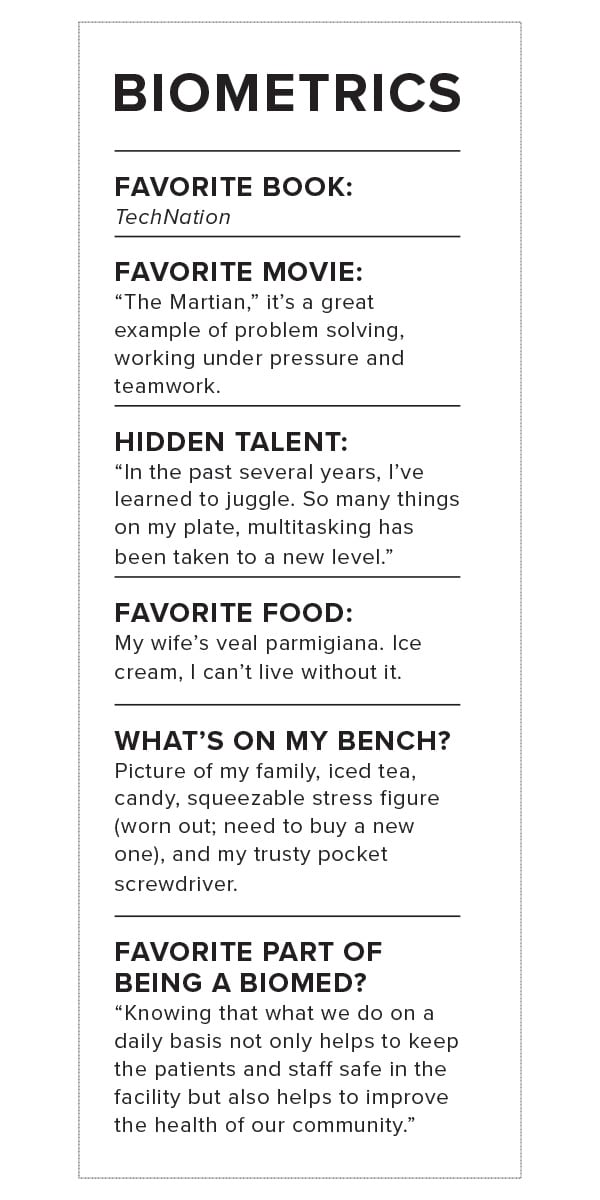
The region is also known for good health care. One of the local health care systems is the Lehigh Valley Health Network (LVHN); comprised of 13 hospital campuses and several other facilities.
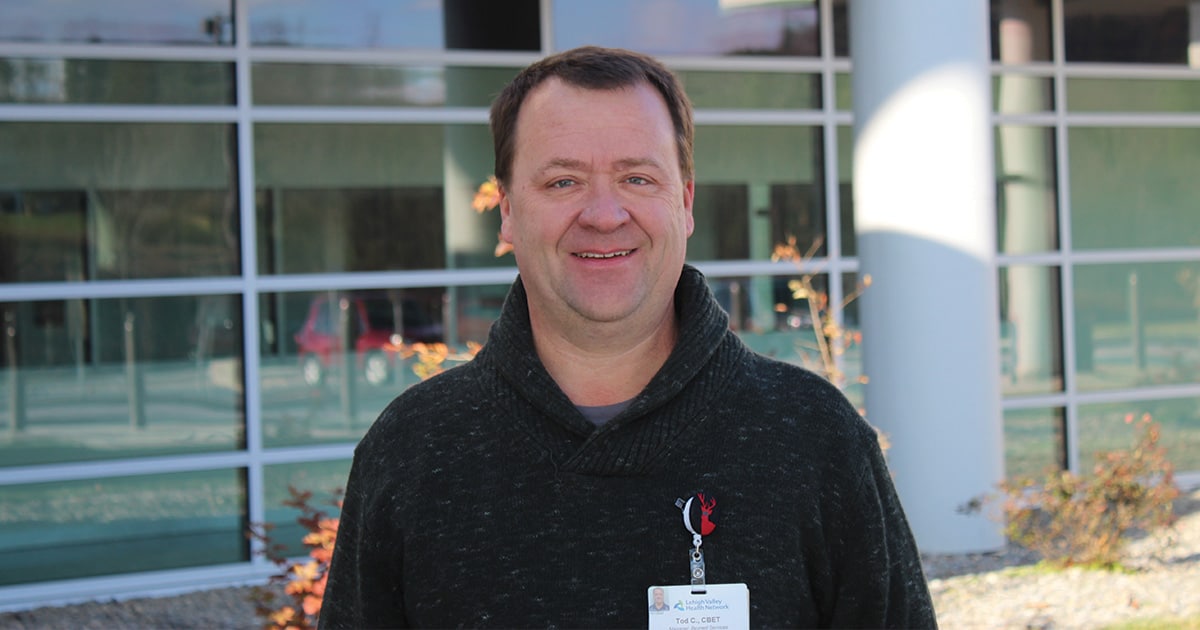
Tod Cook is a technical service manager in the clinical engineering department for the system. Last month was Cook’s 33rd year with the system.
His entry into the profession was a no-brainer, even at an early age.
“I was a senior in high school, had an interest in electronics and tinkering with things. Saw the occupation of biomedical equipment technician in a career guide and liked the fact it was a two-year associate degree,” Cook says.
He says that at the time, he had no idea what was in his future.
“I didn’t know anyone who was doing this type of work. At the time I was going to school, running my own grass service. I thought I would like working inside in a professional environment,” Cook says.
Cook completed the associate in biomedical equipment technology degree program at Penn State University Lehman campus in Dallas, Pennsylvania in 1989.
“I also completed a 10-week internship at Community Medical Center in Scranton, Pennsylvania,” he says.
At Lehigh Valley Health Network, Cook started as an entry-level technician.
“I was promoted to a BMET II after about seven years’ experience, when job descriptions were changed. Obtained CBET (BMET III) in 2005. Advanced to become a supervisor in 2017. Promoted to a manager of biomedical services in 2019, overseeing three LVHN facilities. I’m one of five managers supporting our network,” Cook says.
Opening Hospitals During A Pandemic
The COVID-19 pandemic provided an exceptional challenge to those in HTM. Along with clinical counterparts, there were demands on time, endurance and emotions on HTM professionals that will not be forgotten.
“Like many others in the HTM field have experienced, the COVID-19 pandemic was challenging. The CE team was here on-site everyday doing our jobs. It was very stressful. Making sure equipment stayed functional and available; prepping for a possible surge of patients,” Cook says. He says that he remembers in March of 2020, he was on-call.
“I received a call from a nursing supervisor; he was asking to have some PAPR units checked and additional devices gathered. I came on-site, checked the devices he had and started gathering other kits from throughout the facility. I spent about six hours that Saturday testing, repairing and putting complete PAPR kits together,” Cook remembers.
He says that he didn’t know what was coming their way and it was several days later when they found out.
“Late 2020/early 2021, the CE team here helped coordinate and move anesthesia machines from one facility OR to another campus. We then turned a 10-bed recovery unit into a 10-bed COVID-19 ICU isolation area. The plan was, if needed, to use the ventilators on the anesthesia machines in the event all other ventilators were in use,” Cook says.
He says that he is sure that HTM departments across the nation were thinking of, and doing, this type of creative work in preparation for surges.
“That’s what we all do; problem solve, maintain equipment, keep facilities operational, and if we can’t resolve, we find someone who can assist. Not knowing if one day, you would get COVID-19 at work and take it home to your family, just added to the stress and anxiety,” Cook says.
He says that he didn’t see his parents for months because he was concerned that he might unknowingly transmit it to them.
“When I did see them, it was talking with them through a window while I stood outside,” he says.
Cook and his colleagues still pulled off an impressive feat, even with the additional challenges of the pandemic.
“While working through the pandemic, our network opened three new hospitals in a one-year timeframe along with merging with four hospitals and about 18 off-campus rehab facilities. In 2019, the clinical engineering department was merged into the ‘Technology Department’ with the information services department in the network. This integration now gives CE a direct connection to network leadership,” Cook says.
He says that yet another change to mention, in April of 2021, the network moved to a new CMMS while doing all the above.
“It’s been a rollercoaster the past two years. I appreciate my staff and the entire CE team here at LVHN. I’m thankful for my family and their support during these unprecedented times,” Cook says.
When not on the job, Cook spends time with his wife of 30 years; Suellen. There is also his daughter Susan, a mechanical engineer and son Jordan, a college student studying to be a biology teacher.
“During the start of the COVID-19 pandemic, my son got me interested in beekeeping,” Cook says.
He says that he enjoys hiking, skiing, kayaking and hunting. He does some automotive repair of his family’s vehicles as well, which isn’t necessarily a hobby, but more out of a necessity.
“Hats off to all those in the HTM field getting it done day in and day out, supporting your colleagues in nursing, and most of all, helping the patients who come to the hospitals for care,” Cook adds.
Hats off to you as well, sir.
