




Dr. Brian Bell works with students in the field of biomedical engineering technology education. By creating biomedical STEM kits that students can use anywhere, he has allowed students more flexibility in their learning, even with online courses.
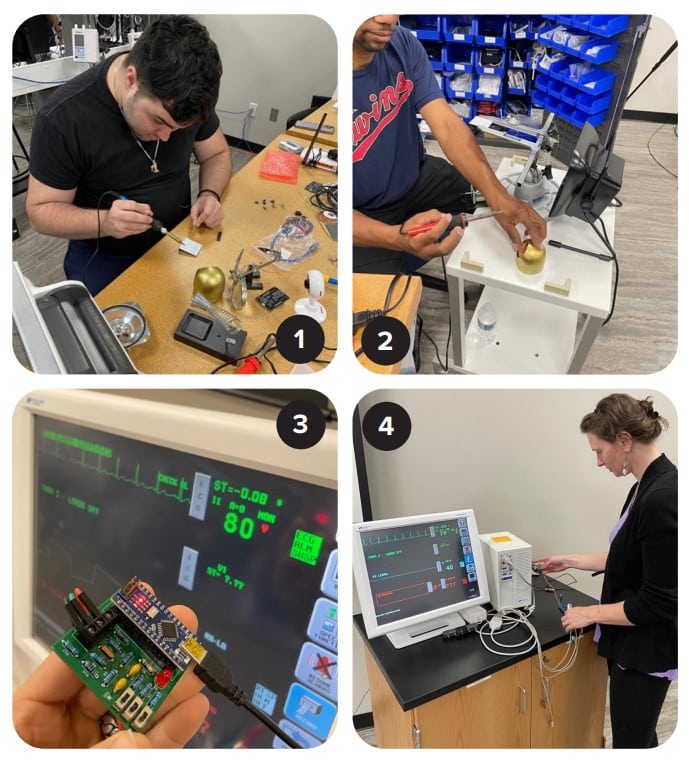
Recently, he has implemented new hands-on labs using electronics kits designed for students to learn how to build their own patient simulator and vital signs monitor. According to Bell, “these hands-on projects are the best way for students to explore technology, manufacturing and engineering of health care devices.”
The goal of these kits is to expand the opportunity to learn about biomedical engineering technology.
“At HTM Workshop, our goal is to create great content in healthcare engineering and technology. In doing so, we hope to raise awareness of the HTM and biomed career fields,” says Bell.
These kits are now being used all over the country and the world to help students learn competencies in biomedical engineering technology.
What do students do?
First, students learn the correct way to solder using video training. Next, they apply the concepts they learn, such as heat, corrosion, and thermal conductivity, to create a good solder joint.
Finally, once students build and assemble their kit, they can analyze their own heart’s electrocardiograph.
Competencies students learn
SPC students learn about electrocardiography (ECG), and by using the free educational resources from HTM workshop and the HTM Workshop YouTube Channel, they learn how to connect patients to an electrocardiogram, set patient alarms and identify common ECG artifacts.
Students also have to answer questions about the electronics and the health care side of technology, such as describing one type of digital filter used in patient monitors and calculating the gain of the TLC272 by measuring the change in voltage between pins 1 and 6 on the chip and researching the common alarm limits for different devices.
In addition to building their own electrocardiography devices, students get to create their own ECG simulator to test patient monitors and build on their electrical safety testing knowledge. Student can then use the ECG simulator to test different alarms on patient monitors or the ECG simulator they already built!
To show competency learners must:
- Identify correct electronic components
- Solder components onto PCB board
- Verify and test the board
- Troubleshoot and fix any issues that occur
- Built and tested an electrocardiogram
- Build and test a patient simulator (ECG and respiratory rate)
- Test patient monitor alarms
What do students say?
“The ECG Simulator project was an excellent addition to the course,” says a biomed student.
Bell’s efforts to provide students with hands-on learning opportunities and to expand the knowledge and awareness of biomedical engineering technology are making a positive impact on the next generation of learners.
“The ECG Reader was like Legos but for biomedical devices, you get to put all the parts together and see how it works,” a student said.
The use of these biomedical learning kits has helped bridge the gap between traditional classroom learning and practical application. With these hands-on projects, students are not only learning important skills in soldering and electronics but also gaining valuable knowledge and experience in healthcare technology. By building their own devices and analyzing their own vital signs, they are actively engaged in the learning process and are more likely to retain the knowledge they acquire. As the use of these kits continues to grow, it’s exciting to think about the impact that they will have on the future of biomedical engineering technology and the talented and competent professionals who will shape the industry.
Brian Bell, Ph.D., faculty biomedical engineering technology at St. Petersburg College in Florida and founder of HTM Workshop. For more information, visit HTM-Workshop.com.
