



By K. Richard Douglas
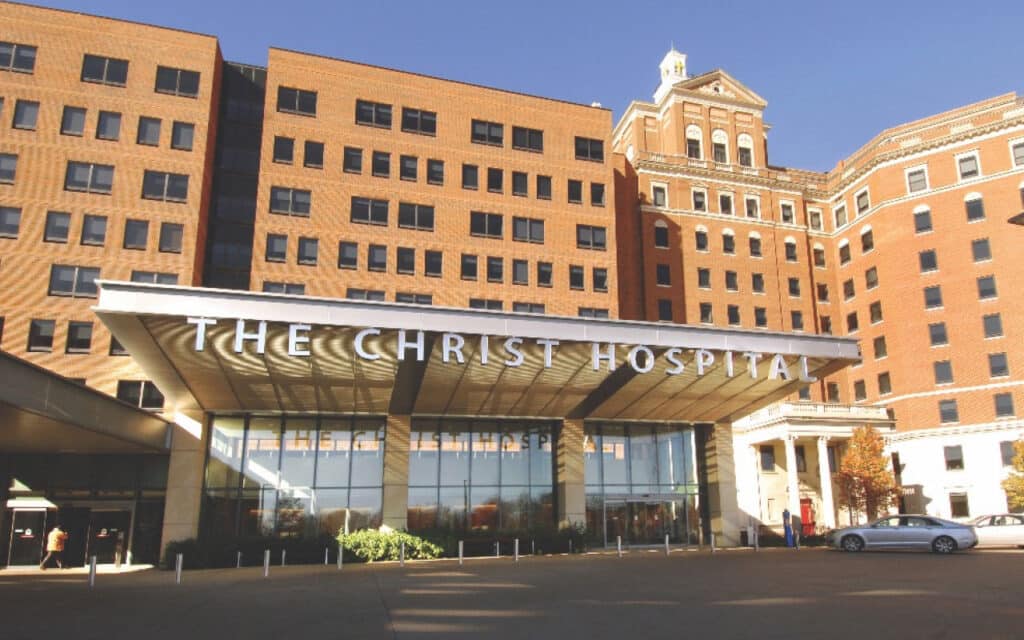
The Christ Hospital in Cincinnati, Ohio, has been caring for patients for more than 130 years. The hospital has developed into a health network that includes several facilities and more than 100 physician locations.
The extensive network requires management of 30,000 devices with an approximate $210 million replacement value.
“HTM is responsible for hospital, AOC, physician offices, nursing school equipment, research center, across Ohio, Kentucky and Indiana,” says Greg Herr, director of healthcare technology management (HTM) department at The Christ Hospital.
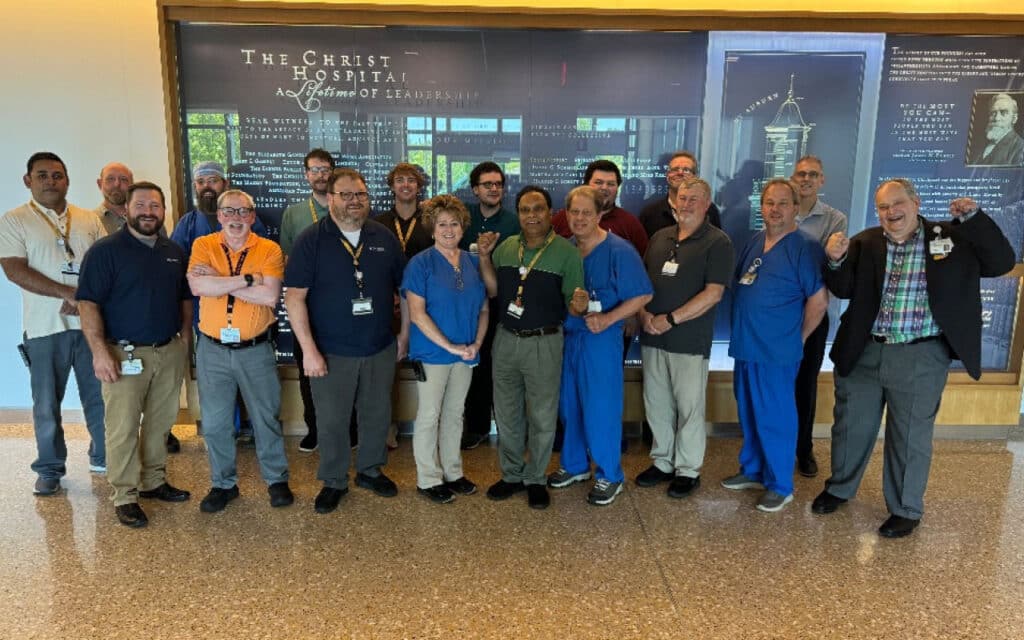
The network’s HTM department has 32 full-time employees, which includes two managers, a supervisor of business operations and a biomed equipment lead. The team also has three specialist BMET 2s, a respiratory specialist BMET 2, two specialists for anesthesia, an imaging team with three specialist 3s, two specialist 2s and a specialist 1. The department also has an IT medical security specialist. There are also other biomeds and specialists that round out the diverse team.
“HTM handles systems in cath/hemo, EP, oncology, surgery, infusion pumps (two-way integration), data integration engine (data capsule), several different PACS (cardiology, orthopedics, OB/neonatal, vascular, and just in process of implementing a new all-in-one 3D portal for cardiology, and next radiology.) Starting work on enterprise imaging architecture,” Herr says.
“The department has one team dedicated to CE/IT integration and works with the biomedical and imaging team to ensure equipment is integrated safely with proper documentation,” Herr says.
Herr says that service contracts are centralized in HTM except for lab, a few in the operating room and central. He says they are managed by the business operations supervisor and director, and coordinated with purchasing and legal.
In terms of data collection, when onboarding new equipment, the process to capture required information and a master class table is used to reduce errors and duplicate descriptions.
“Data is collected from the purchasing process, much of the medical capital – but not all – goes through HTM. The CMMS vendor reviews new system entries, cleans up master equipment index names, and other data quality. Data collection for contracts are collected as contracts are signed and POs created. Date, amount, vendor, term of contract and coverage are identified,” Herr says.
He says that a new process is being developed to streamline workflow and get more accurate data.
Multiple Projects
The department is involved in several projects with IT, nursing and other clinical services.
Some of those projects include new equipment in the NICU, cath lab replacements and an imaging wing at Liberty Medical Center.
“During COVID, HTM moved systems from hospital to hospital, setup a temporary ICUs, and converted anesthesia machines to ventilators during the worst of the crisis. Today, mostly recovered, the department is still getting back on track with projects delayed at the time,” Herr says.
He says that the team also worked on an EP project to develop a new five-room suite, with ancillary support areas. It has been a project for 30 months and was recently completed.
“HTM planned and moved much of the existing systems. Included new imaging systems, but also HTM worked out new team sharing in the room, lighting and sound needs. Now, the department is swinging back to the old area and developing it for IR/vascular,” Herr says.
He adds that a current big project is a centralized monitor unit, to collapse all the unit stations into one centrally located system.
The HTM team has also applied its collective expertise to problem-solving.
Herr says that a few years ago, the hospital lost considerable dollars with fridge/freezer failures, either because to the devices failed or loss of power. The health care system was searched and the system began targeting high-risk fridges/freezers with drugs (pharmacy or lab), food and nutrition, off-site physician offices for vaccines/drugs, and med fridges in nursing units, Herr adds.
He says that HTM worked with users on alarm escalation, managed continuity and helped clinical users develop standardized practices using the temp tracking software. This is an ongoing project that is already several years in duration. The health care system lost only small amounts of items in a physician office fridge with loss of power when the owner did not respond in time. Otherwise, it has cut losses substantially.
At The Christ Hospital, the healthcare technology management department keeps the large inventory operating and refrigerators cold.
