




By K. Richard Douglas
ProHealth Care is one of the largest health care providers in Wisconsin, serving patients in Waukesha County and portions of Dodge, Jefferson, Racine and Walworth counties. The health system has been operating since 1914.
Many innovations and expansions have occurred since its founding. The system’s growth has tested its biomedical engineering department. The 29-member department includes Director Rob Bundick; Manager Nick Inderdahl; Supervisor Dan Blaisdell and HTM Program Manager Lani Bartkowiak.
Other members of the department include Medical Equipment Project Coordinator Rachel Schneider; Equipment Planner Haylee Miles; Biomed Equipment Lifecycle Planner Chuck Overeem and Biomed Engineering Database Administrator (DBA) Robin Shilkey.
The team also includes imaging techs, a procurement specialist, integration analysts, biomed engineers and an operations specialist.
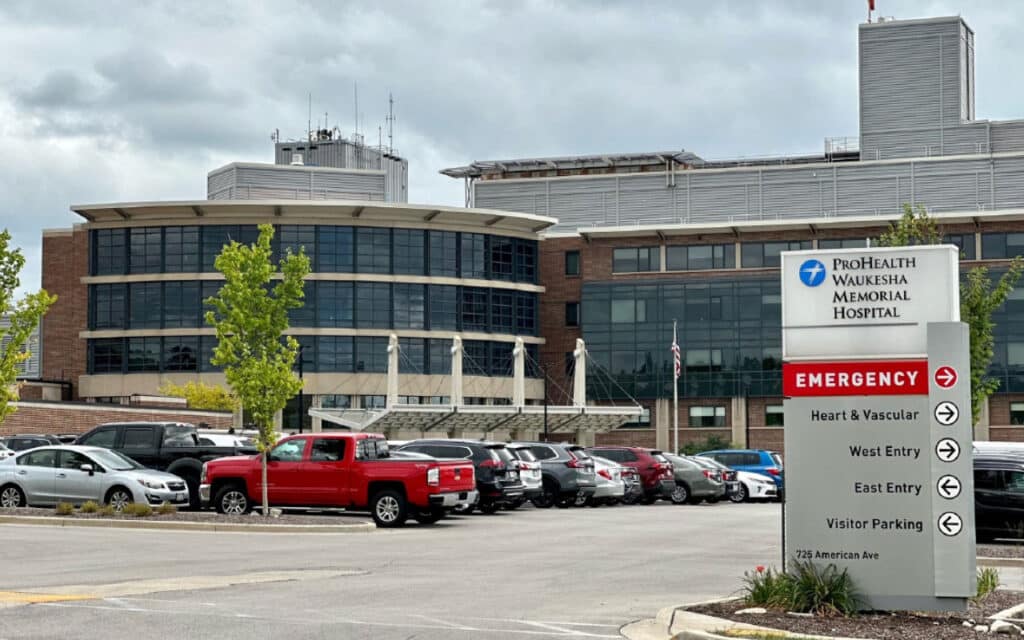
Department members manage equipment at four hospitals, which includes 274-bed ProHealth Waukesha Memorial Hospital; 18-bed ProHealth Waukesha Memorial Hospital-Mukwonago; 63-bed ProHealth Oconomowoc Memorial Hospital and 40-bed ProHealth Rehabilitation Hospital of Wisconsin.

The group also provides equipment management at a freestanding outpatient cancer center, 15 clinics, 11 urgent care sites within clinics and to ProHealth Angels Grace Hospice.
All service contracts for medical equipment are managed by the department and most are budgeted under the department.
“Service contracts are scrutinized and we try to do as much as we can in-house. We invest in the training of our team so we can minimize contract costs. Of course, there are always those ‘one-off’ devices/systems that just make sense,” Inderdahl says.
The team also has a big leg-up in the integration and cybersecurity areas with dedicated specialists on board.
“We have two biomed integrations analyst positions and a biomed security DBA imbedded in the department. They assist with all of the device integrations for our medical devices from EMR integrations to PACS, network connectivity and any other digital connections for devices,” Inderdahl says.
Strategic Growth
The biomed department is active in a number of projects to continuously modernize its processes in order to manage the equipment inventory throughout the equipment life cycle.
“We are included in all aspects of the medical device/system life cycle from purchase to sale of old/unneeded equipment. We handle the capital planning for fleet replacements as well as high-end devices,” Inderdahl says.
“We implemented the ORDR application as we saw a lack of visibility of the network posture our medical devices had in our environment,” he adds.
There was a lack of details on what these systems were doing on the network.
“ORDR provided this for our medical devices as well as all other things connected to the network. We could now see what our devices were talking to internally and, more importantly, externally,” Inderdahl says.
He says that the department then implemented GE’s SKEYE program to assist in two things – gather missing details of the networked devices to complete the informatics page in the CMMS and get a handle on the vulnerabilities that were appearing in the passive network detection platform, ORDR.
“SKEYE monitors our ORDR system 24-hours a day and notifies ProHealth of medical devices that have a vulnerability or alarm that needs to be addressed,” Inderdahl says.
He says that these notifications then turn into a work order for the team to complete.
“This process is helping ProHealth Care maintain a strong security posture for our medical devices, to the extent that is possible. Our next venture is going to be segmentation at the firewall, with the help of ORDR and our IT teams,” Inderdahl says.
Coming up with solutions to challenges has stimulated the department’s expansion.
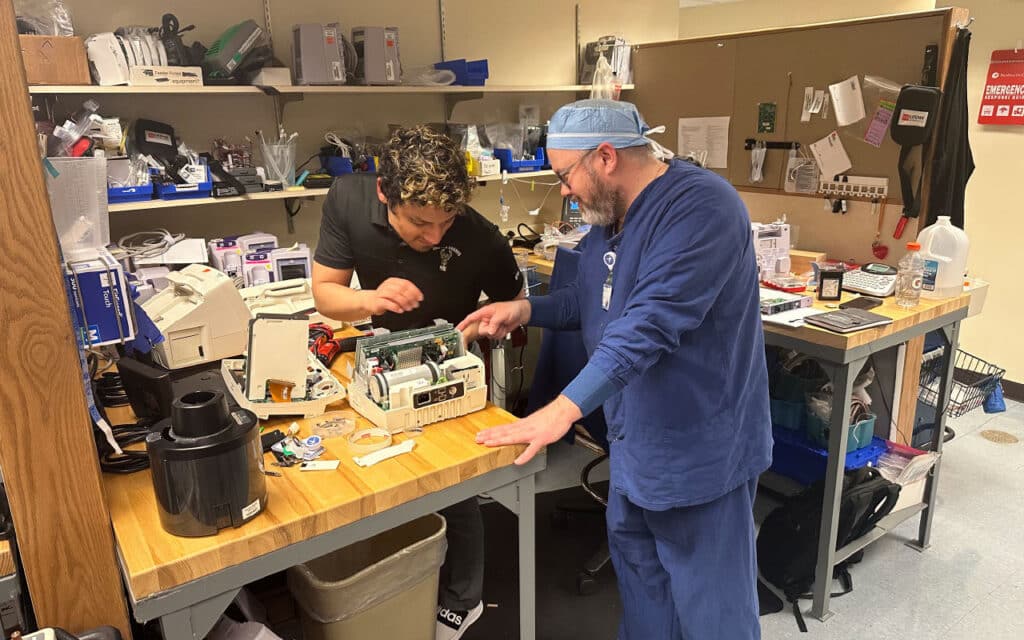
“Department growth over the last six years is a result of problem solving. The need for dedicated integration analysts, security DBA, HTM program manager, project coordinator, equipment planner, and life cycle planner resulted from various issues or concerns that were encountered,” Inderdahl says.
He says that many of the problems that the team has faced are common among HTM departments.
“The need to implement cybersecurity and the need to capture detailed informatics information to support cybersecurity and device integration was a problem we could not overlook. We added a cybersecurity DBA and another integration analyst to the department and that highlighted our strengths and weaknesses,” Inderdahl says.
“We learned early on that while we did a good job of capturing informatics information for device integration, we needed to capture more detailed information for a successful cybersecurity program,” Inderdahl adds.
He says that work orders were created for staff to review all networked equipment for informatics accuracy.
“We created detailed fields in our CMMS for technicians to enter data as these work orders were completed or as new equipment is onboarded. All data was reviewed by our security DBA or integration analysts for accuracy. Currently we are implementing a plan to ensure all window updates/patches are installed and information captured and documented in the CMMS,” Inderdahl says.
Other growth opportunities arose from challenges related to additions to inventory.
“Our capital asset management program for all imaging modalities and many biomed modalities provided leadership with a cost forecast and plan to replace aging fleet. Responsibilities related to the planning, onboarding and installation of the equipment grew. This provided many challenges and opportunities to improve and help the organization,” Inderdahl says.
He says that these challenges allowed for growth by adding a program manager, a project manager medical equipment and an equipment planner.
“These new roles efficiently complete tasks previously provided by department leadership and staff,” Inderdahl adds.
Away from work, the team members are involved with AAMI and the local biomed association.
“Wisconsin Biomedical Association – Lani is a ‘Southern Delegate’ and assists with meeting and annual conference planning,” Inderdahl says.
The biomed team at ProHealth Care met challenges with problem-solvers and specialists, and as a result, have created a well-rounded HTM department for the future of equipment management.
