



By K. Richard Douglas
According to the U.S. Department of Veteran’s Affairs, “the U.S. is divided into 18 Veterans Integrated Service Networks, or VISNs — regional systems of care working together to better meet local health care needs and provides greater access to care.”
These regional systems are numbered from the northeast to the southwest. In the New York and New Jersey region, the VISN is VISN 2. The medical equipment in facilities within VISN 2 is managed by the VISN 2 New York/New Jersey VA Healthcare Network Healthcare Technology Management team.
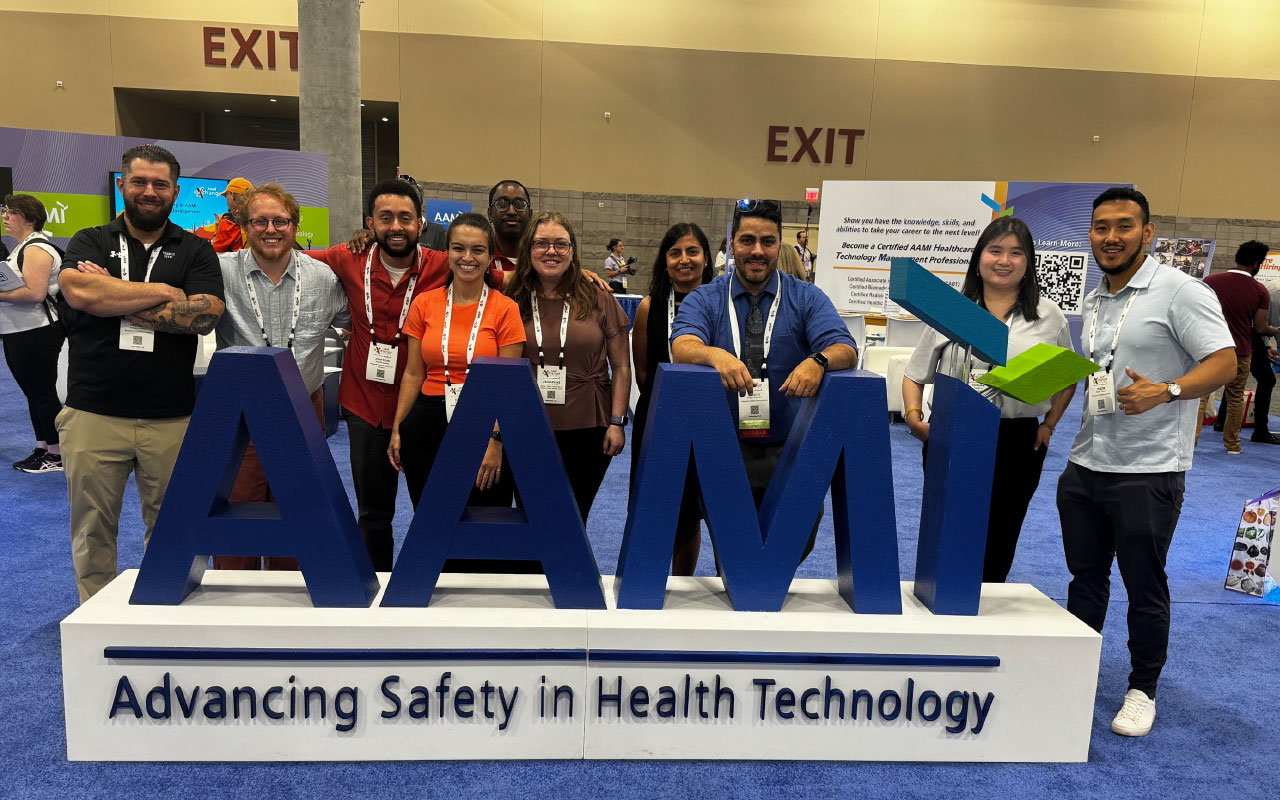
The department’s five-member staff include VISN 2 Chief Healthcare Technology Manager Arleen Thukral, M.S., CCE, CHTM; VISN 2 Deputy Healthcare Technology Manager Jessica Hudson-Rahming, CHTM; VISN 2 Biomedical Equipment Support Specialist-Biomedical Information Systems (BESS-BIS) Matthew Dilla; VISN 2 Biomedical Equipment Support Specialist-Biomedical Information Systems (BESS-BIS) Nicholas Martorano; and VISN 2 Biomedical Engineer Joseph Gucciardi, M.S., CCE.
The VISN 2 New York/New Jersey VA Healthcare Network Healthcare Technology Management team supports nine facilities with over 3,000 beds, $551 million in medical equipment asset value and more than 45,000 medical devices.
“Service contracts are assigned a Contracting Officer Representative (COR) who is responsible for statement of work, independent government cost estimate, market research, FITARA and submission to contracting,” Thukral says.
She says that the Contracting Officer (CO) will review the package and clarify expectations.
“The contract bids are reviewed and evaluated by the COR. After contract award, the COR is responsible for reviewing reports and certifying invoices and working with the CO if amendments/modifications are required,” Thukral adds.
How is data collection accomplished on the VISN 2 team?
“While there are automated reports and scheduled jobs that run such as upcoming contract expiration reports and medical device incidents opened yesterday, most dashboards require validation by facility and VISN HTM staff to ensure accuracy of CMMS and SMAK data through the HTM Dashboard which includes medical device inventory, patient safety, medical device sustainment, medical device security, resource and operations, equipment planning, fiscal, staffing and misc,” Thukral says.
She says that technician assignments are managed locally by department managers. Local managers provide training opportunities to ensure competencies in specialty areas such as imaging and critical care.
“VISN 2 has approximately 46,000 networked medical devices, 400 servers and over 2,000 devices with naming standard index. Our dedicated team, led by Matt and Nick, is responsible for medical device security, EHR device interface testing and validation, and configuration management and support,” Thukral says of HTM/IT integration.
She says that HTM has deployed its own virtual server infrastructure and it is robust, supporting various clinical applications and services.
“We’re also integrating AI technologies to assist physicians in reading medical images, which is a big step forward in improving diagnostic accuracy and patient outcomes,” Thukral explains.

SYSTEMS MANAGEMENT SOFTWARE INSTALL
The department’s experienced staff have been busy with projects, bringing more advanced technology to its facilities, including software solutions.
“VISN BIS staff, Martorano and Dilla, have worked on an exciting project to deploy Microsoft’s System Center Configuration Manager (SCCM) across VISN 2. SCCM is highly leveraged in IT and outside of healthcare environments,” Thukral says.
She says that HTM has had to manually manage software and images on clinical systems in the past.
“SCCM solution allows HTM staff to automate software installs, updates, and even removal all from one dashboard. There are also capabilities to standardize clinical image rollouts for configuring/managing OS level items to better security and accessibility of managed systems,” Thukral says.
She says that the use of a software management solution will exponentially assist staff in keeping clinical systems aligned with their Software Bill of Materials (SBoM) as well as vulnerabilities kept in check for outdated software.
“They use Microsoft SCCM to manage unsupported operating systems, which means even our older systems get the updates and patches they need to stay secure. For tackling vulnerabilities, they use automated tools to spot and fix risks across the network efficiently,” Thukral adds.
Department staff have taken steps to streamline the onboarding process and to bring greater efficiencies through automation.
“For new employees, there is a lot to learn, from understanding the technology landscape to how-to document in Nuvolo CMMS and ensure SOPs are being adhered to,” Thukral says.
She says that VISN 2 staff have worked to ensure there is a one-stop shop for navigating to important links, reviewing the strategic goals and accomplishments and accessing knowledge articles that provide how-to for everything from contracting to installing a system.
“Nick developed the power app tool to make the interface easy to navigate and provide a Google-like search for looking up knowledge articles. The team has also streamlined communications by implementing an automated process of sending emails with specific characteristics, which are then auto-saved into designated folders within our SharePoint. In addition, I am validating a HTM chatbox that can answer questions about VISN 2 standardized SOPs,” Thukral says.
Off the clock, the department’s manager remains active in bettering the HTM community. Thukral is involved with AAMI standards with the Equipment Committee, including revisions of EQ89 and TIR for EQ103 (see cover story) and the newly formed AAMI HTM Advisory Community group which comprises of Healthcare Technology Leadership Committee.
She is also vice-chair of Healthcare Technology Certification Commission (HTCC), which oversees the CCE certification process, procedures and policies.
An involved manager in all things HTM and an impressive biomed team, who have embraced innovation, provide superior management of the medical equipment inventory in VISN 2.
