


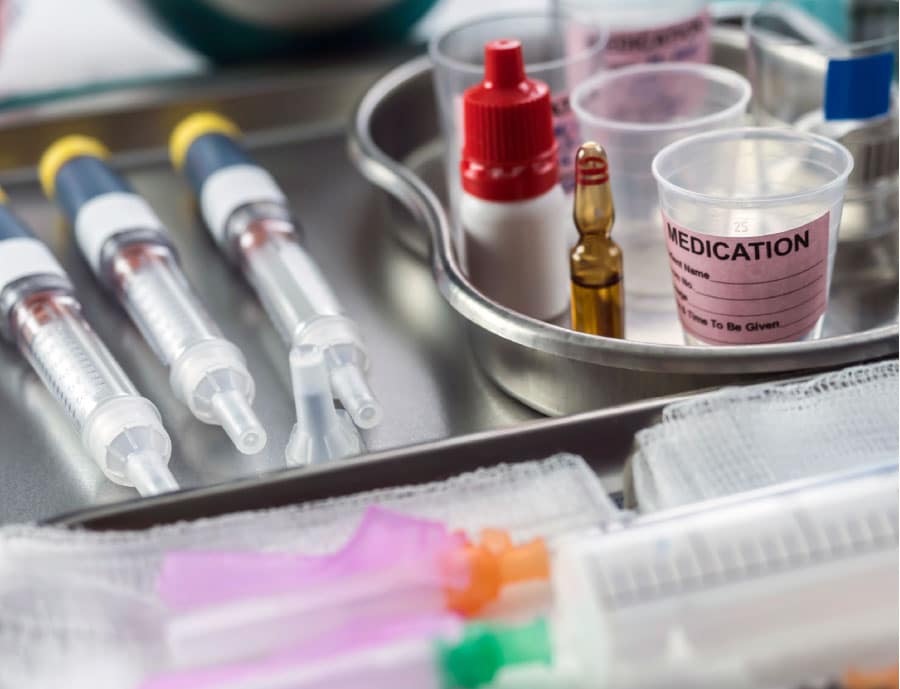
The operating room is one of the highest-risk environments in any hospital, yet it remains one of the least likely places to find the medication safety technologies now considered standard in critical care. ECRI has flagged this gap as Hazard #6 in its 2026 Top Ten Health Technology Hazards report, warning that failure to implement barcode medication administration (BCMA) systems, smart infusion pumps and automated dispensing cabinets (ADCs) in perioperative settings is putting surgical patients at serious risk.
Perioperative settings – hospital operating suites, procedure rooms and ambulatory surgery centers (ASCs) – present a distinct medication safety challenge. The drugs administered there are frequently “high alert” medications – including opioids, vasopressors and neuromuscular blocking agents – which carry a heightened potential for serious harm if given in error. Unlike other care settings where clinical decision-support tools usually provide multiple layers of verification, intraoperative medication management often falls to a single practitioner. ECRI describes this as a “single pathway to harm.”
The scale of the problem is significant. It is estimated that medication errors occur in 1 in every 19 anesthesia doses. With approximately 99.7 million inpatient and outpatient procedures performed annually in the United States, ECRI projects the potential for 7.5 million perioperative medication errors each year. A 2021-2022 Institute for Safe Medication Practices (ISMP) perioperative self-assessment survey of 124 hospitals and 35 ASCs found that only 35% of respondents were fully utilizing BCMA safety checks before administering medications.
Key Findings
• BCMA systems can verify patient identity and confirm medication orders at the point of care, and when integrated with an EHR, enable real-time documentation of doses – yet adoption in perioperative settings lags far behind other care areas.
• Smart infusion pumps with dose error reduction system (DERS) software can prevent programming errors and enforce dosing hard limits, but medications and fluids in perioperative settings are often infused without a pump, or with pumps operating in “anesthesia mode” that may lack those hard limits.
• The use of ADCs can improve medication stock control in pre- and postoperative areas and allow pharmacist review and verification of orders before medications are dispensed.
• ASCs face additional barriers to technology implementation, as many perioperative settings lack the electronic health records infrastructure required to support preferred medication safety workflows.
• The median capital cost of these technologies ranges from approximately $2,300 per programmable smart pump with DERS to $88,000 per decentralized ADC – but the estimated annual organizational cost of preventable perioperative adverse drug events can reach as high as $5.6 million when treatment costs and legal liability are included.
ECRI and ISMP recommend that healthcare organizations take steps to implement BCMA in pre-, intra- and postoperative settings; facilitate smart pump use for all perioperative infusions with a target of 95% or higher DERS compliance; and prioritize ADC use in pre- and postoperative areas, reserving override functions for urgent or lifesaving situations only. ASCs without on-site pharmacy support should consider engaging consultant pharmacist services and conduct rigorous staff training with competency assessment.
ECRI and ISMP are also calling on technology manufacturers to partner with anesthesia providers in developing perioperative-specific workflows and to integrate clinical decision-support tools such as allergy, comorbidity and drug interaction alerts into future systems.
For more recommendations click here to see ISMP’s Guidelines for Safe Medication Use in Perioperative and Procedural Settings.