



Three-dimensional (3-D) printers are all the rage in health care these days. So much so that the U.S. Food and Drug Administration (FDA) held a major town hall meeting in October 2014 to explore potential regulatory issues. With some analysts predicting that U.S. hospitals will buy an average of two 3-D printers each in 2015, how should health facilities respond?
To answer that, it would help to know exactly how 3-D printers are being explored for use in health care. The list includes making anatomic patient-specific models for planning and practicing delicate surgery before the real procedure, fabricating custom implants for patients, and creating human tissues and organs by layering cells.
Amid developments, FDA is asking questions and seeking to define its appropriate role in regulating 3-D printing in health care, trying to strike a balance between protecting patient safety while not stifling innovation in emerging health care technologies.
3-D Printing: The Basics
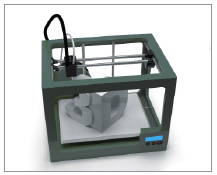 Designers use computer-aided design and 3-D modeling software to plan the printing process, which builds objects from plastic, metal, or other materials by adding successive layers onto each other until the object is complete. Essentially, 3-D printers build products from the bottom up by heating raw materials to facilitate spraying them through a nozzle or jet to create multiple layers in thin slices as directed by software instructions. The 3-D printing process contrasts traditional reductive manufacturing that subtracts from a wooden block or other raw material to reach a finished product.
Numerous 3-D printers are commercially available, ranging widely in size, complexity, and price from tabletop models for hobbyists under $1,000 to large industrial models, which range in cost from tens of thousands of dollars to a million dollars, but no standards have yet emerged for clinical applications of 3-D printing. Companies marketing 3-D printers that are purportedly well-suited for health care applications include 3D Systems, Inc. (Rock Hill, South Carolina, USA) and Stratasys, Ltd. (Eden Prairie, Minnesota, USA). HP (Palo Alto, California, USA) has announced plans to introduce a “revolutionary” 3-D printer in 2016 that promises faster and cheaper printing options than those currently available.
Effects on Health Care Delivery and Patient Outcomes
One of the most dramatic examples of 3-D printing’s potential to directly alter patient care occurred at the University of Michigan, where a surgeon and a biomedical engineer used 3-D printing to create customized, bioresorbable airway splints to treat severe tracheobronchomalacia, a rare but potentially fatal softening of tracheal and bronchial tissue leading to collapsed airways with no real curative therapy. They completed the procedure in two children (as of November 2014) under FDA compassionate use exemptions. In March 2014, investigators at University Medical Center Utrecht (The Netherlands) reported a 23-hour surgery to implant the first complete 3-D printed skull in a 22-year-old patient with a progressive, bone-thickening disorder. Elsewhere, collaborators at Princeton University (New Jersey, USA) and Johns Hopkins University (Baltimore, Maryland, USA) completed a proof-of-concept study using 3-D printing to create bionic ears that interweave biologic tissue with functional electronics. A University of Toronto (Ontario, Canada) team is evaluating the feasibility of 3-D printing sheets of skin grafts using a burn patient’s own cells.
At Children’s National Medical Center (Washington, D.C., USA), pediatric cardiologists and surgeons are using 3-D-printed models to study congenital heart defects to plan intricate corrective surgeries in children.
The Evidence Story
At this point, most published data on 3-D printing are limited to case reports and very small case series describing early 3-D printing experience. Most reports involve craniofacial and mandibular surgery and dental procedures. Typically, these reports describe 3-D printing used to create detailed surgical models and templates to facilitate surgical planning, with fewer reports describing 3-D-printed models for cardiac, neurosurgey, and orthopedic surgery. To a lesser extent, the clinical literature cites 3-D printing to create customized implants used in craniomaxillofacial and mandibular surgery and dental surgery. A couple of studies compared 3-D-printed ankle-foot orthoses to conventionally fabricated orthoses.
Costs, Reimbursement, and Regulation
At this stage, how 3-D printing might affect health care costs overall remains unclear. Ultimately, costs could be affected by how 3-D printing is regulated. According to General Electric Aviation (Cincinnati, Ohio, USA), which has been using 3-D printing and additive manufacturing since the 1990s in some form to produce jet engines, 3-D printing can potentially allow faster and cheaper development of new products compared to traditional manufacturing techniques. Manufacturers and hospitals could view 3-D printing as a cost-cutting technique that allows them to reduce product inventory costs with more “just in time” production.
From a regulatory perspective, among the questions FDA raised at an October 2014 public meeting on 3-D printing were whether the 3-D printing process fundamentally alters raw materials’ chemical or biomechanical properties in unforeseen or unsafe ways. Some patient safety issues raised included printer calibration and maintenance, sterilization, infection risk, and risk of delamination of layered print products over time. Other questions raised included whether FDA might consider hospitals to be manufacturers — held to the same regulatory standards — if and when they use 3-D printing to create individualized implants for patients.
This article is excerpted from ECRI Institute’s 2015 Top 10 Hospital C-Suite Watch List. The full white paper contains more guidance on 3-D printing and other novel, new, or emerging technologies. To download the full C-Suite Watch List, visit www.ecri.org/2015watchlist. For more information on ECRI Institute’s evidence-based health technology assessment or consulting services, contact communications@ecri.org, or call (610) 825-6000., ext. 5889.
