



By K. Richard Douglas
A career in HTM offers many options and specializations. There is IT/IS hybrid, lab, OR, OEM field service, ISO, robotic systems, CMSS, purchasing, management and many others. Some may even transition to another department within the hospital such as healthcare facilities management (HFM). Biomeds attend to every aspect of the medical equipment life cycle.
And, of course, continuing on as a general biomed can offer a rewarding career. The potential for choosing a specialty area as a career growth path makes HTM all the more inviting. A biomed can decide on an area that they find attractive, while taking advantage of existing knowledge as a foundation.
In most cases, these ancillary vocational paths require additional specialized training to ensure competency. This training can come from dedicated third-party training providers, vocational or technical programs at community colleges and universities, in-house or OEM training or via a mentorship.
Moving within the field remains a personal career decision. Many who have made that transition have found specialization rewarding.
One popular career path that biomeds choose is to specialize in imaging service. Imaging is medicine’s most important diagnostic tool for many medical conditions. Imaging’s importance within health care is immeasurable.
Wilhelm Conrad Roentgen’s discovery of X-rays in 1895 was accidental. Roentgen won the Nobel Prize in physics in 1901 and his discovery was being used by physicians in the U.S. and Europe within a year. Today, it is hard to imagine that doctors would still be forced to cut people open in lieu of just looking through tissue.
X-ray (radiography) was just the beginning as imaging modalities were added to enhance and improve 2D images and provide 3D images. There are several imaging modalities today; each used for specific types of exams. An X-ray remains the quickest and most convenient. An X-ray image can be available right away. It can be achieved in a dedicated room or using a C-arm. A downside of X-ray is that it does not provide as much soft tissue detail as some of the other imaging modalities.
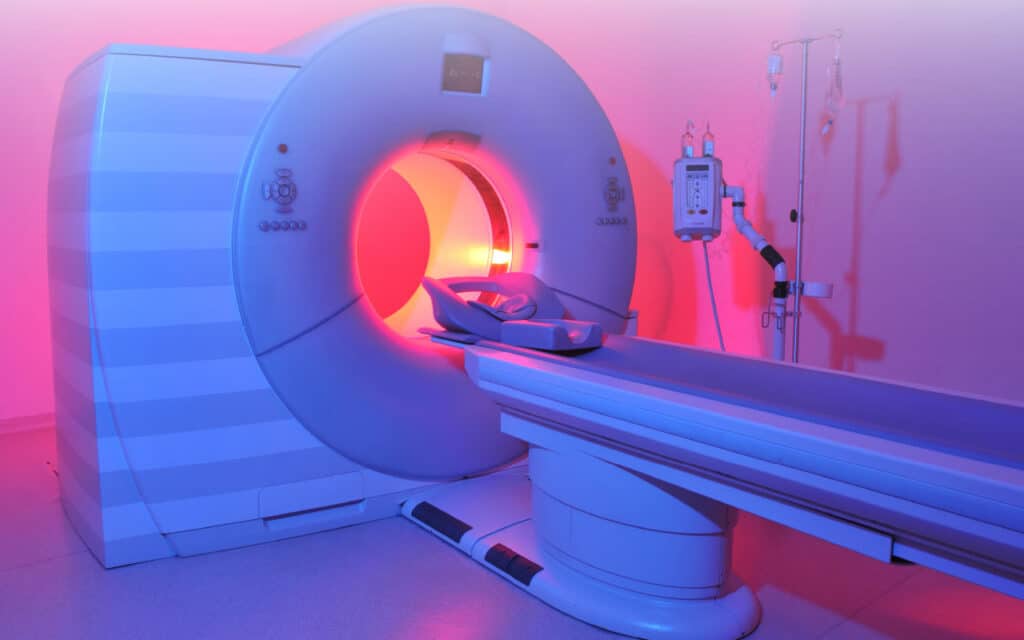
Imaging modalities, comprised of X-ray (including computed tomography and fluoroscopy), magnetic resonance imaging (MRI), ultrasound and nuclear medicine (including positron emission tomography [PET]) all provide clinicians with a valuable view into the human body.
Radiology is useful for looking into the torso, the extremities and for mammography. Nuclear medicine helps visualize thyroid and gallbladder uptake, bone scans, and enables PET-CT and cardiac SPECT.
CT allows the radiology technologist to visualize the spine, head abdomen, chest and pelvis. MRI provides a good visualization of the liver, spine, extremities, brain and pelvis. Ultrasound can be used when examining the thyroid, breasts, liver, gallbladder, kidneys, pediatric head and vascular, such as the carotid arteries. There are other less common exams that utilize these modalities.
For many biomeds who work around imaging equipment, the fascination of peering into the human body is an incredible marvel and working with this technology is exciting and rewarding.
As a career-progression step and a move toward specialization, many biomeds transition into imaging service.
TechNation heard from several biomeds who made the decision to transition into an imaging career path. Their experience could be helpful to other biomeds thinking of pursuing this career path. These are their stories.
Planned or Opportunity
Some biomeds plan to enter imaging and others happen into it when an opportunity presents itself. There is often a learning curve, although many biomeds have an existing foundation of knowledge that allows them to make the move. There are also dedicated training programs and certifications that build upon a biomed’s skills and knowledge.
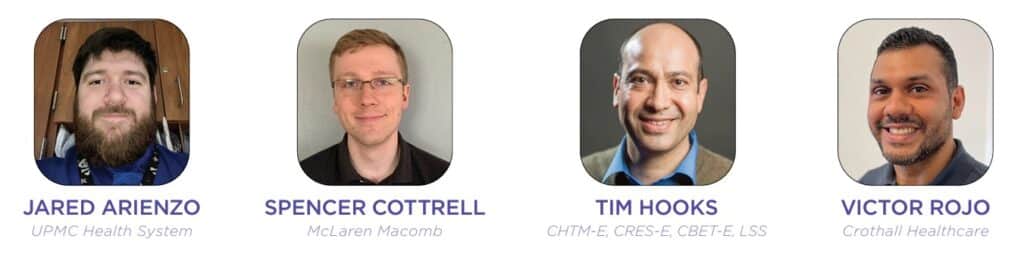
“Back in around 1998, while working in my first in-house position at Bay Harbor Hospital in Harbor City, California, a chance meeting with an X-ray FE I met in the parking lot going to and from the hospital to work on a room said, ‘I am here to work on the X-ray machine that uses invisible X-rays.’ (paraphrased). To someone who grew up watching ‘Battlestar Galactica,’ ‘Star Trek’ and ‘Star Wars,’ this was the coolest thing I had ever heard of. I was a member of CMIA at that time, and a brief time later when DITEC offered a one-day X-ray course that included a certificate, I jumped at the opportunity and it was given by none other than the legend (I didn’t know at the time) himself Manny Roman,” says Timothy Hooks, CHTM-E, CRES-E, CBET-E, LSS, emeritus certified HTM consultant.
Hooks says that he continued in his current occupation as a biomed, becoming a CBET – which did include some imaging on the exam – for many more years and set a goal to become a CRES to break into the industry when he had enough experience to sit for the exam.
“I really liked the DITEC ad that was placed in the trade magazines back then that showed an image with lots on infusion pumps with a caption stating your career started here, then in another image in the same ad, were ventilators and anesthesia machines with a caption that read; hard work and determination got you here, and then a third and final image displaying various imaging devices with the caption that read; Are you ready for the next level?” Hooks says.
He says that he took every opportunity to talk to the imaging guys who came to work on the equipment from the OEM/third parties, as well as the hospital-based in-house imaging specialists.
“When they walked down the hall, or worked on the machines, I was asking anything and everything I could to learn everything I could as the Internet was not what it is today. I noticed, when I went to interviews and explained I had hands-on experience, I was not taken seriously. I was labeled a biomed with just some minimum hands-on experience. I knew I needed something to show I had the experience and the knowledge,” Hooks says.
He says that he called AAMI’s ICC (now the ACI) and asked if they had any recommendations for preparing for the CRES exam, and they referred him to RSTI. He purchased the RSTI CRES self-study program, as it was known back then.
“I also purchased various other books, that I found out later, were textbooks at TSTC’s imaging program. Once I got enough hands-on experience doing things like collimator bulb replacements and other remedial service tasks, and I had met the minimum requirements for the CRES exam, I took the exam and passed it,” Hooks says.
It was an open imaging position that prompted another biomed to make the change.
“My medical device repair career began in 2013 after earning a two-year associate degree in biomedical engineering equipment technology (BMET) and completing a summer-long internship in Pittsburgh, Pennsylvania,” says Jared Arienzo, a radiology equipment specialist with UPMC Health System in Pittsburgh.
“After getting into the field, I knew this field was the place for me. I worked as a biomed for five years in Pittsburgh where I learned so much about equipment and how necessary communication skills are in this industry,” Arienzo says.
He says that he was then approached to get trained on radiology equipment/portable X-ray equipment, as there was a vacancy.
“I agreed and started down this new path of radiology equipment repair. What led me to this decision is that I knew deep down that radiology was ultimately where I wanted to end up; I was excited, to say the least, to be given the opportunity. This meant several OEM service schools to get trained up with plenty of on-the-job learning from very knowledgeable sources in my hospital,” he adds.
Arienzo says that he worked as an in-house X-ray repair technician for about three and a half years.
“The job could be demanding, but it was rewarding at the same time. Patient safety and earning trust of the X-ray department staff was my immediate goal,” Arienzo says.
One benefit of moving into imaging is that with the various modalities, and the special skill sets required for each one, a move into imaging can mean additional career progressions.
“After these three and a half years passed, I was asked to shift toward computed tomography (CT) modality. Again, I had several more OEM training courses to attend. I maintain and repair CT scanners in general CT department, an operating room, emergency room and in radiation oncology areas where the scanner is used for patient treatment planning,” Arienzo says.
He says that his general X-ray experience helped him transfer into his current CT role because he better understood the theory, terminology and demands of radiology departments.
“I am also lucky to have guidance from individuals with lots of experience from the beginning of my journey. These individuals taught and continue to teach me about radiological devices and about life in general. I try to learn something new every day and use repair opportunities as a way to become better at what I do. I cannot be more happy with the career path I was presented with,” Arienzo adds.
Retirements Provide Opportunities
With the large numbers of retirements within HTM in recent years, there has also been a number of experienced imaging service professionals who have exited the field. This has opened up more opportunities for biomeds.
“I started out as a biomed I and worked my way to a III. While I liked what I did, I really liked when I was able to help with repairing imaging equipment. When our ultrasound guy retired, I took over his role and tried to help out our imaging specialists as much as I could,” says Andrew Fleming, CBET, service specialist in the clinical engineering services department at McLaren Healthcare.
Fleming says that he found that he preferred to work on imaging-related equipment instead of the biomed-related equipment.
“After a few years of that, I was given the chance to become a service specialist instead of an imaging specialist. When I transitioned to this new role, all I had to do was interview for it. I repair linear accelerators now and really enjoy it. The machines take images of the patient (X-ray and CT) to make sure they are positioned correctly before their treatment. I like my current role since I have some imaging repairs/maintenance and electrical/mechanical related repairs too,” Fleming adds.
Benefits from Blended Training
A biomed’s entry into imaging can sometimes be more integrated into their employer’s career ladder and apprenticeship opportunities can avail a biomed with the required training.
Spencer Cottrell, an imaging service specialist at McLaren Macomb in Michigan started out as a BMET I for McLaren Greater Lansing in May 2021. He was then promoted to BMET II/Imaging Apprentice in February 2023 and a year later, was promoted again to Imaging Service Specialist.
“I’ve always been interested in imaging, and I was very fortunate McLaren gave me the opportunity to learn more about and work on imaging equipment. The transition from biomed to imaging was busy. As I went about seeing new equipment and shadowing imaging specialists, I still had the biomed side of work maintaining the equipment I knew best and trying to pass that knowledge along to other biomeds. A lot of the experience I gathered as a biomed transferred over into basic imaging such as networking principles and electronics troubleshooting. The outcome now is that I am the primary for various X-ray systems, and I have a large network of imaging specialists to help me as a new guy in the field,” Cottrell says.
Other biomeds have gleaned knowledge from working alongside imaging engineers and that experience led them to make the move into imaging service.
“During my time at Children’s Memorial Hospital with Aramark Healthcare as a BMET I, I initially collaborated closely with imaging engineers, providing essential support in maintaining portables and ultrasound machines,” says Victor Rojo, resident regional manager with Crothall Healthcare at Ann and Robert H. Lurie Children’s Hospital of Chicago.
His interest and knowledge of imaging caught his manager’s attention.
“My then-manager, Kelley Harris, facilitated my enrollment in an imaging program prioritizing comprehensive X-ray training. This program, affiliated with RSTI, proved to be a pivotal moment in my career journey,” Rojo says.
He eventually became an Imaging Specialist I, gathering more experience from working on ultrasound and X-ray units before moving to MR/CT scanners, linear accelerators and mammography machines. He pursued additional training including service instruction regarding Siemens MRI, CT and bone density. The mentorship of hospital physicists also contributed to his career advancement.
The experiences of these biomeds provide a glimpse into the window of opportunity that exists for HTM professionals who have entertained pursuing an imaging service career. It can be a fulfilling career move that offers additional options for growth in the future.
