



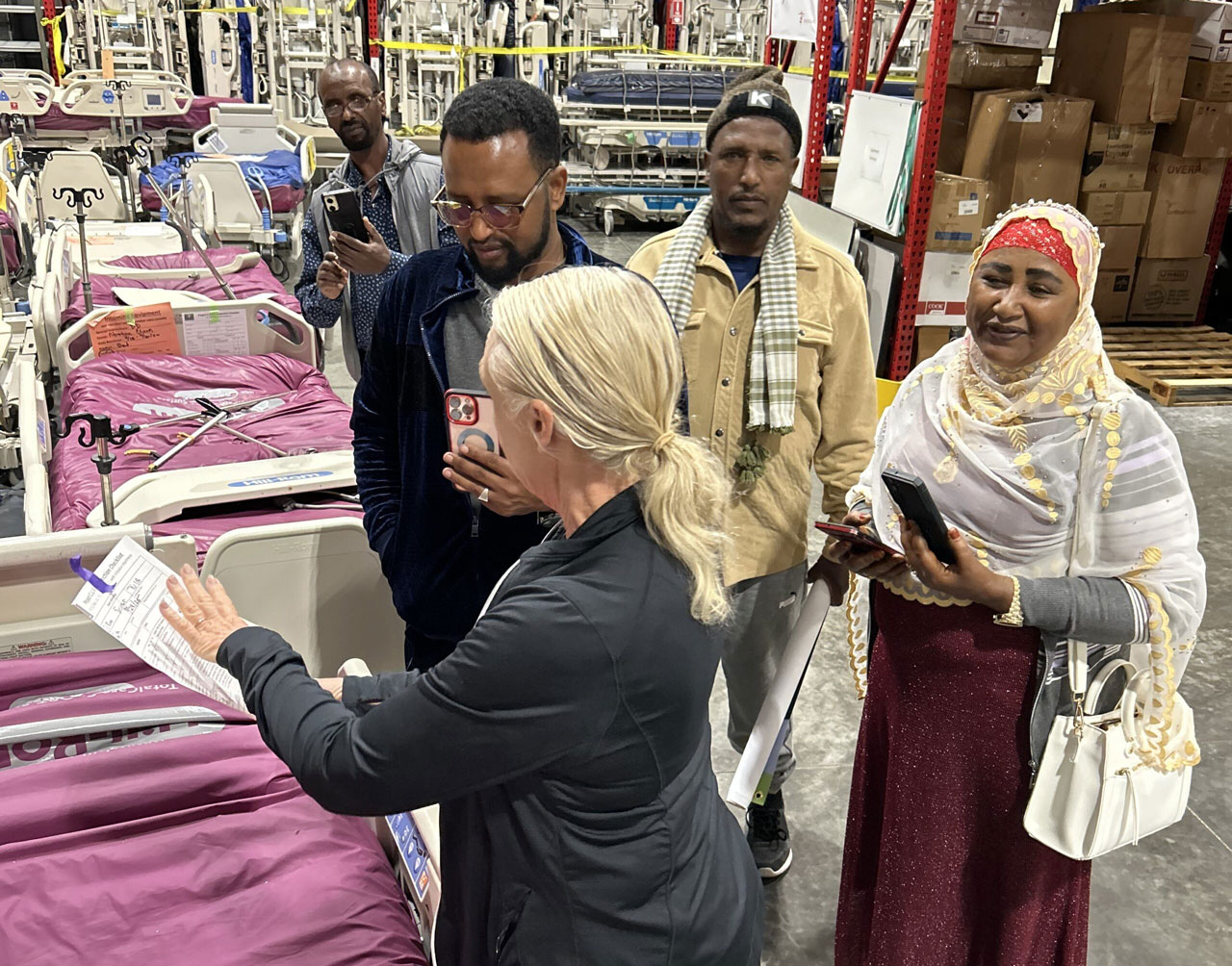
What began as an effort to send a single medical container to equip a health center in Ethiopia two years ago grew into a grassroots inter-continental movement that could serve more than 8 million people.
On April 7, World Health Day, that effort reached a significant milestone when the last of 41 semi-truck-sized containers filled with lifesaving medical equipment and supplies was packed at the Project C.U.R.E. warehouse in Nashville, destined for the Oromia region of Ethiopia.
Implemented by Project C.U.R.E. in partnership with more than 1,200 Ethiopian donors, Islamic Relief Canada, Islamic Relief Ethiopia, and Haramaya University, the Oromia Health Improvement Plan (OHIP) represents a large-scale, initiative designed not merely to deliver supplies but to strengthen healthcare systems serving millions.
“This was an effort, not a program,” said Jo Sullivan, Executive Director of Project C.U.R.E.’s Houston Region, who helped lead coordination of the initiative. “For two years, people talked, met, organized, and coordinated in any way they could. What started as a one-container idea became a global movement that gave power to the people to help rewrite outcomes in healthcare.”
As international aid retracts – most evident with the dismantling of the U.S. Agency for International Development (USAID) – home-grown initiatives like the Oromia project will become increasingly important. Project C.U.R.E.’s model relies on beneficiaries requesting assistance and raising funds to transport the container of donated supplies after an on-site needs assessment. The cost to collect and deliver an ocean-freight container is $35,000-$45,000 depending on the transportation expenses to the recipient community. The Oromia project was underwritten by members of the diaspora. Additional funding comes from donations by individuals, faith groups, country governments, grants, and other sources.
The approximate value of a C.U.R.E. Cargo delivery averages between $350,000 and $450,000, depending on the contents. A single container will impact an estimated 30,000 patients.
Strengthening Care at Scale
The 41 containers represent more than 5.5 million individual medical items and over $12.4 million in verified gift-in-kind medical supplies and equipment, supported by approximately $1.63 million in mobilized cash contributions.
The shipments support 55 health facilities serving a combined catchment population of approximately 50.4 million people. Collectively, these facilities report more than 8.8 million annual patient visits and approximately 202,000 births each year.
Rather than introducing entirely new services, OHIP focused on reinforcing existing clinical platforms – ensuring that facilities already delivering care had the equipment and supplies necessary to do so safely and effectively.
In multiple zones, early partner feedback indicates reductions in avoidable referrals driven by lack of basic equipment or diagnostics, allowing patients to receive care closer to home and enabling referral hospitals to focus on advanced cases aligned with their capabilities.
“This effort wasn’t about sending goods,” Sullivan said. “It was about strengthening systems. When you match the right equipment to the right facility, you change how care is delivered. That’s how you begin rewriting outcomes.”
A Structured, Shared Partnership
The initiative reflects a clearly defined partnership model:
- Project C.U.R.E. provided assessments, logistics, inventory alignment, and overall program coordination.
- Diaspora organizations led grassroots mobilization and fundraising.
- Islamic Relief Canada provided institutional funding and strategic oversight.
- Islamic Relief Ethiopia supported biomedical installation, training, and facility follow-up.
- Haramaya University served as a customs and consignee partner for most shipments while facilitating institutional coordination.
Together, these partners established a disciplined framework designed for sustainability, alignment, and long-term system strengthening.
A Milestone – and a Beginning
While the 41st container marks the completion of this first deployment phase, the work continues.
Fifteen additional facilities have completed assessments but remain unfunded, representing immediate opportunities for expansion. Clinical engagement initiatives have already begun, signaling a shift from shipment delivery toward deeper integration, training, and capacity building.
In a world often defined by fragmentation, the Oromia Health Improvement Plan offers a reminder: coordinated communities, structured partnerships, and shared belief can still move systems – and strengthen hope – at scale.
