



By K. Richard Douglas
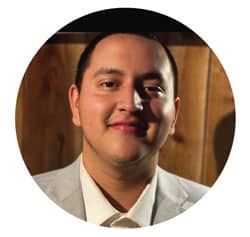 The HTM profession certainly needs new recruits to bring its numbers up to full staffing. Some of those newer to the profession are already impressing their bosses and making their mark.
That is the case with one biomed in Sebastopol, California.
Andy Martinez is a central supply technician/biomed technician with Sonoma Specialty Hospital in that northern California city.
“I became interested in biomedical engineering very recently in my life. I was introduced to biomed by my boss, Jorge Contreras, who first showed me the different types of machines and equipment our facility housed,” Martinez says.
He says that after working in a hospital in central supply, Contreras pointed out all that biomed had to offer.
“Having the knowledge that these monitors and machines can help save lives in the day-to-day workplace. From telemetry systems to bedside monitors to fixing beds, biomed just grabbed me by the arms and made me feel like I am taking part in helping save a patient. I have never had anyone in my family do any work in the biomed field, so when introduced to this specific field, my patience and focus and attention to detail improved drastically,” Martinez says.
Martinez does plan on pursuing certification in the future, but for now, he is training under the guidance of his supervisor. Every day proves to be a valuable learning experience as an HTM pro.
“I have been actively training in biomed from October 2020-present date. So far, I have learned about all cables needed for a Nihon Kohden beside monitor, all cables for a Phillips bedside monitor and telemetry system. I have repaired a ribbon cable on an EKG machine. I have worked on patient beds, specifically Stryker beds. On those beds, I have replaced circuit boards, foot boards, fowler switch, power connector and load cells. I have learned to replace battery doors and stickers on telemetry boxes,” he says.
Martinez has also learned the different ways to properly use biomed test equipment, such as testing defibrillators and telemetry boxes. The on-the-job education continues.
“I have also tested centrifuges in the lab calculating the RPMs. I have very basic training in the biomed field, and I am beyond excited for what training lays ahead for me and the programs available around the country,” he adds.

Learning While Doing
In most biomed departments, teamwork is key, and especially when rookie biomeds depend on getting tips and insights from more veteran colleagues.
“I have always worked well at teamwork rather than working alone. A special challenge I have encountered is troubleshooting on my own. Most of my encounters include biomeds, or under supervision; however, there are certain occasions where I may proceed to solve a problem by myself,” Martinez says.
He says that this can be a challenge when relying on himself while in a patient room or if a nurse requests an immediate repair on a machine.
“This has taught me patience, trusting my instincts, and ‘Keep It Simple Stupid (KISS).’ I have learned that overthinking leads to over-complicating the particular assignment I am on. So, I take my time to assess what screw or what wire goes where,” Martinez says.
He says that he is grateful to be part of a special project, which is the preparation for the installation of a new telemetry system.
“Only being 21 and not certified in biomed, I have been honored to assist my boss with this project. For example, I have helped figure out where the antennas are throughout our building and have made sure all are properly connected and labeled. Also, figuring out how far our monitors can reach from the central station when attached to a patient,” Martinez says.
He says that the project has shown him how to program new telemetry boxes to the existing system at the central station.
“Using a bedside monitor of the same manufacturer as the telemetry box with a configuration cable. I understand how important telemetry systems are with it being able to monitor a patient’s heart rate and oxygen, which helps the nurses attend to the patient when needed, so I couldn’t pass up this specialty project,” Martinez says.
Off the job, the rookie biomed enjoys hobbies and sports.
“A couple of hobbies that I enjoy are doing are Jiu Jitsu, playing basketball with old friends and spending time with my two cats. My cats are part of what keep me going,” Martinez says.
Family is also important and that extends to both coasts.
“I have a pretty big family; my family is from all over. I have family from Mexico, as well as still living in Mexico. I have family in New York and family that have lived in California for decades. I have family that have become a part of my life later down the line,” Martinez says.
“My wife, Isabella, has brought a new light to my life that has changed my life for the better, and there are my grandmothers, Pascuala and Kathleen; my dad, Ramon; my mother, Marie; and four siblings: Cassandra, Amanda, Seraphina and Adriano. And, of course my two cats Rona and Meeko,” he adds.
Martinez says that he and his wife were born and raised in Santa Rosa, California.
“My dad was an immigrant from Mexico and came to America in the mid-1980s. My mother was born and raised in Santa Rosa, California as well. My mother is American, as well as Native American,” he says.
A big sports fan, Martinez likes to be a spectator and a participant. He has played sports since childhood. He led his high school basketball team in points per game during all four years of high school.
“After high school, I have been married since 2020 to my beautiful wife and have taken on a love for cats, but am still more of a dog person. My life is still yet to begin, as I have many years ahead and am still figuring out my interests as I become wiser with age and experience,” he says.
If enthusiasm is any predictor of success in the biomed field, this biomed should develop into a top-notch HTM professional and resource for his employer.
