



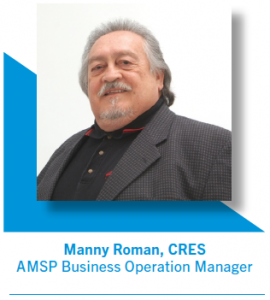
 By Manny Roman
Last month, I wrote about how our expectations can be unrealistic and about the pain caused when they are not met. In this column, I will continue the discussion of expectations and how attitude and reframing can help deal with life’s unwelcome issues.
We all want to have only good things happen and to receive all the things we desire. Life disagrees. Our expectations are not often met and that is why I wrote last month’s column. Daily life seems to be full of what I will now call issues, some expected and others not so much. Our minds spend much time in anticipation of what is to come and in fear of the future because it is not in our control. Our minds naturally float toward what might happen since we desire a particular outcome. How much time do you spend each day stressing over what might happen in the unknowable future?
On the other hand, how much time do you spend each day searching through your past looking for “if only” items that would have made your present situation better? If only I had done this, if only that had not happened, if only I were rich, beautiful, athletic and charismatic like Manny Roman, etc. How much time, energy and anxiety do you expend on regrets, remorse and repentance?
Amor fati is a philosophy in which fate is regarded with appreciation and even with love. To love one’s fate is total acceptance of what has happened in our lives and even in the entire history of the world. This is a belief that what happened was meant to happen and what will happen is unavoidable. We are what we are and we cannot have regrets about any of our experiences. What we experienced was beyond our control and necessary so love it. You can no longer alter the past so why hate it? Amor fati eliminates resentment for the past, fear of the future and allows for a happier present.
Ancient philosopher Epictetus said, “Seek not for events to happen as you wish but rather wish for events to happen as they do and your life will go smoothly.”
So, how do we implement amor fati? We do this with attitude and framing.
I am confident that you have heard the phrase, “Attitude determines altitude.” This means that how we choose to view things, our attitude, greatly influences what we can achieve. In the morning we choose what to wear and attitude should be part of our wardrobe. Will we choose to have a great and happy day or wander through the day looking to be offended? With the former attitude, we might still run into situations that could offend however our attitude gives us the ability to respond how we choose.
Make your daily attitude one where you are not going to be driven by regrets, remorse and repentance. Be happy in being alive. Be happy for the opportunity to face the challenges of the day. Accept that a life without challenges would be a very boring existence. Prepare to decide what you have control over and what is beyond your control. Accept, and love, that there are things that are fundamental to your existence that will happen no matter what you do. Exert your efforts toward influencing that which you can control.
What all this is about is framing things in a different perspective, different from the normal point of view. Framing is a technique where we view and present a situation from a particular perspective. We all use framing whenever we think and talk. We present a situation to ourselves and to others from a very specific point of view. For example, as I write this I have a particular point I want to make. I think of multiple words in a particular order with particular definitions. I then imagine you reading them and deciphering my meaning. Seriously, I think of a few actual individuals that I know and think about how they will perceive my presentations. I often change the framing of the presentation to better fit the two of you who read this stuff.
If you want to implement amor fati, or portions of it, you must frame the past and the future in a different way. You must change how you present your past, and future, to yourself. Rather than dwell on regrets, remorse and repentance, view the past as an inevitable series of events that happened and that cannot ever be altered. Were they bad? Maybe. Were they good? Maybe. Could you have changed some outcomes? Maybe. Could some good have come from the bad? Maybe, explore that. Could some bad have come from the good? Maybe, ignore that.
No matter what, the past cannot be changed and the future cannot be predicted. What cannot be changed must be accepted. Therefore, love the present. Someone once told me, “Tomorrow, today will be yesterday, so why worry about the past.” Wise words indeed!
The views expressed here are those of the author and do not necessarily represent or reflect the views of TechNation or MD Publishing.
