



Sponsored by Altamont Software
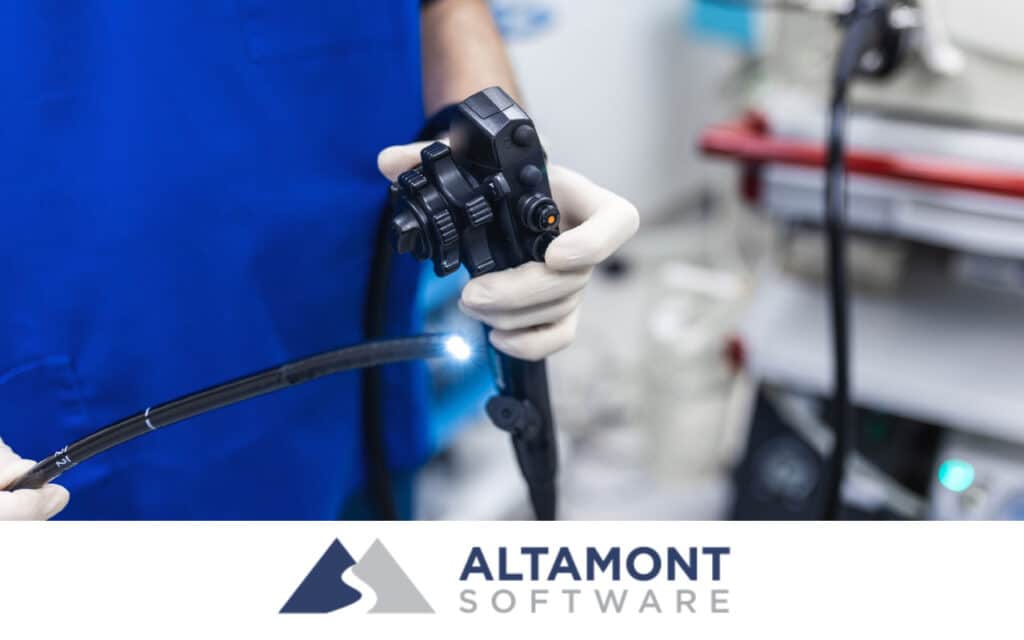
Clinical video is generated in many departments across a health system, including GI, surgery, urology, OB-GYN and ENT. The number and variety of scopes used during minimally invasive procedures has grown rapidly. Video recorded during these procedures is valuable for post-procedure follow-up and patient consultation, as well as teaching and research.
There are several technical reasons why the integration of scope video into the Electronic Health Record (EHR) and enterprise Picture Archiving and Communications System (PACS) has lagged:
- Clinical video is typically captured in a non-DICOM (non-standard) format.
- Clinical video scope manufacturers only recently began including native DICOM capabilities.
- Many legacy PACS solutions cannot store and display video, forcing them to be stored locally in the medical scope, on removable media or in proprietary scope vendor archives.
There are also organizational barriers. Often, the biomedical team that services and supports clinical scopes is independent of the IT team that manages the enterprise imaging systems. Biomed may lack the experience and knowledge of the video capabilities of the enterprise PACS/VNA. This can lead to departmental purchases of isolated scope vendor solutions or perpetuating clunky “capture box” solutions instead of adopting a standards-based enterprise approach.
These technical and organizational challenges are compounded by the fact that healthcare organizations typically have numerous scopes from various vendors spread across many clinical departments – which creates significant operational challenges when attempting to improve access to this valuable clinical information.
Some medical scope manufacturers provide hardware upgrades that enable video to be exported in a standardized format. Still, they are more likely to offer a dedicated mini-PACS to store the video and enable sharing with other clinical IT systems. These approaches do not align with enterprise imaging goals and strategies because they:
- Increase costs
- Perpetuate scope vendor-specific solutions that typically do not connect with competing vendors’ equipment using accepted standards
- Require EHR integration to each mini-PACS solution
- Force clinicians to learn different user interfaces to view videos from each department
The most common approach to video capture is implementing a hardware-only video capture box. Unfortunately, these capture boxes are typically expensive, and one is required for each medical scope. In addition, they cannot be centrally managed, requiring maintenance from already stretched biomed teams. Lastly, these non-IT-supported boxes are often security concerns during IT audits because of dated operating systems, custom patch administration and the potential for Protected Health Information (PHI) being stored on them. These shortcomings are significant barriers to adopting standards-based clinical video capture. They have led to their adoption only in high-volume or high-value clinical departments such as surgery and gastroenterology.
The good news is that many hospitals and health systems are on their way toward implementing enterprise imaging strategies that leverage standards to centrally store, manage and provide universal access to still images for all clinicians. It is time for clinical video to be included in these strategies so it can be accessed via the EHR and other enterprise clinical IT systems.
Challenges and Limitations with the Status Quo
The current approach of capturing clinical video in a proprietary format and locally storing it on removable media has created numerous challenges that affect the hospital’s clinical and IT operations. Let’s review some of them.
Operational Impact
- If the video is in a proprietary format, it can only be viewed on the scope that initially acquired it.
- Typically, there is no backup of the video. If the removable media is misplaced or the hard drive in the scope becomes corrupt, the clinical information may be lost.
- Removable media on the shelf inevitably becomes inaccessible as scopes are upgraded and older storage media formats become obsolete.
- Manually retrieving video files is a time-consuming process.
IT & Security Impact
- Auditable tracking of who accesses removable media is impossible. Removable media can be lost or misplaced.
- Security measures, such as the need to log into a video scope, are often not in place.
- Enterprise access controls and security measures do not exist.
- Hardware-only clinical video capture solutions cannot be centrally accessed and managed.
Clinical Impact
- Clinical comparisons are only possible if a follow-up exam is performed in the same room or on the same vendor’s equipment as a prior exam.
- Staff cannot easily retrieve and compare a current video study to a prior one for diagnostic purposes.
- There is restricted access to the video for teaching and research purposes.
- Typically, only a few high-volume, high-profit clinical departments digitize their video because of the high cost of hardware-only video capture and conversion solutions.
- Limited access to the clinical report and associated key images is also common.
Financial Impact
- The cost of removable media, the space to store it and the cost of expanding storage on an existing scope can add up.
- Hardware-only video capture solutions are expensive; one video capture box must be purchased for every medical scope.
- Purchasing a dedicated scope mini-PACS for every department is costly.
Why Connect Clinical Video to the Imaging Enterprise?
 Integrating clinical video into your IT infrastructure creates an opportunity to leverage existing enterprise imaging investments. If an enterprise PACS or VNA has been implemented, enabling video to be accessible via the EHR can:
- Improve and simplify access to all caregivers inside and outside the organization.
- Increase the availability of video for teaching and research.
- Facilitate compliance with Release of Information (ROI) guidelines.
These opportunities become more attainable when adopting a modern enterprise approach to clinical video connectivity. Replacing clunky video capture black boxes with enterprise software tools provides a more cost-effective, IT friendly approach. The software should provide a common set of tools for centralizing the management of all connected video capture devices. In addition, it should be offered via an enterprise licensing model that simplifies broad implementation across all clinical departments – in a cost-effective manner that doesn’t put demands on the clinical IT department.
Summary
Replacing unmanaged video capture boxes with centrally managed enterprise software makes it easy and affordable to capture all clinical video in the DICOM standard format. Centrally managed enterprise software that makes video available to the EHR offers numerous operational, security, clinical and financial benefits. Eliminating expensive islands of clinical information is a valuable and logical extension of any enterprise imaging strategy.
For more information, visit altamont.com.
