Sponsored by Soma Tech Intl.
By Charu Chande
In health care, medical equipment is essential to providing optimal patient care, from diagnostics to critical life-saving procedures. The performance and reliability of these devices is non-negotiable, as lives depend on them. Whether new or refurbished, medical equipment must function flawlessly, as intended by the original manufacturer. This highlights the crucial role that quality assurance plays, particularly in refurbished medical equipment, where attention to detail is essential.
A Gap in Refurbishment Standards
Unlike new medical devices, where FDA regulations dictate performance standards, there are no formal guidelines governing the refurbishment process. This lack of regulation means that the quality of refurbished equipment can be significantly different between providers. It also places the responsibility on decision makers to do their research and make sure they’re purchasing from a reputable company. Creating a comprehensive refurbishment process that meets high standards is essential to make sure refurbished equipment is reliable and safe to use on patients.
Without a standardized process, refurbishing companies may adopt different methods, some of which may not fully restore the equipment to its original condition. This variability introduces risks to patient safety and complicates clinical workflows. Health care providers should choose partners who adhere to comprehensive quality assurance protocols that make sure refurbished devices meet the same performance standards as new equipment.
Why Does Quality Assurance Matter?
The stakes are high when it comes to medical equipment performance. A failure in a clinical setting could have tragic, even fatal, consequences. Quality assurance isn’t just important – it’s essential. A comprehensive refurbishment process ensures that equipment performs as well as it did when it first left the manufacturer. This gives health care providers confidence that refurbished devices will deliver safe and effective patient care. Quality assurance in refurbished medical equipment goes beyond simply ensuring that the device powers on. It includes a thorough assessment of the equipment’s functionality, safety features and reliability. For example, ventilators and anesthesia machines are life-support systems in critical care environments. The refurbishment process should extend beyond powering the unit on and performing a ventilation check. This involves measuring the volume and pressure accuracy of gases, checking the gas mixture, ensuring that backup systems work in case of failure, and verifying that anesthetic gases are not exposed to health care staff.
Additionally, this process must inspect and identify parts that are on the verge of failure, which might not always be visible through standard OEM preventive maintenance procedures. The refurbishment should also restore the device’s original cosmetic appearance, avoiding contamination during the process, and undergo a re-check to ensure that performance parameters are retained. After this process, the system should easily pass the biomedical pre-check in an operating room. A comprehensive quality assurance process simulates real-world usage to ensure the equipment is patient ready.
The ISO 13485:2016 Certification
ISO 13485:2016 is an internationally recognized certification that demonstrates a medical equipment company’s commitment to stringent quality management standards. Achieving and maintaining this certification is a rigorous process that involves thorough audits and continuous improvement processes. While medical refurbishment companies aren’t required to get this certification, Soma Tech Intl consistently re-certifies, proving that its facility, products and production process meet the highest standards of safety and performance.
This certification not only reflects Soma Tech Intl’s dedication to quality assurance, but also provides health care providers confidence that its refurbished equipment is safe and reliable. By adhering to ISO 13485:2016, Soma ensures that its products are refurbished under the same standards as newly manufactured medical equipment.
Soma Tech Intl’s Comprehensive Refurbishment Process
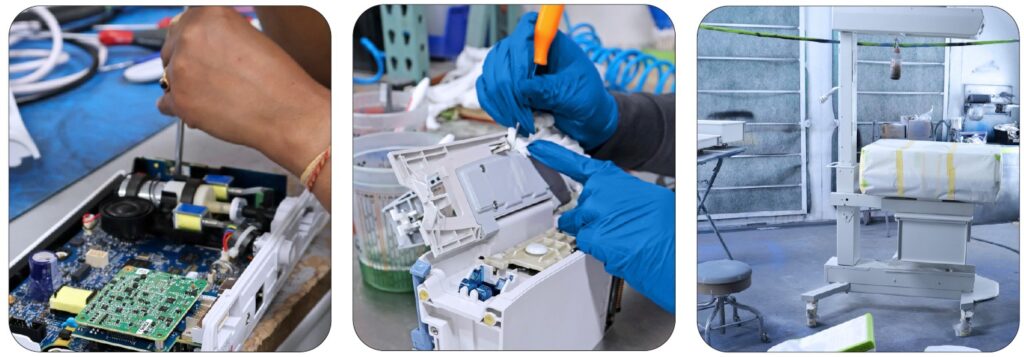
At Soma Tech Intl, the refurbishment process is designed to restore each unit to its original performance and safety standards. It starts with a technical refurbishing process where highly trained and certified biomedical engineers, many with OEM experience, disassemble the system and check each area, replacing components as per OEM recommendations. This includes individual circuit board testing and repair, resolution of any pending recalls and upgrading any necessary software. Engineers take a preventative approach to identify parts that might seem functional but are on the verge of failure. This is followed by replacement of necessary parts, assembly and calibration of the system.
An operational test of the system then follows, during which individual components are assessed. This includes testing the speakers, indicators, switches and other critical elements. Additionally, it checks whether the software routines are functioning as intended. Any detected failures are promptly corrected and retested to ensure proper operation.
A functional test is also conducted to assess various parameters and the overall operation of the system, followed by an electrical safety inspection. All readings are thoroughly documented to ensure complete transparency throughout the process. These results are compiled into a detailed engineering testing report. The parameter testing and electrical safety inspection further validate that the device meets the manufacturer’s performance specifications, ensuring it is safe for use in patient care.
In addition to ensuring the equipment works flawlessly, Soma Tech Intl also restores its appearance. The cosmetic restoration process includes repairing or replacing broken panels, handles and pieces. The process also includes cleaning, sanding, painting and adding new decals to bring the device back to its original look. This not only enhances the aesthetic appeal of the equipment but also ensures its durability in a clinical setting.
Before any unit is labeled “patient ready,” it undergoes a final round of testing and inspection. This step includes re-testing the performance of the devices, verifying the accuracy of the engineering report, and checking the physical appearance one last time. Only then is the unit approved for shipment, complete with a warranty.
Conclusion
Quality assurance in refurbished medical equipment isn’t just a matter of compliance; it’s a commitment to patient safety and effective health care delivery. By choosing a refurbishing company that prioritizes quality, like Soma Tech Intl, health care providers can ensure that their equipment is both reliable and safe, capable of performing at the highest level when it matters most. In an industry where there are no formal regulations, a well-executed process stands as a testament to a company’s dedication to quality, providing health care providers with reliable, safe and effective equipment.
To discover more about Soma Tech Intl., please visit somatechnology.com.