
By Carol Davis-Smith
Summer is upon us and my days are a bit lonely without UCONN clinical engineer intern assignments to grade. Not!
Actually, I’m writing this column as the spring semester is coming to a close and semester final grades must be posted. Loneliness will have to wait until next week.
To date, I’ve shared an overview of the UCONN clinical engineering internship program and insights to our Clinical Engineering Weeks held each semester. In this column, I want to dive into the technical rotations courses because they are a real differentiator from other programs.
From the syllabus …
“The clinical engineering interns will complete rotations through clinical and non-clinical areas of the hospital observing the clinician-technology-patient interface.
By the end of the semester, students should be:
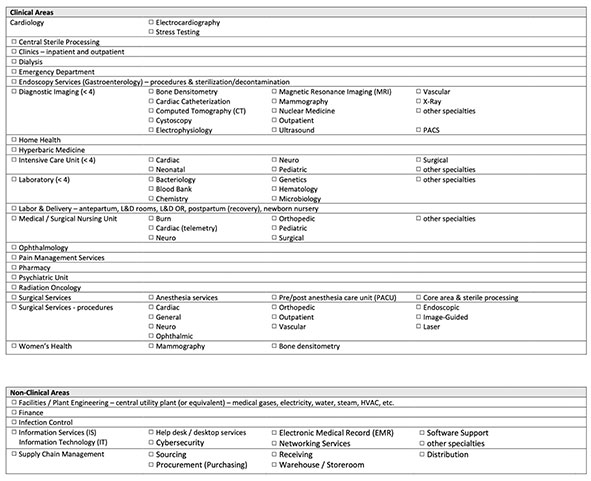
• Able to effectively describe the interface and relationships between the technology, clinical user, and patient in at least ten (10) clinical and non-clinical areas of their internship host hospital or health system. This description is inclusive of advantages, disadvantages, safety and risk attributes as well as simple observations.
• Aware of which technologies are managed by their clinical engineering department as well as those not managed by their clinical engineering department and why.”
The academic rigor of this course is somewhat different from the intern’s other courses. In addition to the objectives outlined in the syllabus, the rotations require the interns to take initiative (scheduling) and to develop communication and critical thinking skills (questions and observations). The interns demonstrate their proficiency in these “soft” skills through their monthly logbooks in which they describe their experiences and observations during each rotation. By the end of their program, each intern should have completed at least forty (40) rotations with the majority of them in clinical areas.
The following tables are provided to the interns as part of the assignment rubric.
Most interns will tell you that the rotations are “a pain” because they are sometimes hard to schedule. What they won’t tell you is that rotations are hard to schedule because they must put themselves in the uncomfortable position of reaching out to people they don’t know to ask for help. By the end of the program, most interns are adept at reaching out and have recognized the value of “rotations” as a means of learning about unfamiliar areas before, during and/or after a project. In fact, some interns have mentioned that they scheduled a particular rotation so that they were familiar with the staff and clinical workflows for an upcoming internship work assignment.
Another benefit of the rotations is familiarity with a broad base of medical equipment. Too often, interns or co-op students only see the equipment and sites associated with their specific work assignments. As part of the rotations course, the UCONN CE interns are encouraged to explore sites and services across the healthcare delivery organizations where they are completing their internships. Sometimes this requires a walk across a large campus. Other times, it requires a drive or a subway or even a ferry. Regardless, it is another unintended benefit towards increasing the interns’ independence, confidence and professionalism.
The chart template below is provided to the interns to document their rotation observations. Within the observations section, they are expected to identify the medical equipment (manufacturers and models) as well as the clinicians they met and procedures they observed. Similarly, for non-clinical rotations, the interns capture who they interacted with and that department’s connect to the clinical engineering/healthcare technology management (CE/HTM) department.
Occasionally, an intern will say that they were unable to document the medical equipment make/model, especially for surgical or interventional procedures. I remind them that they have the CMMS and the equipment inventory for those spaces should be available before and/or after their rotation. It’s safe to say that most interns only make this mistake once because it usually results in a significant loss of credit on their logbook submission.
On the other hand, some interns have found missing inventory during rotations and have corrected the situation in their CMMS. This is a great example of how interns can provide value to the host health system even when they are doing schoolwork. In this case, it’s almost like having supplemental rounding by the environment of care department.
The most important lessons, however, are focused on clinical workflows. Understanding the types of clinicians in each area, what they do, how they do it, and why they do it that way. Becoming familiar with the types of patients and conditions diagnosed and/or treated in each area. Interns will routinely document in their rotations logbooks that they were completely unaware of an area or procedure before their rotation. Unfortunately, I’ve also heard that from seasoned professionals because we just don’t have the time (or make the time) to explore and familiarize ourselves with the larger enterprise we serve.
I often say that I was raised by nurses in the OR and ICU. Those experiences during my early career plus the intense anatomy and physiology courses I was required to take as an undergraduate strengthened my ability to discern what is important to care delivery and not just laser focused on what is important to clinical engineering. In turn, my engineering education enabled me to assist clinicians with process analysis and design (or redesign) of their workflows and work environments. Even today, when I visit a new health system I remind myself that every hospital is exactly the same and completely different. It’s about the people – the clinicians, the support staff, the administrators. But mostly, it’s about the patients and communities they serve.
If you are a student, make rotations a part of your education even if your academic program doesn’t require them. If you’re a CE/HTM director hosting interns and/or co-op students, carve out time for them to complete rotations regardless of whether their academic program requires them. If you’re a young professional or even a seasoned one, make time in your week to visit someplace in your enterprise that is unfamiliar. Keep learning. That’s how we know we’re still alive!

Time to turn my attention to preparing for the 2026 fall semester. The new cohort of UCONN clinical engineer interns will be arriving at their host health systems in mid-August and classes will begin at the end of that same month. I will be here updating the syllabus, so feel free to reach out to me with questions or suggestions. And don’t forget to read about the great things Steve Yelton (Cincinnati State) and Joie Marhefka (Penn State New Kensington) are doing with their students!