



By Alan Moretti
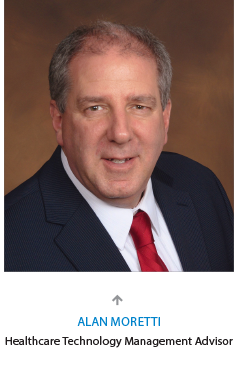
Happy New Year and Welcome to 2017! To say the last quarter of 2016 was “eventful” would be an understatement. Let’s quickly review a few notables – the Chicago Cubs finally “Reversed the Curse” after 108 years and were crowned World Series Champions! GO CUBS GO! Then there was the Presidential Election of 2016 which has brought a new era. As Americans we now embark on a new executive branch administration with the soon to be inaugurated 45th President of the United States Donald Trump. The Affordable Care Act (ACA a.k.a ObamaCare) is about to take a ride into new turbulent waters! Well … it should be a very exciting 2017. Hang on as we are all in for a ride.
Well, this first Thought Leader column of the new year is very timely and meant to be thought provoking for all HTM professionals envisioning their responsible medical equipment landscapes. A very valuable resource resides within just about every health care organization that many times goes untapped when the topic of medical equipment replacement is discussed. Sure, the request may come into the Biomedical Department from the nurse or radiology clinical manager asking for service histories, though usually this is in an effort to support “their desire” in replacing the “old” medical equipment. But wouldn’t it make more sense for the Biomedical Department to be that forward thinking resource champion of the organization that proactively plans medical equipment replacement looking three or five years out?
The norm across the country has been that medical equipment replacement is not “planned” but more of a “crisis by crisis” or in some cases a political physician chess game. I can tell you first hand from a personal career now in its 32nd year of HTM experience, I have seen $1 million spent on “emotional purchases” of medical equipment in the “name of patient care.” In these unfortunate situations many of those medical equipment purchases turned out to be under-utilized with no sustainable business plan and in some situations, if the clinical program it supported fizzled out or the physician champion exited the organization, the equipment was stowed away to “depreciate off the books” in a distant storage room somewhere on the campus. Talk about health care dollars wasted – you can’t blame the Affordable Care Act on this one!
In my travels around the country, I have seen a few biomedical programs become engaged in proactive medical equipment planning and some of those have established pretty good replacement forecasting tools. This ability in medical equipment planning and replacement resources has never been more critical to a health care organization since the current and future day capital dollars allotted each year now represent about one-third of the funding needed to purchase replacement medical devices and stay current with advancing technology.
Here’s a couple of take-aways for you to noodle on. What is your health care organization’s medical equipment replacement plan for this year and the next five years? How can your team be a contributing resource to that replacement planning strategy? There is no better medical equipment “knowledge source” than yourself Mr. and Ms. HTM service professional. Here’s another opportunity for you to shine!
