



By K. Richard Douglas
During the 1960s, a commercial jingle directed at women announced; “You’ve come a long way baby to get to where you’ve got to today.” While the company promoting the commercial was a cigarette maker, the sentiment was right. Much had transpired since the 1920s. The Women’s Suffrage Movement had labored for 100 years to win women the right to vote, and in August of 1920, the 19th Amendment was passed and women finally won that fundamental right of citizenship.
During World War II, when men were off to war, it was the women who kept the country going and who labored to build the weaponry the U.S. troops needed to push the effort forward.
Artist Norman Rockwell immortalized the allegorical icon “Rosie the Riveter” in 1942, an image that represented all of the important women who worked in America’s defense industry; including factories and shipyards. (This writer’s mother was one of them.)
While many women were also engaged in the important work of acting as a single parent during the war effort, the image of Rosie was one of women using tools, working in construction and in steel mills and doing jobs that had traditionally been held my men.
The image of women using power tools and shop machines showed conclusively that women could do these jobs right alongside the men. While many women have worked in jobs that are often thought of as traditionally female, like teachers or nurses, there are also men who work in those roles.
The Rosie the Riveters of the war era had to fill those jobs to continue the production of goods needed by their country. They didn’t plan, from their school days, to go into those industries, but instead answered the call when they were most needed.
Today, many women find that they enjoy electronics or working with tools from the time they are in school. Many decide that a less-traditional path is more fulfilling and they enter professions that had previously been dominated by males. Even while still representing a minority in those professions, they have carved out a niche that has helped break stereotypes about who can perform that job.
This has included an evolution in the HTM profession, as women have gained in numbers as both technicians and managers. There are many women making a difference in the HTM field and moving the profession and processes forward. While the numbers are not 50/50, the image of the profession as a viable career alternative for women continues to gain momentum.
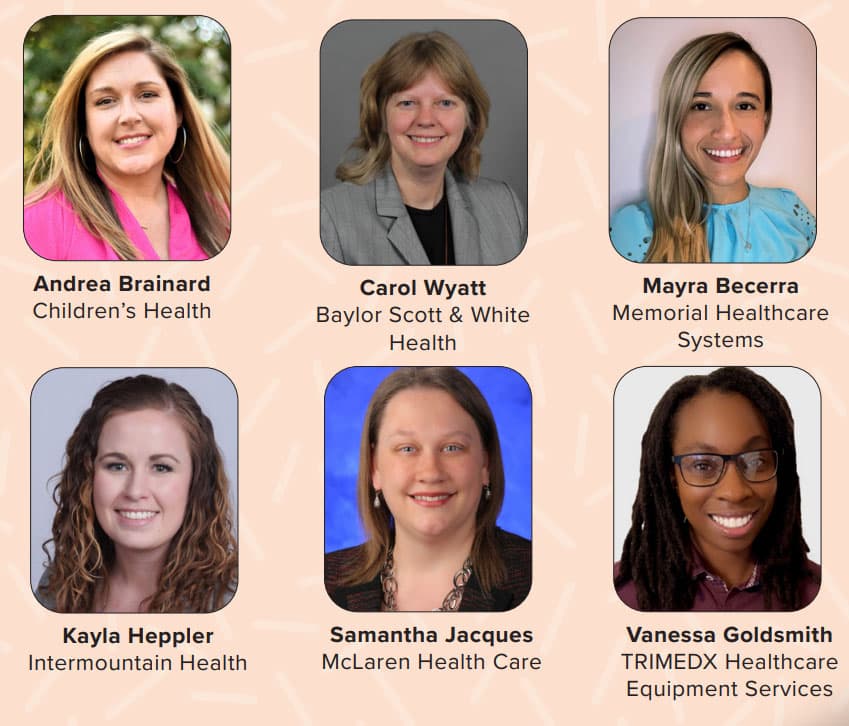
Several women who have had an impact on HTM have provided perspectives on how the field can attract more women and what the prospects are in the future for women in HTM. Each of these women also illustrate the contributions women make to the profession.

Informing More Women About HTM as a Career
At a time when the HTM field suffers from an exodus of experienced biomeds, any effort to broaden the pool of qualified applicants would make sense. This would include methods and efforts to introduce more women to the profession. Women offer special insights, ideas and opinions about how successful campaigns might be conducted.
“Women already working in the HTM field have a unique opportunity to make a significant impact in attracting more women to join this field. By actively engaging in educational outreach, we can visit schools and introduce students to the exciting world of HTM,” says Mayra Becerra, a senior biomed with Memorial Healthcare Systems and the creator of the BioMedGirl YouTube channel.
She says that additionally, serving as role models and mentors, “we can provide guidance and support to women aspiring to enter engineering or health care fields, as well as those seeking meaningful career paths.”
“Personally, I find social media to be an effective platform for showcasing the capabilities of women in HTM. By sharing our experiences and accomplishments, we can inspire others and demonstrate that women can excel as HTM professionals,” Becerra says.
“We face many challenges attracting qualified techs,” says Carol L. Wyatt, MPA, CBET, CHTM, director, SCS at Baylor Scott and White Health in Dallas, Texas.
“We need to grab future teammates’ interest early by talking to students at middle school, high school and college career fairs. They will not know what HTM has to offer unless we get out there and share the knowledge,” she says.
Allison Woolford, CBET, biomedical equipment specialist, clinical engineering-periop team lead at the Duke University Health System says that those in the biomed field need to go into the community and advocate for the field.
“Community colleges, clinical engineering departments and medical device companies could put together one-day summer camps or Saturday camps that are geared towards female middle and high school students,” Woolford suggests.
“Clinical engineering departments and private industries can work with their local schools to have a job shadowing program, where once a quarter, students can come and see what the field is like. Let them fix a vital signs machine or do a PM on a syringe pump. Teach them why accuracy is important for the care of patients,” she adds.
Kayla L. Heppler, MHA, clinical engineering director with Intermountain Health in Utah says that women need to know there are health care career opportunities outside of clinician roles.
“Speaking as someone who stumbled into this field, I think that more women will discover the field as the HTM industry attempts to develop how we find talent. When I was in high school, I knew that I wanted to do something to help people. I wanted to work in health care, but the problem was that I am way too squeamish to be a nurse or anything patient facing,” she says.
She ended up pursuing a bachelor’s in finance because she didn’t know what else to pursue besides a generic business degree.
“After finishing my degree, I fell into a financial analyst role in Intermountain Healthcare. The way I stumbled into clinical engineering was through my friendships and connections, and I’ve been in HTM ever since. Had I known more about this field prior to attending college, I might have changed my course. I am happy that I still stumbled into this industry,” Heppler says.
She says that she believes that there are plenty of young women out there who want to work in health care, but do not have the ability to work in a patient facing area, like her.
“While HTM certainly can have some off and on interface with patients directly, it is mostly behind the scenes work. I know that my peers in my organization have been making efforts to go to job fairs and high schools to educate people on what this field is all about. We also are establishing an apprentice program and connections with the state department of labor and the U.S. Department of Defense. I think that the more our women HTM techs and leaders participate in the education and recruitment efforts, the more they can attract other women to the field,” Heppler says.
Vanessa Goldsmith, site manager at Ascension Sacred Heart Bay/Emerald Coast/Gulf for TRIMEDX Healthcare Equipment Services, says that to help more women discover HTM, it is important to have female representation at recruitment events such as college and job fairs.
“With the HTM field being known as predominately male, utilizing female faces and voices in various media platforms helps increase awareness around the field being a viable and rewarding career for women looking for careers in tech,” she says.
An emphasis on STEM and its application in the real world could help direct more women into HTM.
“All of the areas of STEM, including HTM, still need more exposure earlier in children’s school curriculum. Classes in middle and high school that show the application of the STEM fields to the real world would help students identify how skills such as problem solving, can be applied to everyday situations,” says Samantha Jacques, Ph.D., FACHE, AAMIF, vice president of McLaren Clinical Engineering Services (MCES) at McLaren Health Care in Grand Blanc Township, Michigan.
She says that although students need good foundations in the fundamentals, nothing sparks imagination in students more than seeing how it applies to real life and how that application can be a career path for them to follow.
“I agree that we need more women in HTM, but we also need more men in the field. This profession still lacks the visibility to the general public, even though it’s been around for decades. We need to get in front of kids in middle school and high school during career fairs; we need to use social media to spread the word to the younger generation; and we need to support local colleges that have biomed programs – essentially, we need to use any means possible to get the word out,” says Andrea Brainard, CBET, CHTM, senior director of healthcare technology management at Children’s Health in Dallas, Texas.
The Future of HTM and Women
Where do these HTM professionals see women in the field in five years?
“In the past five years, there has been an increase of women not only in the technician roles, but also more visible in leadership roles. I believe we will continue to see more women enter the field and be promoted to management roles. The one area I haven’t see a lot of improvement is in the imaging service area. There is still a lack of women in those roles and I would love to see some more expansion into those aspects of device repair,” Jacques says.
Goldsmith says that the stereotype of tech roles being for males is slowly going away, and more women are venturing out into roles like HTM.
“This will continue to allow for steady growth and career development in the coming years,” she says.
Becerra says that she envisions a promising future for women in the HTM field.
“While the current industry average stands at 22 percent female representation, it is encouraging to note the gradual increase observed in recent years. With the growing emphasis on inclusion and diversity within many organizations, I am optimistic about the potential to achieve a significant milestone of 40 percent women in the HTM industry, with a substantial number occupying management roles,” she says.
“If we can show the benefits of joining and remaining in the HTM field and we can offer competitive salaries, I see women flourishing in five years, 10 years and even 20 years,” Wyatt says.
Heppler says that it’s hard to imagine and predict the future because of how fast health care and the HTM industry is constantly evolving.
“I would imagine and hope that we would see a steady increase of women in this industry. I think women bring a unique perspective to the field and I have been seeing a slow increase of women entering the field, which is exciting. I just hope the trend continues, with all the efforts being made by not only my organization, but the HTM industry as a whole,” she says.
Woolford says that in five years, she sees more women in team leader and management roles.
“By helping to remove gender specific stigmas and increasing exposure to this field, more women will see that this career field has a place for them,” she says.
“Hopefully in five years, we see an exponential increase in the number of women in HTM as we work to bring HTM to the forefront as a career choice,” Brainard says.
She says that HTM, as a career, provides stability, a sense of accomplishment and a rewarding feeling at the end of the day knowing your job saves patient lives.
“With the rapid growth of technology in general, more women are working in STEM fields as compared to the 1970s, but there’s still a gap to our male counterparts and I’m hoping that as more and more women get into HTM, they will recruit more women to also get into this field,” Brainard adds.
Positive Aspects for Women Currently in the Field
Regardless of role or responsibilities, the women in HTM find the field rewarding and fulfilling.
“I really like knowing that I have the skills necessary to be a member of a team that is critical to a person’s physical health and well-being,” Woolford says.
She says that she enjoys working in the operating room.
“It’s a different atmosphere when you put on the scrubs designated for the OR. It is as if we are our own little community in the hospital. When a call comes from the OR, you know that it is a matter of life and death. When the problem is resolved, there is a sigh of relief that fills the room. The staff know that now, they are able to provide the best care to that person on the table,” Woolford adds.
Another thing she enjoys about the profession is the relationships you build within the HTM and hospital community.
“We are like a big family. We cheer each other on and celebrate accomplishments; professionally and personally. We want to see each other succeed because we understand that our success in turn helps the patient in the long run,” Woolford says.
“In HTM, I like the diversity of the field. There is always a new challenge that allows me to grow and learn something new. I enjoy being able to play a vital role in the care of those in need,” Goldsmith says.
Jacques says that one thing she likes about HTM is that it offers a different challenge each day.
“Two days are never the same and the changing hospital landscape, the advancements in technology, and the collaborations to be successful make each day something new. I can always continue to learn, adapt and grow my skills,” she says.
Wyatt says that the best thing about the HTM profession is that it offers varied opportunities to highlight one’s skills.
“Whether your strength is troubleshooting medical devices, managing operations, database administration, cybersecurity, or any of the other dozen fields, HTM has a place for you. And I have taken advantage of a few different areas as my skills and knowledge evolved. But for me, the best thing about working in HTM is the opportunity to make a difference and have a positive impact to make someone’s life better, whether they know it or not,” she says.
One aspect that Becerra enjoys the most about the field is having a significant impact on patient care.
“It brings me great satisfaction to know that my contributions play a part in saving lives and improving health care outcomes. As HTM professionals, we play a vital role in the health care system by meticulously maintaining and ensuring the proper operation of medical devices. Our primary focus is on patient safety, diligently working to ensure that all medical equipment is safe and reliable for use in patient care,” she says.
Brainard says that what she likes about HTM requires a two-fold answer.
“First, I love that HTM is still a small, tightly knit community. We all have the same basic goal: ensuring medical devices are safe and ready for patient care. Since becoming an HTM leader, my personal goals have grown and evolved somewhat, but the drive and purpose of our HTM team remains the same. The second part of the answer is that I love being a part of cultivating new HTM talent, recruiting new technicians into the field, and providing them opportunities to learn and grow and be the best techs they can be,” she says.
With women represented across the HTM profession at every level, and an obvious passion among them for the jobs they do every day, it can only behoove the field to grow their numbers and introduce the profession to a new generation of females as a career option.
NOTE: The upcoming MD Expo in Orlando, Florida will feature a panel discussion on women in HTM. For more information, visit mdexposhow.com/presentation/women-in-the-healthcare-technology-field-a-panel-discussion.
