For Veterans Day 2025, AAMI News interviewed AAMI member and friend Richard L. Gonzales, a retired U.S. Army officer with 21 years of military service. He serves as the president of the College of Biomedical Equipment Technology (CBET) and senior partner at RTG and Associates, an educational services company dedicated to supporting Veterans education programs.
Known as “Monty” to friends and colleagues, Dr. Richard L. Gonzales joined the military straight out of high school. Since then, he hasn’t slow down once.
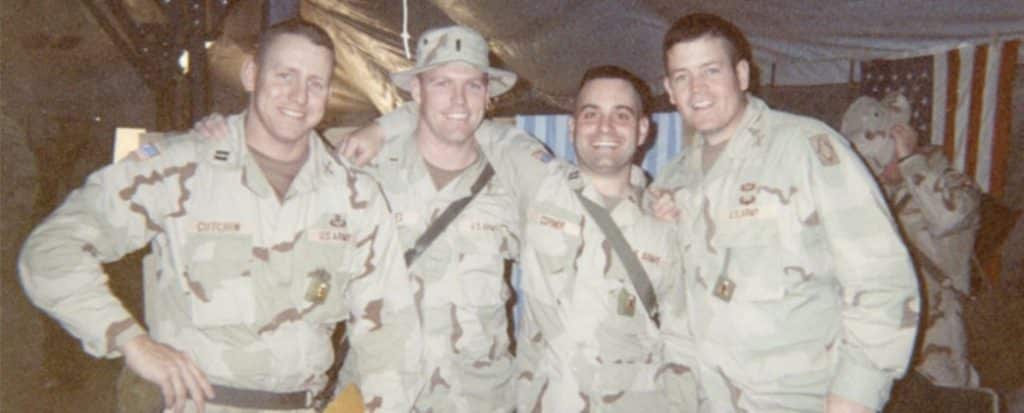
His career began in the 75th Army Ranger Regiment, where he served as a forward observer for the 1st Ranger Battalion in Georgia and the 2nd Ranger Battalion in Washington.
That hard work earned him a position as a warrant officer, where he conducted targeting and intelligence operations while stationed around the globe for the last 13 years of his career.
Across Europe, the Balkans, and the United States, he served as a brigade targeting officer. In Oklahoma, he developed and taught targeting courses. In Iraq in 2003, he led the team searching for weapons of mass destruction.
That team would later become the subject of “Green Zone,” a 2010 film which brought Gonzales to Morocco, Spain and the UK to consult on the military’s portrayal – and work closely with Matt Damon.
Little did he know, the skills he gained as a military leader would also prove invaluable to the role he would one day take on as the President of the College of Biomedical Equipment Technology.
A NEW BEGINNING IN HTM
When Gonzales retired from the military in 2009, he stepped into a business development and contract management role at Northrop Grumman. But after years of active duty, he wasn’t fulfilled by work behind the scenes.
So, when he transitioned again into a position as a Junior Reserve Officer Training Corps instructor, he realized a career in education might just be the path forward.
Though he had never heard of healthcare technology management (HTM), it felt like a natural fit when a fellow veteran friend put the field on his radar. “I could have just as easily stumbled into a different industry, but it happened to be this one where we identified an opportunity and a real need, and we thought that would be a lot of fun,” he said.
In 2018, along with three other veterans, Gonzales founded the College of Biomedical Equipment Technology (CBET). The curriculum is designed to prepare students to obtain AAMI certifications and succeed in HTM. The company now boasts 53 employees, around 85% of whom also served in the military.
AAMI & CBET: A NATURAL PARTNERSHIP
CBET welcomed AAMI as a strategic partner shortly after its founding. Under AAMI’s guidance, three joint initiatives are now “thriving” and helping to amplify CBET’s mission, said Gonzales.
Most recently, their collaboration was responsible for the development of an HTM leadership certification program, set to graduate 65 emerging leaders next March. Another exciting program, launching this year, will introduce over 350,000 participating high school STEM students to HTM careers, in partnership with HOSA-Future Health Professionals. A third initiative will provide essential certification training to clinical engineers in Saudi Arabia.
“AAMI was a very natural partner from the start,” Gonzales explained. “We are 100% mission-focused on the same thing, and CBET is profoundly grateful for the strong, supportive relationship we’ve built with AAMI’s team.”
Q&A
As Veterans Day approached, AAMI had some questions for Gonzales on the unique perspective he brings to HTM. Read his thoughts below.
Q: HOW DOES YOUR MILITARY EXPERIENCE INFORM THE TRAINING YOU DO AT CBET?
GONZALES: From a military perspective, we were always trained and encouraged to get inside of the enemy’s decision cycle, to make decisions quicker than they could. You can easily adapt that to this industry; we need to be thinking quicker than devices fail and risks can occur. And so, it’s really about training technicians and teaching in a way that is risk preventative, and thinking about patient safety first.
Q: HOW HAS YOUR BACKGROUND IN THE ARMED FORCES INFLUENCED YOUR APPROACH TO BUSINESS PARTNERSHIPS?
GONZALES: The first thing that comes to mind is relationships of trust. And my experience in building relationships with foreign nationals and working overseas in complex environments absolutely formed the cement that that foundation is built on.
I had a commander of mine who I’m still in touch with, General Kimmitt, who many referred to as the “prince of darkness” because of how exacting he was as a leader, the no nonsense type. And I always loved the guy, but he came in looking to destroy everything he touched every time. And so as a young officer, I was just trying to figure out, how do I deal with this guy?
I said, the next time he shows up on my site, I’m going to start by telling him everything that’s screwed up. That’s what broke through that barrier, and that was an important lesson to me: Nobody’s afraid of a problem. They’re afraid of not having the correct information or being led in a direction that doesn’t make sense or allow them to deal with the problem.
I think when you translate that into the healthcare industry, people want the facts. It can be data that’s coming out of a CMMS, or it could be data exchanged in conversation, but for a leader to make a good decision, they’ve got to have accurate information and clean data.
Q: WHAT ADVICE WOULD YOU GIVE TO A SERVICE MEMBER LOOKING FOR A CAREER CHANGE, PARTICULARLY INTO THE HTM FIELD?
GONZALES: Here at the college, we tell service members: You’ve served your country – now serve your community. That’s because the idea of contributing to something greater than yourself is deeply ingrained in the overwhelming majority of the people with whom I served.
For me personally, transitioning from the military to a role at Northrop Grumman was a really tough experience. It was a fantastic company – but I found it unfulfilling, because it lacked that sense of pride I felt showing up each day in uniform. And many other service members are also looking for that renewed sense of belonging and ability to give back.
Healthcare technology management offers a unique career field that fulfills that need, because there’s no shortage of scenarios in which you’re truly in demand. And there is no greater feeling than knowing that others can trust and rely on you.