



By K. Richard Douglas
Oklahoma City is the capital and most populace city in the state of Oklahoma. It sits in the central portion of the state. The city offers visitors a cowboy and western museum, a banjo museum, a zoo, a botanical garden, walking trails to a water taxi cruise down the Bricktown Canal and more. The city juxtaposes its western heritage with its modern accouterments.
The biomed community is represented by an association focused on bringing biomeds together. The Oklahoma City Biomedical Association (OKCBA) evolved after a delayed beginning.
“There were several attempts by the original members going back to 1989, but the first official meeting was in 1994 at Southwest Medical Center with Juan Lara, Steve McCartney, Bob Thompson, Ken Reimer, Gene Butler and Larry Henderson. There may have been others, but these were the names that could be remembered,” says OKCBA President Shannon Landsberger.
He says that Juan Lara, Steve McCartney, Bob Thompson and Ken Reimer are credited as the founding members.
“Juan Lara had the initial idea of creating a biomed association and was the one who attempted to get meetings together from 1989 to 1994. He worked at Midwest Regional Hospital at the time. Steve McCartney was voted in as president of the association early on and kept it going until October 2017 when I was voted in as president. Steve still continues supporting the association as vice president today,” Landsberger says.
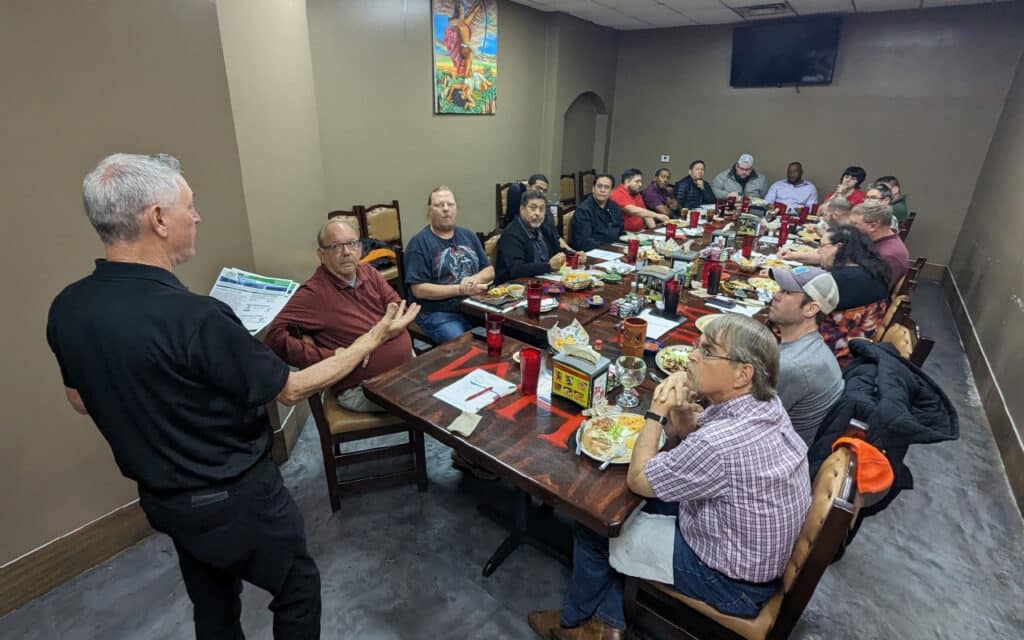
He says the original group maintained annual meetings (often at restaurants) from 1994 through 2017, typically around October.
“Steve McCartney was president during most of that timeframe, with me joining the group in 2016, and becoming president in 2017. At that time, Steve stepped down into the vice president position. In 2018, we changed to a bi-annual meeting schedule with April and October being the months we typically planned for. I have worked towards bringing more content to our meetings, with a focus on continued education,” Landsberger says.
OKCBA typically has vendor education as well as discussion topics related to the biomed field at each meeting.
“I also added in a spotlight on retirees, whom we do a more in-depth review of their career with them during the meeting after they retire, often turning into some educational discussions on career plans. Moving forward, I am working with others in the group to move to a quarterly biomed association meeting, which will hopefully entail vendor education at every single meeting, and rotate hospitals in the area so that we are not favoring one facility over another,” Landsberger says.
Strengthening the Profession
The OKCBA does not have a formal conference or symposium, although it makes the most of its scheduled meetings. Landsberger tries to get the most productive use out of the regular meetings.
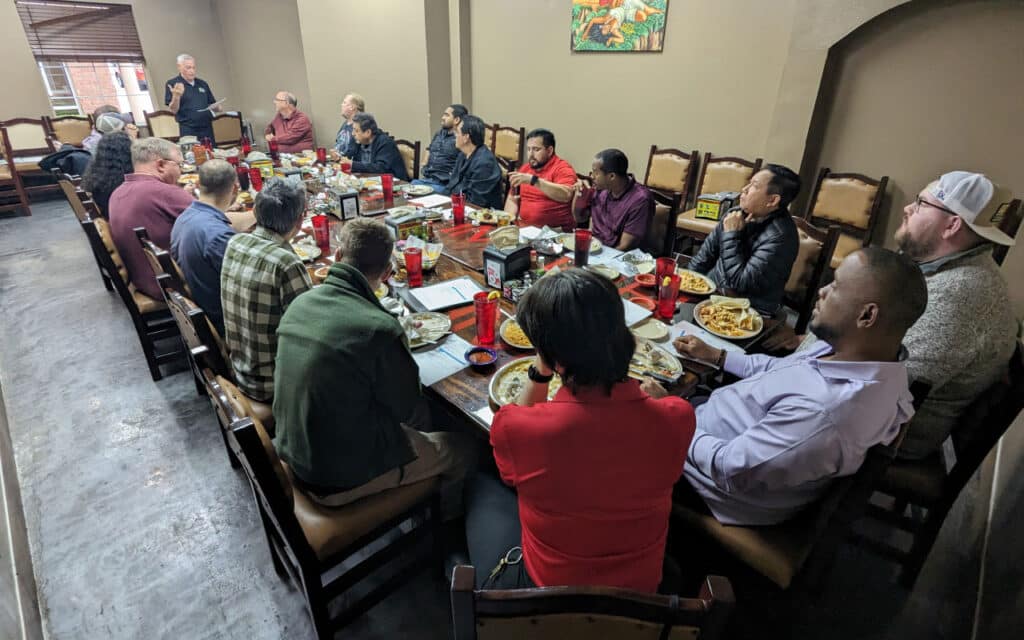
“Our last meeting consisted of a discussion about Ken Reimer, a long-time member and local biomed company owner who recently retired. Ken sponsored nearly all of our meetings until our last meeting before his retirement in October of 2023. I gave a 30-plus minute discussion/code review on AAMI ST108 and its impact on facility design, biomed interaction, and the positive impact of high-water quality in our SPD areas,” Landsberger says.
He says that the group also had plenty of discussion around the general status of the biomed space in Oklahoma including a talk about outsourcing, open positions and future meetings changing to four times per year.
As the HTM profession still seeks methods to recruit new talent to replace the baby-boomer retirees, it has been the biomed associations, in their respective cities and states on the front lines.
“Our biomed association meetings are 100 percent free. We make it a point to let all of our traveling vendors and sister hospitals know about the meetings as well as when to attend meetings, and our influx of new people is fairly steady. I have about 70 members on my email list at this time, and our attendance has grown from an average of five to seven people per meeting in 2016, to around 20 per meeting now in 2024,” Landsberger says.
He says that in Oklahoma, there is no requirement for certification or an education minimum to be a biomed.
“Due to this, biomed is not always recognized as an occupation with a high-level skillset and pay remains relatively low for many. I want to work towards getting our membership AAMI-certified, with continuing education credit mostly provided during our meetings as educational content from vendors. Once this is established, I will work towards discussions with hospital leaders about the benefits that come with a certified and better educated biomed shop,” Landsberger says.
He says that the intent is for hospital organizations to see the value and offer incentives for those who become certified.
“Once the pay level starts to increase, I think that will help draw in more applicants to the region,” Landsberger adds.
Some biomed associations have a local technical school or dedicated biomed training program that the association can build a relationship with.
“We do not have any biomed schools in Oklahoma, and many of the technical schools have moved away from an in-depth electronics program in favor of short, focused courses that can be completed in a few weeks each. This has limited our ability to recruit biomedical staff locally, and we must often look to biomed programs in other states for added personnel,” Landsberger says.
How did the pandemic impact the way the association operates or affect its members?
“Operationally, it slowed progress down quite a bit, forcing places and personnel to perform better planning around shipment and install timeframes. There was also a need to increase contingency funds on projects a bit more to accommodate the rapid increase in the price of goods and services. Vendor labor prices have risen significantly in the last several years, and I believe it will have a long-term effect on the cost-of-service ratio (COSR) for facilities. Until things stabilize, there is likely to be some added financial tension between biomed groups and administration regarding the added costs for maintenance,” Landsberger says.
Biomeds in the Sooner State have a place to rub elbows, catch up on the community and receive education in centrally located Oklahoma City.
