

By K. Richard Douglas
The northeast U.S. has been one of the hardest hit areas during the coronavirus pandemic with New York, New Jersey and Massachusetts in the top spots as of early May. Connecticut is in the top 10. Healthcare technology management professionals in the region have been challenged during this difficult time.
The New England region is served by a biomed association with a long history. For 45 years, the New England Society of Clinical Engineering (NESCE) has provided its members with education, training, networking opportunities and information from manufacturers. The society was started by a small group of like-minded medical technology supporters and founded on December 10, 1975.
“Erin Gignon and Mark English and others started in Connecticut [and] started a local clinical engineering professional society. At the same time, other local clinical engineering professional societies were started in Albany, New York; Boston, Massachusetts; Maine, Vermont; and New Hampshire,” says current NESCE President Vinnie DeFrancesco.
“Erin Gignon was the director of clinical engineering for UConn Health Center in Farmington, Connecticut and Mark English was director of clinical engineering at Hartford Hospital,” DeFrancesco says.
He says that the group started locally in Connecticut as the New England Society of Clinical Engineering (NESCE) and partnered with the other existing biomed groups across the region.
Four of the societies rotated hosting an annual symposium. When the other societies disbanded, they joined NESCE and it became a regional society.
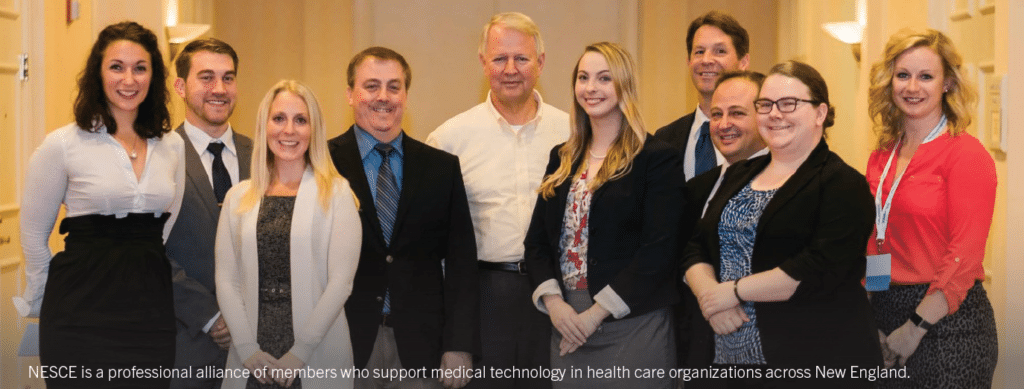
Other officers in the group’s current roster include Vice President Ashley O’Mara, Secretary Samantha Herold and Treasurer Frank Painter.
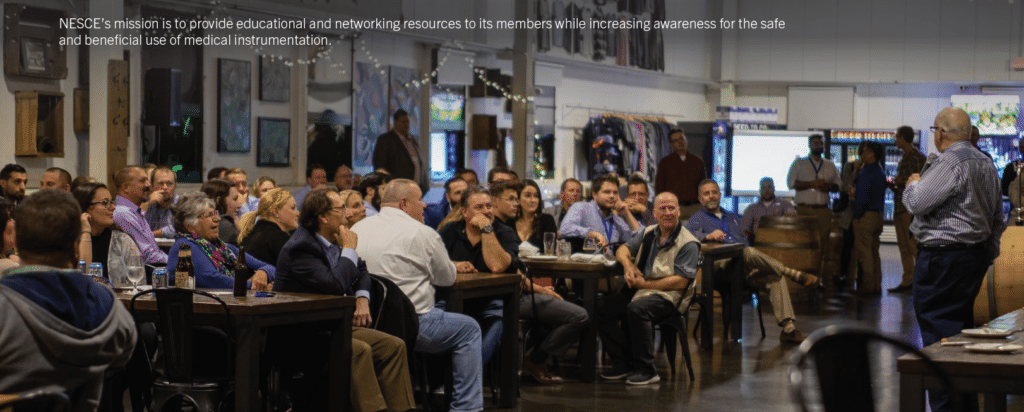
DeFrancesco says that membership meetings are held at least quarterly throughout the year and the group rotates the venue throughout the New England region.
Like many of NESCE’s counterparts, the group brings a strong training and education focus to the region’s biomeds.
“We do subsidize education programs, training – PM class, networking class – reimbursement for CBET certifications and give out scholarships for BMET student graduates,” DeFrancesco says.
He says that throughout the year, the society hosts at least two technical or professional training courses and offers them to members at a reduced rate.
“We arranged for a project management trainer to provide a one-week course on-site (in the past it has been in a local hospital’s conference room). We have also set up networking or computer classes at a training facility that provides many networking classes at a reduced rate to our members,” DeFrancesco says.
The group holds one to two major educational events a year for professional development of the membership, along with networking classes, project management classes and cybersecurity classes at a highly discounted rate. They offer quarterly networking dinners
DeFrancesco says that they have a partnership with UConn and other local universities to assist with succession planning for the HTM field.
With the exodus of many baby-boom generation HTM professionals in recent years, there is always a need to replace those members with new members. In addition to efforts to fill those seats, many biomed associations make an effort to help bring new colleagues to the field and fill existing positions. NESCE is no exception.
“[The] symposium offered the job board and networking room for interviews, positing ads on the NESCE site, great collaboration on the UConn Clinical Engineering Internship Program and partnering with local universities. We do advertise job openings at our meetings,” DeFrancesco says.
Symposium
The group’s most recent symposium was held last October at the Framingham Hotel and Conference Center in Framingham, Massachusetts. Attendees included biomedical equipment technicians, clinical engineers, hospital directors, technology managers, administrators and other health care professionals from across the region.
“I do not have the exact count of the attendance, but it is was about 200-225. This was about what we expected, which did cover our expenses. The attendance was very high in the cybersecurity track as well as the executive leaders (C-Suite) and physician hot topics, which was new this time,” DeFrancesco says.
He says that the majority of instructors at the symposium were from the New England area, although this is not always the case.
The group had a raffle in conjunction with the closing of the exhibit hall.
The symposium is held every other year at locations throughout New England.
DeFrancesco says that the 2019 event included two outstanding keynotes by Jeff Cooper and Carol Davis-Smith. Cooper’s keynote presentation was titled “How Clinical Engineers affect Patient Safety.” Davis-Smith presented “Planning the Hospital of the Future.”
“We have seven educational tracks: under clinical engineering – CE/IT, HTM program management/risk management and compliance and executive leaders (C-suite) and physician hot topics,” DeFrancesco says.
He says that they also had a BMET group of tracks that included an all-day imaging workshop, specialty (ultrasound or anesthesia) and general biomed all-day patient monitoring.
“On the second day, the all-day training classes changed to lasers and portable RO systems, and defibrillators. The last track for the entire symposium was CBET review,” DeFrancesco adds.
He said that over the entire two-day event, it included two keynotes, an expo with 50 vendors, and a networking dinner along with a wine and cheese event.
DeFrancesco says that the symposium had a great networking social event the night of the first day. That evening, there was a comedian for entertainment and the show provided a “great relaxing atmosphere and networking in a casual fun event.”
In addition to the many workshops and sessions, vendors provided one- and two-day technical hands-on classes.
The society’s next symposium is scheduled for the fall of 2021.
The group continues to help further the HTM profession in the New England region and offers opportunities for career growth, networking, education and enjoyable interactions with colleagues from across several states.
For more information, visit nesce.org.