



By John Wallace
In 2015, Money magazine listed “Medical Equipment Repairer” (a.k.a. HTM or biomed professional) number 2 on its list of “The Best 5 Jobs You’ve Never Heard Of.” The problem is educational opportunities to become an HTM professional have been disappearing since Money magazine’s list debuted.
DeVry University, ITT Technical Institute and Brown Mackie College are among the larger institutes of higher learning that have eliminated all or some of their HTM programs. Smaller technical schools, junior colleges and community colleges have also shuttered programs.
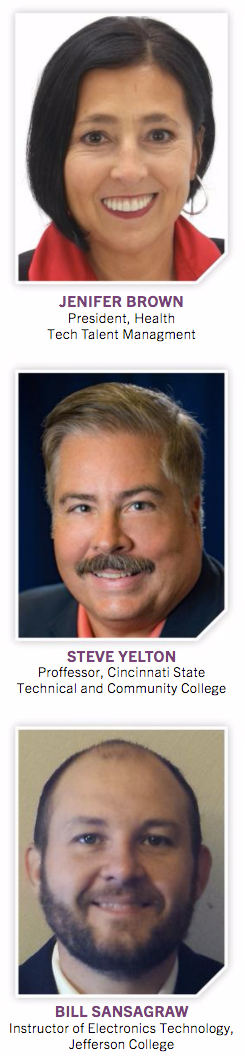 Jenifer Brown, president and owner of Health Tech Talent Management, works to help place HTM professionals in jobs throughout the United States. She has also worked in higher education.
She explained that colleges must maintain a certain job placement ratio in order to offer financial aid to students from federal funds. The problem is that students sometimes sign up for HTM without realizing there is an expectation that they be willing to relocate in order to find an entry-level job.
“You have to make sure they know they have to relocate and they have to keep up the placement ratio,” Brown said.
She added that there are many high-quality institutions offering HTM degrees and biomed training in the U.S. Armed Forces is another great option.
“To me it is not difficult to find a job in biomed if they put forth the initiative. Some schools do not require an internship. The majority of good biomed programs require an internship as part of an associate degree. It is one thing to be book taught and another to actually be working inside a hospital,” Brown said. “If a student is not required to do an internship, they should take it upon themselves to knock on the hospital’s door and volunteer. Hands-on experience is important.”
Brown said military biomed training comes with hands-on experience.
“A lot of them have hands-on training so it makes them more attractive to an employer,” Brown said.
Educators and those working in the HTM profession see a shortage of qualified biomeds to fill vacancies. Many report that this is a huge concern as more and more HTM professionals retire in the coming years creating an even greater need for talented HTM professionals.
Steve Yelton, a professor at Cincinnati State Technical and Community College, said there is a need for HTM professionals.
“In addition to my role teaching HTM courses, I also work as a senior consultant for a large health network in Cincinnati, Ohio,” Yelton said. “One of our biggest concerns is where would we get qualified technicians if the local biomedical program didn’t exist? We are also striving to keep our senior technicians who have specialized training and service schools. As these programs close, this becomes extremely difficult. I don’t think, at this time, that health care is adversely impacted, but staffing is getting more and more difficult and in the future health care could be adversely impacted.”
Bill Sansagraw, instructor of electronics technology at Jefferson College, said he sees a real need for more HTM professionals.
“I have found that most hospitals prefer you to have an associate degree in biomedical technology, but are willing to hire those with an associate degree in electronics,” Sansagraw said. “With the recent changes in the educational sector, we have lost a lot of ground work for those seeking to hire biomedical technicians. The employers that I work with have positions that are open for months and have a hard time finding qualified biomeds. The demand for qualified and skilled HTM/biomeds tells me that we do not have enough students or programs to meet the needs of the health care field.”
Jewel C. Newell, Program Lead for Biomedical Equipment Technology at Brown Mackie College, Dallas/Ft. Worth campus and Network Recalls Manager at JPS Heath Network, said the question whether enough educational programs exist for future HTM professionals depends on the student.
“Well, that truly depends on what the prospective student is hoping to gain. If it is a 4-year bachelor of science in biomedical engineering, then the answer is, yes,” Newell said. “There are colleges and universities all over that offer this type of degree. A biomedical engineering degree is multifaceted and allows the student to either focus on design and implementation of medical devices, go into research and compliance of medical devices, or repair and maintain them. However, if the prospective student is not looking to do all of those things, then the answer is, no, we no longer have a strong offering of colleges that can support the number of interested people in our field. With schools like DeVry, ITT, Brown Mackie, and Jefferson, closing its doors or just dropping the biomedical equipment technology programs, the national pool has diminished significantly.”
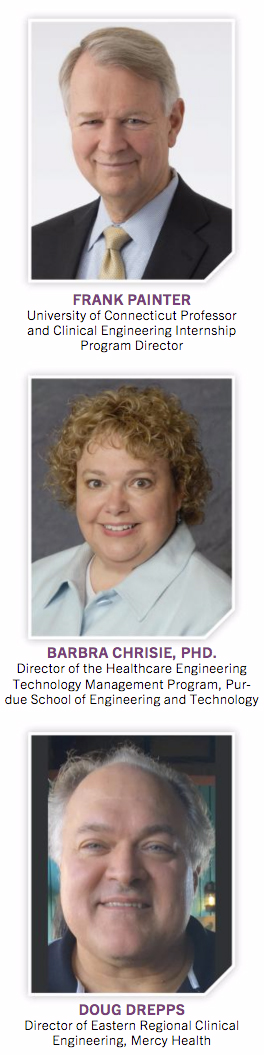
University of Connecticut Professor and Clinical Engineering Internship Program Director Frank R. Painter said the recent closings will impact the profession.
“All of my clinical engineering students get multiple job offers when they graduate in May. To me this means the demand is higher than the supply,” Painter said. “As well, on the HTM/BMET side, when a hospital advertises for BMETs there are usually very few qualified applicants, also indicating the demand is stronger than the supply.”
“Hospitals and vendors will have to hire candidates outside the field and train them,” Painter added when asked how the decision to close some educational programs could affect health care. “This is more expensive, more time consuming and more frustrating because if someone leaves after training, the resources put into the person are gone. This is normally how things are done in countries with limited resources, like Namibia and Ecuador. There are very few BMETs, the hospital must train them and then they leave for greener pastures. If the number of untrained BMETs entering the field decreases, the number of positions will increase because the amount of technology in the hospital is increasing. This will entice BMETs to change jobs more often. This will either drive up health care costs or decrease the quality of the technology service provided. This problem is universal, affecting in-house, third-party and vendor-based support programs and their BMETs.”

Barbara Christe, Ph.D. is the director of the healthcare engineering technology management program and an associate professor in the engineering technology department at the Purdue School of Engineering and Technology at Indiana University-Purdue University Indianapolis. She said the recent closing of some DeVry campuses coupled with others leaves a void.
“I do not think there are enough programs. With DeVry’s closings (not all campuses), very few bachelor of science programs are left in the U.S. The country has about 3,000 hospitals – how can we have just a handful of academic programs? We cannot expect the profession to have visibility and grow if there are no graduates to fill vacancies,” Christe said. “As an educator, I know many hospitals contact me seeking graduates to fill openings – for which I have no one to recommend. Currently, our students are finding employment prior to graduation so we don’t have folks looking for a position when openings happen. How does this impact health care? I think the employers have to answer that – but I would assume a lack of available candidates means that hospitals must hire folks with less than desirable qualifications … such as a degree from another field (such as electronics).”
Douglas Dreps, director of eastern regional clinical engineering for Mercy Health sees a need for health care facilities to develop relationships with institutes of higher learning, especially in regards to replacing retiring baby boomers.
 “I recommend reaching out to all educational institutions within their state and outside of your area. We have hired many that did internships or externships with us. With recent closings of electronics and BMET programs locally – i.e. ITT, Brown Mackie, and Jefferson College this month – we feel the need to reach outside of our area to other institutions, as we need future candidates. I am even going to reach out to Owens Community College in Toledo Ohio, where I received my AASEE/BMET degree.”
“I am looking at convincing our leadership that we need to have an apprentice program, where we hire technicians 1-2 years before retirements, so they can get technical training and on-the-job training with seasoned technicians,” Dreps added. “Many of the imaging manufacturers have these programs and that is helpful in having trained technicians fill retirement positions. For many imaging modalities, and some biomedical systems, it takes years to be proficient. Costly high-dollar contracts can be the driving force to help us make this happen. Supply and demand could drive wage wars among hospitals, ISOs and OEMs.”
Sansagraw said as more and more HTM professional from the baby boomer generation retire the need for HTM professionals will only increase.
“This is a growing problem for all of the employer partners that I have worked with,” Sansagraw said. “They have people retiring faster than they can find qualified technicians. There has been some talk in other areas of skilled labor to start growing their own technicians. This might not be the perfect answer, but when you cannot find people willing to do this kind of work then you have to get creative.”
All of the changes that are taking place in education have students, faculty, and administration worried, Sansagraw said.
“I think that education should be the last item to be cut from any budget,” he said. “If we do not have an educated workforce, we as a country will struggle. I wish I had a way to fix all of the problems with the lack of qualified technicians.”
Newell hopes to provide a solution with the creation of a new source for highly trained and experienced HTM professionals.
“As of today, I, and Douglas Redwine, clinical engineering manager with Texas Health Resources in Ft. Worth and an adjunct instructor for biomedical equipment technology, are in the process of opening a nonprofit technical college that focuses on the four major areas in our field,” Newell said in March. “Students will earn associate degrees in biomedical equipment technology, radiology equipment repair technology, information technology-security, and information technology-health care. We will also offer certificates for specialized training on certain radiology devices through our training partner.”
“In fact, as part of our radiology equipment repair program, students will spend one week each semester at our partner’s facility for advanced training,” she added. “We believe that these programs and added trainings will answer the call to what is needed in our field. We will be working on a SACSCOC accreditation for the college, and an ABET accreditation for our programs. We understand that this is a very large endeavor, but we feel that there is a definite need in the industry for well-trained, quality technicians. We take a holistic approach to teaching and training our students, so that they are well informed and prepared for what they are going to do. We hope to start taking our first students in January 2018, and it is our sincere hope that the technicians that we create will be an added value to any organization.”
